

How long does hardwood flooring last? Bay Area guide
TL;DR:
- Hardwood floor lifespan varies based on material, climate, and maintenance, ranging from 20 to over 100 years.
- Engineered hardwood is more stable in Bay Area humidity than solid hardwood, which is sensitive to moisture changes.
- Proper climate control and regular upkeep can significantly extend the durability of hardwood floors in coastal environments.
Most Bay Area homeowners assume all hardwood floors are created equal and will last forever with minimal effort. That’s a costly assumption. The truth is that flooring lifespan varies wildly depending on the type of wood, how it’s installed, and how well it handles your local environment. In a region where coastal fog, bay humidity, and temperature swings are facts of life, picking the wrong floor or ignoring early warning signs can cut your floor’s life in half. This guide breaks down what really determines hardwood flooring longevity, how solid and engineered options compare, and what you can do right now to protect your investment.
Table of Contents
- What determines the lifetime of hardwood flooring?
- Comparing solid and engineered hardwood lifespan
- How Bay Area climate affects hardwood flooring lifespan
- Getting the most years from your hardwood flooring investment
- Our take: What most Bay Area buyers get wrong about hardwood durability
- Explore quality hardwood flooring options for your Bay Area property
- Frequently asked questions
Key Takeaways
| Point | Details |
|---|---|
| Solid vs. engineered longevity | Solid hardwood can last 50–100 years, while engineered hardwood lasts 20–50 years depending on conditions. |
| Bay Area challenges | Humidity swings and coastal air in California mean engineered hardwood often lasts longer than solid. |
| Maintenance is key | Routine cleaning, moisture control, and refinishing cycles dramatically extend floor life. |
| Smart investment | A higher-quality floor pays off with greater durability and lower long-term costs compared to cheaper alternatives. |
What determines the lifetime of hardwood flooring?
Hardwood floors don’t fail overnight. They wear down gradually through a combination of factors that most people underestimate until the damage is already visible. Understanding those factors gives you real control over how long your floors last.
The two biggest variables are material type and moisture exposure. Solid hardwood is milled from a single piece of wood, which makes it strong but also reactive to humidity changes. Engineered hardwood uses a real wood veneer bonded over layered plywood, which makes it far more dimensionally stable. In the Bay Area, California hardwood floor lifespan ranges from 25 to 100 years, with engineered options often preferred because humidity fluctuations cause solid wood to gap and cup.
Here are the core factors that shape how long your floor will last:
- Wood species and hardness: Harder species like hickory and white oak resist dents and scratches far better than softer woods like pine.
- Finish quality: A commercial-grade finish protects the surface from daily wear and moisture penetration.
- Installation method: Floating, glue-down, or nail-down each affects how the floor responds to movement and moisture.
- Subfloor condition: A damp or uneven subfloor accelerates warping, buckling, and adhesive failure.
- Maintenance habits: Regular cleaning with the right products and prompt spill cleanup directly extend floor life.
- Refinishing history: Sanding and refinishing restores the surface and adds decades to the floor’s usable life.
For Bay Area homeowners, the local climate adds a layer of complexity. Coastal neighborhoods like Daly City or the Richmond District face persistent moisture from marine air. Inland areas like Walnut Creek deal with hot, dry summers followed by wet winters. That swing stresses wood fibers repeatedly over time. Choosing durable hardwood flooring suited to these conditions from the start is the single most impactful decision you can make.
“The floor that lasts isn’t always the most expensive one. It’s the one that was chosen for the right environment and maintained consistently.”
Pro Tip: Bay Area homeowners consistently underestimate indoor humidity levels. Use an inexpensive hygrometer to monitor your home’s moisture year-round. Ideally, keep indoor humidity between 35% and 55% to prevent wood movement. This one habit can add years to any hardwood floor.
Exploring your hardwood flooring solutions early in the process means fewer surprises after installation.
Comparing solid and engineered hardwood lifespan
With the main factors in mind, let’s break down how each flooring type stands up over time. The numbers here are meaningful, but context matters just as much as raw lifespan data.
Solid hardwood lasts 50 to 100+ years with proper maintenance and can be refinished multiple times, which is why century-old homes in San Francisco still have original floors that look stunning. Each refinishing cycle sands down a thin layer of wood and applies a fresh finish, effectively resetting the clock on surface wear. Most solid hardwood floors can handle 3 to 10 refinishing cycles depending on thickness.
Engineered hardwood lasts 20 to 50 years, with refinishing limited to 1 to 3 times based on the veneer layer thickness, which typically ranges from 1 to 6mm. Thicker veneers allow more sanding passes. While that sounds like a shorter lifespan, engineered hardwood holds up better in environments where moisture and temperature fluctuate, which describes most Bay Area homes.
| Feature | Solid hardwood | Engineered hardwood |
|---|---|---|
| Typical lifespan | 50 to 100+ years | 20 to 50 years |
| Refinishing cycles | 3 to 10 times | 1 to 3 times |
| Climate stability | Sensitive to humidity | Highly stable |
| Best Bay Area use | Dry inland areas | Coastal and variable climates |
| Cost range (installed) | $10 to $20 per sq ft | $7 to $15 per sq ft |
| Resale value impact | Very high | High |
When should you favor solid over engineered? If you’re in a climate-controlled home with consistent humidity, solid hardwood is a generational investment. If you’re managing a rental property or living near the water, engineered hardwood for Bay Area conditions is usually the smarter choice.
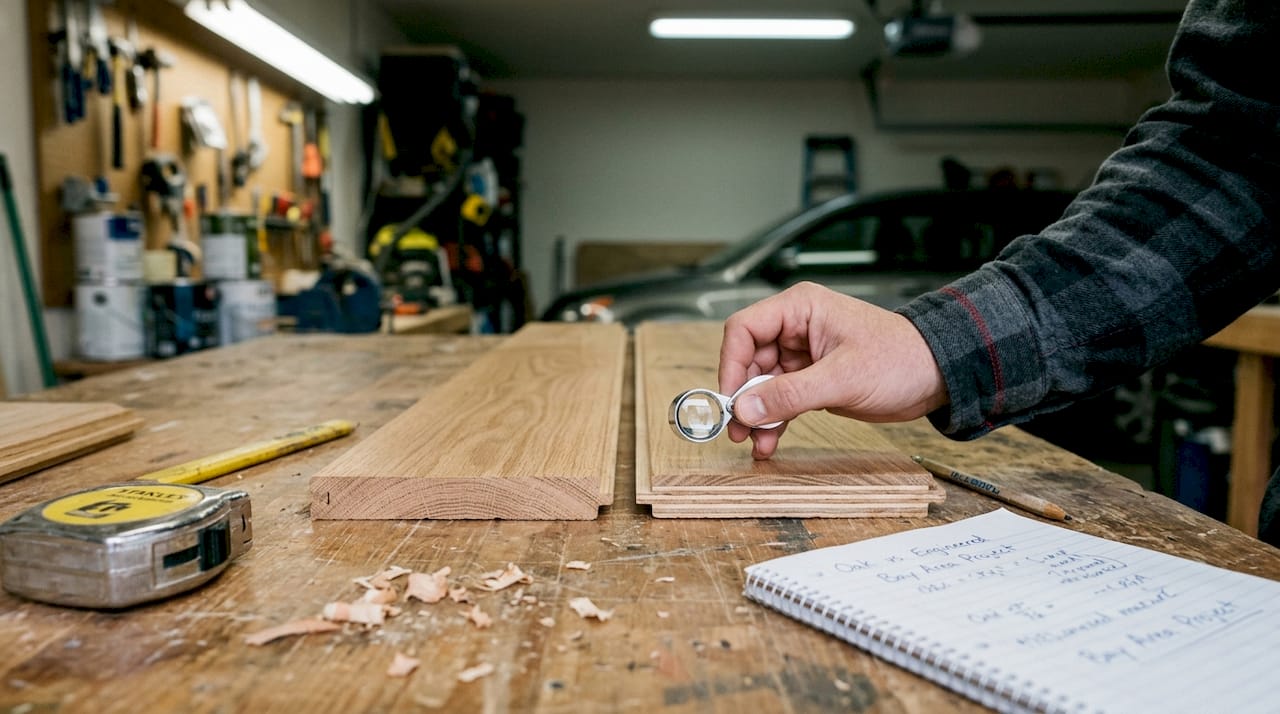
The key takeaway is that neither type is universally better. They serve different needs. Knowing which types of hardwood match your specific home and lifestyle is what separates a great flooring decision from an expensive regret.
How Bay Area climate affects hardwood flooring lifespan
The comparison doesn’t stop at the material. Local environment plays a decisive role in your floor’s lifespan, and the Bay Area is one of the most demanding climates for hardwood floors in the country.
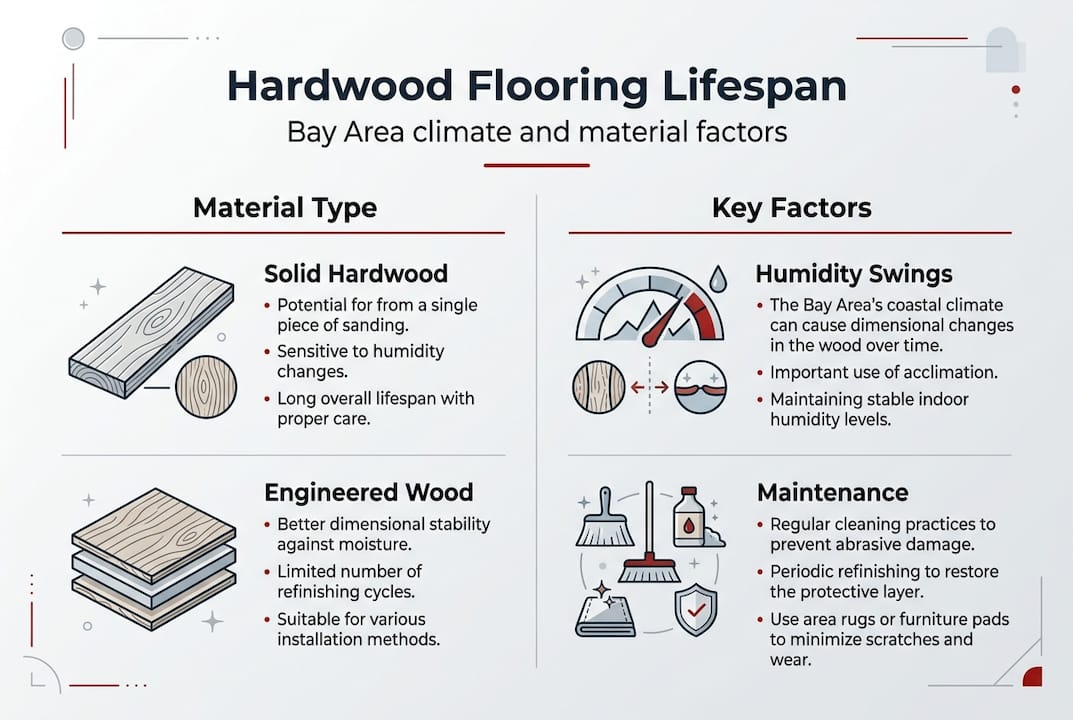
The region’s microclimates create wildly different conditions within just a few miles. Fog-heavy areas along the coast maintain high ambient moisture for months at a time. Homes near the bay deal with salt air, which can accelerate finish degradation. Hillside properties in Oakland or Berkeley face both rain exposure and dry heat depending on the season. As a general rule, solid hardwood performs better in stable climates while engineered hardwood is the smarter pick for moisture-prone Bay Area conditions.
Here’s how typical hardwood floors perform under Bay Area climate stress:
| Flooring type | Stable inland climate | Coastal or high-humidity zone |
|---|---|---|
| Solid hardwood | 75 to 100+ years | 40 to 60 years |
| Engineered hardwood | 30 to 50 years | 25 to 40 years |
| LVP (for reference) | 15 to 25 years | 15 to 25 years |
To protect your floors from Bay Area climate challenges, follow these steps:
- Acclimate the wood before installation. Let the flooring sit in your home for 3 to 5 days so it adjusts to local humidity before being installed.
- Seal the subfloor. A moisture barrier under the floor prevents ground moisture from migrating upward, especially in older Bay Area homes with crawl spaces.
- Install a whole-home humidifier or dehumidifier. This keeps indoor humidity in the ideal 35% to 55% range year-round.
- Use rugs in high-traffic areas. Entry points and kitchens take the most abuse. Area rugs reduce surface wear dramatically.
- Inspect annually. Look for gaps, soft spots, or discoloration near windows and exterior walls where moisture intrusion is most likely.
“In the Bay Area, the floor you choose is only half the battle. How you manage your indoor environment determines whether it lasts 30 years or 100.”
Understanding the full picture of hardwood flooring pros and cons for Bay Area conditions helps you set realistic expectations. And if you’re still in the selection phase, choosing hardwood floors for your Bay Area home is worth reading before you commit.
Getting the most years from your hardwood flooring investment
Understanding local risks and available options puts you in control. Here’s how you can extend your flooring’s lifetime for decades with practical, consistent habits.
The most overlooked truth in flooring maintenance is that small actions taken regularly beat expensive repairs taken reactively. A floor that gets swept weekly, kept at stable humidity, and refinished every 8 to 12 years can genuinely outlast the home’s original owners. One that gets ignored for years and then flooded once may never fully recover.
Hardwood flooring in the Bay Area typically runs $8 to $15 per square foot installed, which sounds steep until you factor in that a well-maintained solid hardwood floor can last 75 to 100 years compared to LVP’s 15 to 25 years. That’s potentially four or five replacement cycles for LVP versus one installation of hardwood.
Here are the most effective steps to maximize your floor’s lifespan:
- Sweep or vacuum regularly. Grit and debris act like sandpaper underfoot. Removing them daily in high-traffic areas prevents micro-scratches that dull the finish over time.
- Clean with hardwood-specific products. Avoid steam mops and excessive water. Use pH-neutral cleaners designed for finished wood.
- Place felt pads under all furniture. Dragging chairs and tables is one of the fastest ways to score and scratch a finish.
- Refinish before the damage reaches the wood. Don’t wait until you can see bare wood. Refinish when the finish looks dull or thin, not after it’s already worn through.
- Address moisture problems immediately. A leaking appliance or window left unattended for even a few weeks can cause permanent warping.
- Control sunlight exposure. UV rays fade and dry out wood over time. Use curtains or UV-filtering window film in sun-heavy rooms.
Pro Tip: Choosing the right floor type upfront is the single best ROI decision you can make. An affordable Bay Area hardwood option that suits your climate and lifestyle will outlast a premium floor installed in the wrong conditions. Browse quality hardwood options that match your home’s specific needs before committing.
Our take: What most Bay Area buyers get wrong about hardwood durability
Here’s the uncomfortable reality we see repeatedly: most buyers fixate on the top-end lifespan number, hear “100 years,” and assume that’s what they’re getting. It isn’t. That number assumes ideal conditions, consistent maintenance, and multiple refinishing cycles over decades. In a Bay Area rental property with tenants who don’t use felt pads and ignore spills, you might get 20 years out of a floor rated for 80.
The real value of hardwood isn’t just longevity. It’s the hassle-free decade between refinishes, the resale value it adds to your property, and the fact that a scratched hardwood floor can be restored while a scratched LVP plank usually gets replaced. We’ve seen homeowners choose cheaper alternatives to save $2 per square foot upfront and then spend three times that on replacement within 15 years.
When choosing durable hardwood for your Bay Area home, focus less on maximum theoretical lifespan and more on how the floor will perform in your specific conditions, with your maintenance habits, in your climate zone. That honest self-assessment leads to better decisions than any spec sheet.
Explore quality hardwood flooring options for your Bay Area property
Ready to put these insights into practice? At Kapriz Hardwood Floors, we carry a curated range of hardwood flooring options built for Bay Area homes, from high-end solid hardwood to engineered options designed for coastal humidity. Every product we stock is one we’d install in our own homes.
Whether you’re managing a multi-unit property or renovating a single-family home on a tight budget, we can help you find the right floor at the right price. If you’re weighing your options, our guide to choosing affordable floors walks you through balancing quality and cost without sacrificing durability. Come in or browse online and let’s find a floor that lasts.
Frequently asked questions
How long does solid hardwood flooring last in the Bay Area?
With proper care, solid hardwood lasts 50 to 100+ years, though Bay Area humidity and coastal air can reduce that range if the floor isn’t properly maintained or climate-controlled.
Is engineered hardwood suitable for Bay Area humidity?
Yes. Engineered hardwood handles humidity fluctuations better than solid wood, making it a practical and popular choice for Bay Area homes near the coast or in areas with seasonal moisture swings.
How many times can I refinish engineered vs. solid hardwood?
Solid hardwood can be refinished 3 to 10 times over its life, while engineered hardwood allows only 1 to 3 refinishes depending on how thick the top veneer layer is.
Does the Bay Area climate shorten hardwood flooring life?
It can. Humidity fluctuations cause gaps and cupping in solid hardwood, so choosing the right floor type and managing indoor humidity are both essential for protecting your investment in this region.
Is hardwood flooring worth the investment compared to vinyl or laminate?
For most Bay Area homeowners, yes. Hardwood lasts 75 to 100 years versus LVP’s 15 to 25 years, meaning the higher upfront cost is offset by far fewer replacements over the life of the home.


