

Affordable hardwood flooring for Bay Area homes 2026
Bay Area homeowners face a confusing landscape when shopping for hardwood flooring that balances cost, quality, and style. With material prices varying widely and installation costs adding up quickly, finding value becomes challenging. This article breaks down a clear selection framework covering cost factors, hardwood types, wood species, and installation methods to help you make confident, budget-smart flooring decisions for your home improvement project.
Table of Contents
- How To Choose Affordable Hardwood Flooring: Key Selection Criteria
- Comparing Hardwood Flooring Types: Solid Vs Engineered
- Hardwood Species That Deliver Quality Without Breaking The Bank
- Installation Method And Its Impact On Overall Affordability
- Summary Comparison Of Affordable Hardwood Flooring Options
- Choosing The Right Hardwood Flooring For Your Bay Area Home: Situational Recommendations
- Discover The Best Affordable Hardwood Flooring Options At Kapriz Hardwood Floors
Key takeaways
| Point | Details |
|---|---|
| Total cost breakdown | Material and installation combined; installation is 30-40% of total cost. |
| Engineered hardwood savings | Offers 20-30% cost reduction with 10-15 year lifespan versus solid wood’s 25+ years. |
| Best budget species | Oak and bamboo balance affordability ($3-$5/sq ft), durability (Janka 1290-1360), and aesthetics. |
| Prefinished advantages | Reduces labor complexity by 10-15% and speeds up usability by 50% compared to site-finished. |
| Local supplier benefits | Regional brands often provide better pricing, warranty support, and personalized service. |
How to choose affordable hardwood flooring: key selection criteria
Before diving into specific products, you need a framework for evaluating hardwood flooring options. Understanding the core criteria prevents costly mistakes and ensures your investment delivers long-term value.
Total cost extends beyond the sticker price per square foot. Material expenses represent only part of your budget. Installation labor accounts for 30-40% of total project costs, making installation method a critical factor in affordability. Finishing adds another layer of expense if you choose unfinished boards.
Durability directly impacts lifetime value. The Janka hardness scale measures wood resistance to dents and wear, with higher numbers indicating tougher surfaces. Species with ratings above 1200 typically withstand high-traffic areas better, reducing replacement frequency and long-term costs.
Installation complexity influences both labor expenses and project timelines. Prefinished floors arrive ready to use, while site-finished options require additional steps, skilled labor, and curing time. Engineered planks often install faster than solid boards, cutting labor hours and overall costs.
Wood species choices affect aesthetics, maintenance needs, and price points. Oak, maple, and bamboo offer different color palettes and grain patterns at varying costs. Each species requires specific care routines that impact your ongoing maintenance budget.
Finish types determine protection levels and upkeep requirements. Polyurethane, oil-based, and water-based finishes vary in durability, application cost, and maintenance frequency. Choosing the right finish can extend floor life by 40%, maximizing your investment.
Pro Tip: Request itemized quotes separating material and labor costs to identify where you can negotiate or adjust specifications for savings.
Key evaluation factors include:
- Material cost per square foot
- Installation labor rates and complexity
- Janka hardness rating for durability
- Finish type and application method
- Maintenance frequency and costs
- Expected lifespan and warranty coverage
Explore current hardwood flooring trends bay area homeowners are choosing to align your selection with proven local preferences.
Comparing hardwood flooring types: solid vs engineered
Understanding the fundamental differences between solid and engineered hardwood helps you weigh upfront costs against long-term value. Each type serves different budgets, renovation timelines, and durability expectations.
Solid hardwood consists of single-piece planks milled from lumber. These floors last 25+ years and can be refinished multiple times, making them excellent lifetime investments. However, they cost more upfront and require longer installation periods with site finishing.
Engineered hardwood costs 20-30% less than solid options while offering adequate durability for 10-15 years. Constructed from layered wood veneers, engineered planks resist moisture better and install faster. They’re ideal for renovations where budget and timeline matter most.
Prefinished floors arrive with factory-applied finish coatings, eliminating on-site finishing labor. This reduces finishing costs by 10-15% and allows you to use rooms immediately after installation. Site-finished floors require sanding, staining, and multiple finish coats, extending project duration by several days.
| Feature | Solid Hardwood | Engineered Hardwood |
|---|---|---|
| Lifespan | 25+ years | 10-15 years |
| Cost per sq ft | $5-$10 | $3-$7 |
| Installation speed | Slower (site finishing required) | Faster (prefinished available) |
| Moisture resistance | Lower | Higher |
| Refinishing potential | Multiple times | 1-2 times |
| Best for | Long-term investment, traditional homes | Budget projects, quick renovations |
Installation represents a major cost factor regardless of hardwood type. Labor expenses typically consume 30-40% of your total budget, making installation efficiency a key affordability consideration.
Prefinished engineered hardwood combines multiple cost advantages. Factory finishes ensure consistent quality while reducing labor hours. Faster installation means lower contractor fees and quicker room access.
Pro Tip: For basement or below-grade installations, engineered hardwood’s moisture resistance prevents warping issues that plague solid wood in humid conditions.
Cost-saving considerations:
- Prefinished options eliminate finishing labor and materials
- Engineered planks install up to 50% faster than solid
- Floating installation methods reduce adhesive and fastener costs
- Thinner engineered planks cost less but limit refinishing options
Learn more about choosing the best hardwood flooring for your specific home conditions and budget constraints.
Hardwood species that deliver quality without breaking the bank
Selecting the right wood species balances aesthetic preferences with practical budget limits. Certain species offer excellent durability and visual appeal at accessible price points, making them smart choices for value-conscious Bay Area homeowners.
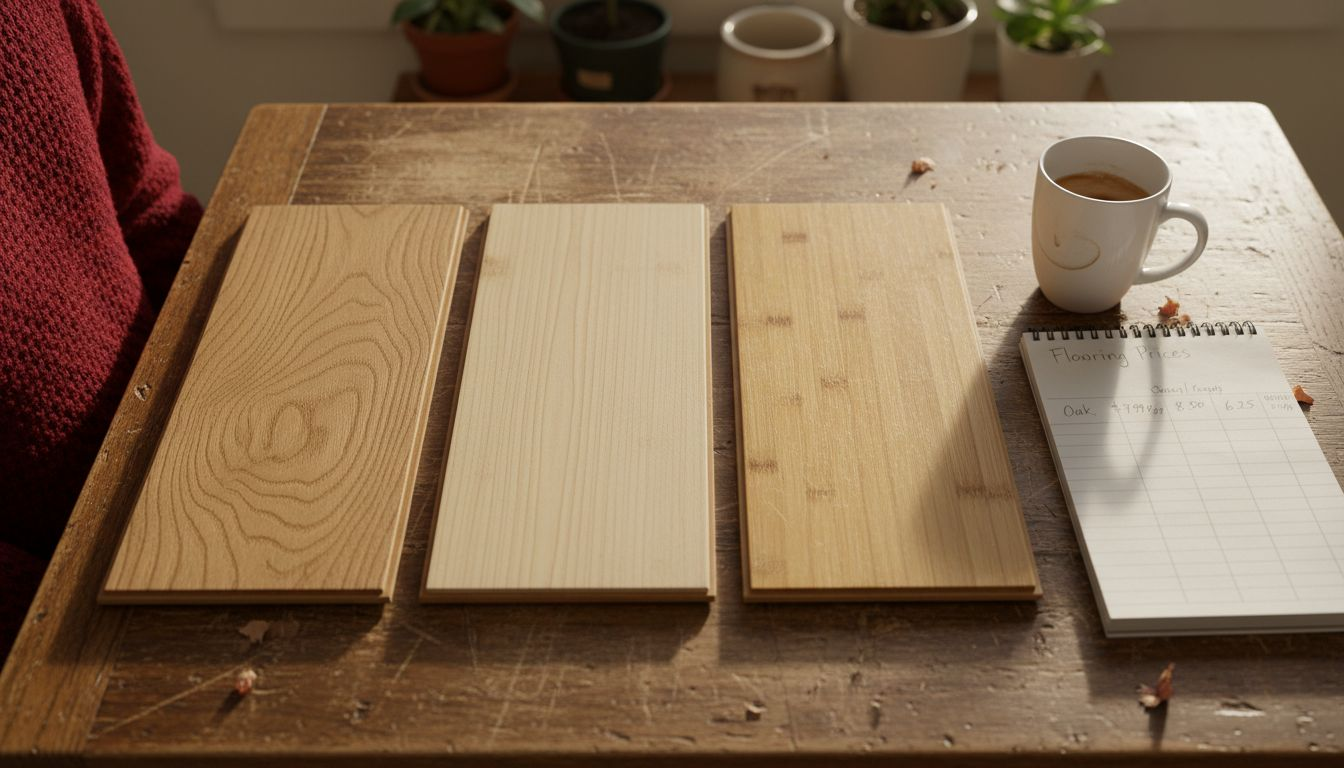
Oak costs $3-$5 per square foot and ranks among the most popular affordable hardwoods. With a Janka hardness rating around 1290-1360, oak withstands daily wear in kitchens, hallways, and living areas. Its prominent grain patterns and warm tones complement both traditional and contemporary interiors.
Bamboo presents an eco-friendly alternative at similar price points ($2.50-$5 per square foot). Though technically a grass, bamboo flooring achieves hardness ratings comparable to oak when strand-woven. Its rapid growth cycle and sustainable harvesting make it appealing for environmentally conscious homeowners.
Maple offers lighter coloring and fine grain patterns at $4-$6 per square foot. With Janka ratings around 1450, maple surpasses oak in hardness, making it suitable for high-traffic areas. Its subtle appearance pairs well with minimalist design schemes.
Finish types significantly impact wear resistance and maintenance needs. Polyurethane finishes enhance durability by up to 40%, extending floor lifespan and reducing refinishing frequency. This protection translates to lower long-term costs despite slightly higher initial finishing expenses.
Affordable species recommendations:
- Red oak: Classic appearance, widely available, easy to match
- White oak: Slightly harder than red, modern aesthetic
- Bamboo: Sustainable, unique grain, moisture resistant
- Ash: Light color, strong durability, distinctive grain
- Hickory: Extremely hard (Janka 1820), rustic character
Discover detailed comparisons of best wood species hardwood floors to match your style preferences with durability requirements and budget parameters.
Installation method and its impact on overall affordability
How you install hardwood flooring affects total project costs as much as material selection. Understanding installation options helps you optimize your budget while ensuring quality results.
Installation labor typically represents 30-40% of your total flooring investment. Choosing methods that reduce labor hours or eliminate specialized steps directly lowers your bottom line. Prefinished hardwood floors streamline installation by removing finishing steps entirely.
Prefinished floors reduce labor costs by 10-15% and enable 50% faster room usability compared to site-finished alternatives. Factory finishing ensures consistent quality and eliminates drying time, allowing immediate furniture placement and foot traffic.
Site-finished floors require sanding, staining, and multiple finish coats after installation. Each coat needs drying time, extending projects by 5-7 days. While site finishing allows custom color matching, the added labor and delayed usability increase total costs.
Floating floor installation, common with engineered hardwood, uses click-lock systems instead of nails or glue. This method cuts installation time and allows DIY-friendly approaches for handy homeowners willing to tackle the project themselves.
Nail-down installation provides traditional stability but requires subflooring preparation and specialized pneumatic tools. Labor costs run higher, but the method works well for solid hardwood in above-grade applications.
Installation cost factors:
- Prefinished versus site-finished finishing requirements
- Floating, nail-down, or glue-down method selection
- Subfloor condition and preparation needs
- Room size, layout complexity, and transition areas
- Contractor experience and regional labor rates
Explore various hardwood installation methods to understand which approach aligns with your budget, timeline, and skill level for potential DIY savings.
Summary comparison of affordable hardwood flooring options
Synthesizing all factors into a clear comparison helps you evaluate trade-offs and make informed decisions matching your specific priorities and constraints.
| Flooring Type | Cost Range (installed) | Janka Hardness | Lifespan | Installation Speed | Best For |
|---|---|---|---|---|---|
| Solid oak (prefinished) | $7-$12/sq ft | 1290-1360 | 25+ years | Moderate | Long-term investment, traditional homes |
| Engineered oak (prefinished) | $5-$9/sq ft | 1290-1360 | 10-15 years | Fast | Budget renovations, quick projects |
| Bamboo (strand-woven) | $4-$7/sq ft | 1300-1400 | 15-20 years | Fast | Eco-conscious buyers, modern aesthetics |
| Solid maple (site-finished) | $8-$13/sq ft | 1450 | 25+ years | Slow | Custom color needs, high-traffic areas |
| Engineered maple (prefinished) | $6-$10/sq ft | 1450 | 12-18 years | Fast | Light aesthetics, moderate budget |
Cost ranges include materials and professional installation. Prefinished surfaces consistently deliver faster project completion and lower labor expenses across all species and types.
Solid oak offers the highest lifespan potential but requires larger upfront investment. Its refinishing capability means you can restore appearance multiple times over decades, improving long-term value despite higher initial costs.
Engineered options provide immediate cost savings through lower material prices and faster installation. While lifespan runs shorter, the 10-15 year durability suits homeowners planning future renovations or uncertain about long-term residence.
Bamboo balances sustainability goals with competitive pricing and durability. Its unique appearance adds modern character while delivering performance comparable to traditional hardwoods.
Key decision factors:
- Budget ceiling determines solid versus engineered choice
- Timeline urgency favors prefinished and engineered options
- Long-term plans influence solid hardwood investment value
- Aesthetic preferences guide species selection
- Environmental priorities support bamboo consideration
Review comprehensive engineered hardwood investment benefits to understand how this option maximizes value for budget-conscious projects.
Choosing the right hardwood flooring for your Bay Area home: situational recommendations
Applying the framework to real scenarios helps you match flooring choices to your specific circumstances, priorities, and home characteristics.
Tight budgets benefit most from engineered oak with prefinished surfaces. This combination delivers authentic hardwood appearance at $5-$9 per square foot installed while minimizing labor costs through factory finishing. The 10-15 year lifespan provides excellent value for homeowners planning eventual upgrades.
Sustainability-focused buyers should consider bamboo flooring as their primary option. At $4-$7 per square foot installed, bamboo offers eco-friendly credentials without premium pricing. Its rapid renewability and comparable hardness to oak make it a responsible choice that doesn’t compromise durability.
High-traffic areas like entryways, hallways, and kitchens demand maximum durability. Solid oak or maple with polyurethane finish provides superior wear resistance and multiple refinishing opportunities. The higher upfront cost ($7-$12 per square foot) pays dividends through extended lifespan and maintained appearance.
Fast renovation timelines require prefinished engineered hardwood for immediate usability. Installation completes in 1-2 days for average rooms, and you can move furniture back immediately. This option works perfectly for occupied homes where room access matters.
Pro Tip: For mixed-use homes, install solid hardwood in public spaces (living room, dining room) for longevity and engineered in bedrooms for cost savings where traffic runs lighter.
Situation-specific recommendations:
- First-time buyers on budget: Engineered oak, prefinished, floating installation
- Eco-conscious homeowners: Bamboo, prefinished, with low-VOC finishes
- Family homes with kids/pets: Solid oak or hickory, durable polyurethane finish
- Quick flips or rentals: Engineered maple, prefinished, cost-minimized installation
- Luxury renovations: Solid exotic species, site-finished, custom staining
Find personalized hardwood flooring recommendations and explore detailed wood species for hardwood floors to refine your selection.
Discover the best affordable hardwood flooring options at Kapriz Hardwood Floors
Now that you understand how to evaluate hardwood flooring for affordability and quality, finding the right products locally makes your project succeed. Kapriz Hardwood Floors specializes in serving Bay Area homeowners with curated selections matching your budget and style needs.
Our showroom features affordable wood species hardwood floors including oak, bamboo, and maple in both solid and engineered formats. We stock prefinished options that reduce your installation costs and speed project completion, perfect for busy homeowners.
Expert consultation helps you navigate the selection process with confidence. We explain trade-offs between different species, types, and finishes so you make informed decisions matching your specific home conditions and budget constraints. Our team knows Bay Area homes and can recommend solutions proven in local climates.
Competitive pricing reflects our commitment to value without compromising quality. We source directly from trusted manufacturers, passing savings to you while maintaining the durability standards your investment deserves. Warranty support and local service ensure long-term satisfaction.
Visit Kapriz Hardwood Flooring Store to explore our inventory and discover how engineered hardwood benefits can transform your home affordably.
Frequently asked questions
What is the most affordable hardwood flooring option for Bay Area homes?
Engineered hardwood, particularly prefinished oak, delivers the best balance of cost and quality for budget-conscious homeowners. This option costs 20-30% less than solid hardwood while providing authentic appearance and adequate 10-15 year durability. Bamboo flooring offers another affordable alternative with sustainable credentials and competitive pricing around $4-$7 per square foot installed.
How does installation method affect overall hardwood flooring cost?
Installation typically accounts for 30-40% of your total project expenses, making method selection critical for affordability. Prefinished floors reduce labor and finishing costs by 10-15% while enabling 50% faster room usability compared to site-finished alternatives. Choosing floating installation with engineered planks further cuts labor time and eliminates specialized fastening requirements.
What wood species are best for durability on a budget?
Oak stands out as the most recommended species, balancing cost ($3-$5 per square foot), durability (Janka hardness 1290-1360), and timeless aesthetic appeal. Bamboo provides comparable hardness ratings with eco-friendly benefits at similar or lower price points. Both species handle high-traffic areas effectively while fitting modest budgets.
Are engineered hardwood floors a good investment for Bay Area homes?
Engineered hardwood offers excellent value for Bay Area homeowners prioritizing affordability and quick installation. The 20-30% cost savings compared to solid hardwood makes renovation projects more accessible, while 10-15 year lifespan provides adequate durability for most residential needs. Prefinished engineered options further reduce labor expenses and accelerate project completion, making them smart investments for budget-conscious home improvements.
Recommended
- Hardwood flooring trends in San Jose, Santa Clara and SF Bay area. | Kapriz Hardwood Flooring Store
- Flooring Articles | Kapriz Hardwood Flooring Store
- Best Prices: Kapriz Hardwood Flooring Store San Jose & San Francisco Area
- New Flooring Trends in San Francisco & Bay Area 2025-2026? | Kapriz Hardwood Flooring Store

