

Hardwood flooring pros and cons: Bay Area homeowner’s guide
Many Bay Area homeowners assume hardwood flooring is too risky for their climate. The fear makes sense: coastal fog, temperature swings, and variable indoor humidity are real concerns. But the truth is more nuanced. Hardwood adds real value and can last decades when you choose the right product and maintain it properly. This guide breaks down the genuine pros and cons of hardwood flooring, with specific advice for Bay Area conditions, so you can make a confident, informed decision.
Table of Contents
- What makes hardwood flooring so popular?
- The major pros of hardwood flooring
- What are the drawbacks of hardwood flooring?
- Engineered vs. solid hardwood: Key differences for Bay Area homes
- Maximizing the benefits and minimizing hardwood’s risks
- Explore your Bay Area hardwood flooring options
- Frequently asked questions
Key Takeaways
| Point | Details |
|---|---|
| Boosts home value | Hardwood flooring adds 3-5% or more to your Bay Area home’s resale value with strong ROI. |
| Longevity varies by type | Solid hardwood can last up to 100 years, while engineered typically lasts 20-40 years when cared for. |
| Moisture sensitivity | Bay Area humidity and microclimates make engineered hardwood a more stable choice than solid. |
| Invest in maintenance | Proper acclimation, humidity control, and refinishing are key to enjoying hardwood’s full benefits. |
| Cost considerations | Expect higher upfront costs and budget for periodic refinishing to keep floors looking new. |
What makes hardwood flooring so popular?
Hardwood has been a top flooring choice for centuries, and it is not hard to see why. The look is timeless. Whether your home is a modern Palo Alto condo or a classic Craftsman in Oakland, wood floors fit naturally into almost any design style. Neutral tones like white oak or natural maple let you repaint walls, swap furniture, and redecorate without ever worrying about your floors clashing.
Beyond looks, hardwood is genuinely durable. Solid hardwood lasts 30 to 100+ years with proper care, which is a lifespan that almost no other flooring material can match. It is also much easier to keep clean than carpet. No fibers trap dust, pet dander, or pollen, which makes hardwood a strong choice for allergy sufferers.
“Hardwood flooring consistently ranks as one of the top features homebuyers look for, and it signals quality the moment someone walks through the door.”
From a financial standpoint, hardwood is one of the best investments you can make in your home. It supports boosting home value in a meaningful way, and buyers in the Bay Area actively seek it out. When you are choosing hardwood floors, understanding the full picture helps you pick the right product from the start.
Key reasons hardwood stays popular:
- Timeless visual appeal across many design styles
- Exceptional durability and multi-generational lifespan
- Hypoallergenic surface that is easy to clean
- Strong return on investment at resale
- Widely recognized as a quality signal by homebuyers
Pro Tip: Stick with neutral wood tones like natural oak or light walnut. They give you maximum flexibility when you redecorate, and they appeal to the widest range of buyers if you ever sell.
While hardwood is popular for good reasons, understanding both its upsides and downsides is key before making a decision.
The major pros of hardwood flooring
Let’s get specific about what hardwood actually delivers. First, the financial return is real. Hardwood floors offer a 70 to 80% ROI and can add 3 to 5% to your home’s resale value. In a Bay Area market where home prices are high, that percentage translates to serious dollars.
Second, the lifespan is hard to beat. A well-maintained solid hardwood floor can outlast the mortgage, the renovation, and possibly the next owner’s tenure too. The hardwood flooring lifespan depends heavily on species, finish, and maintenance, but multiple generations of use is genuinely achievable.
“Hardwood floors are one of the most effective ways to boost resale value in any housing market.”
Third, cleaning is simple. A quick sweep and occasional damp mop handle most messes. No deep shampooing, no steam cleaning, no replacing stained sections. This also means fewer allergens building up in your living space, which matters a lot if anyone in your household has asthma or seasonal allergies.
Finally, refinishing gives hardwood a second life. When the surface starts to show wear, a professional can sand and refinish it, adding another 10 to 15 years of life. You can also change the stain color during refinishing, which is essentially a floor makeover without replacing anything.
Top pros at a glance:
- Adds measurable resale value
- Lasts multiple generations with proper care
- Easy to clean and allergy-friendly
- Refinishable to extend life and update appearance
- Pairs well with hardwood flooring solutions designed for local conditions
Pro Tip: Place felt pads under all furniture legs and sweep regularly. These two simple habits can dramatically extend the life of your floors and reduce the frequency of refinishing.
Of course, no material is perfect. Let’s look at the other side of the story.
What are the drawbacks of hardwood flooring?
Hardwood has real downsides, and Bay Area homeowners need to know them before committing. The biggest one is cost. Bay Area installation runs $8 to $15 per square foot, which is among the highest of any flooring type. That is before you factor in subfloor prep, furniture moving, or finishing work.
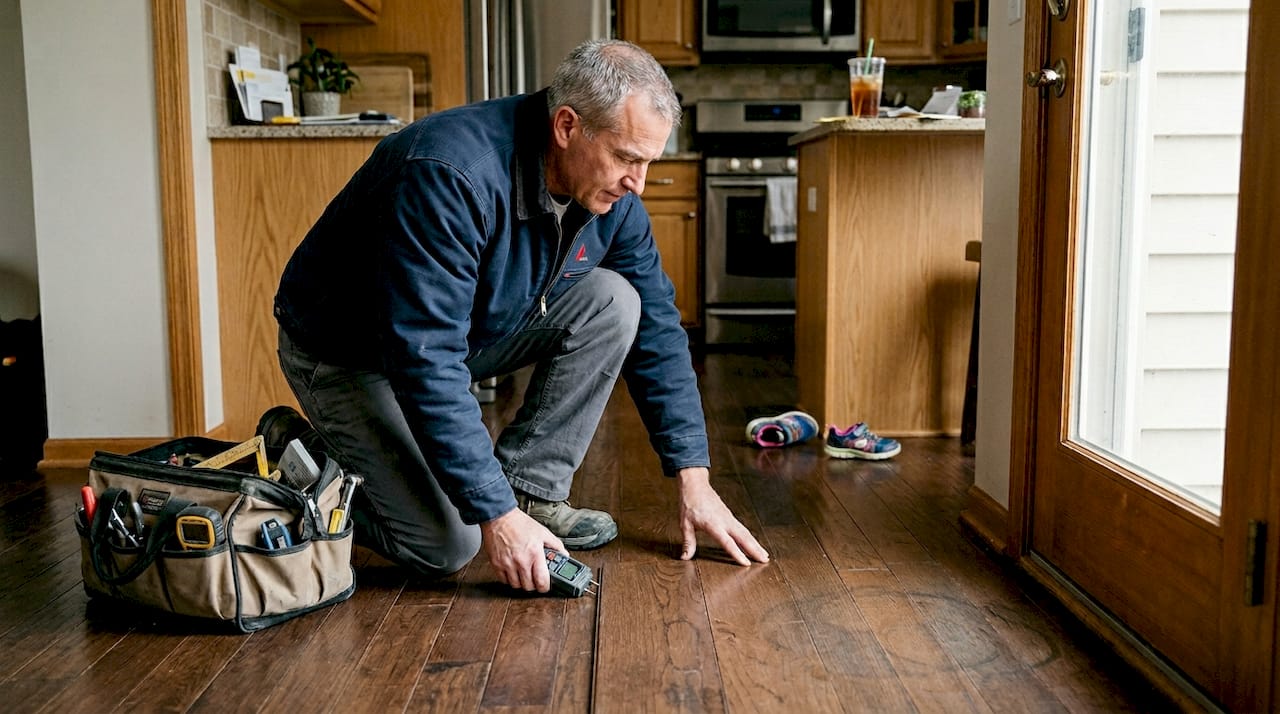
Moisture is the second major concern. The Bay Area’s humidity swings, especially in coastal neighborhoods like Daly City or Half Moon Bay, can cause solid hardwood to warp, cup, or gap. This is not a dealbreaker, but it does require planning and the right product choice.
Scratches and dents are also a reality, especially in homes with dogs or kids. Softer species like pine show damage quickly. Harder species like hickory hold up better, but no wood floor is completely scratch-proof. Noise and creaking can develop over time as the subfloor shifts or the wood expands and contracts with seasonal changes.
Key drawbacks to consider:
- High upfront installation cost in the Bay Area
- Moisture and humidity can cause warping without proper controls
- Scratches and dents from pets, furniture, and heavy foot traffic
- Creaking over time as wood and subfloor settle
- Refinishing needed every 10 to 20 years, costing $3 to $8 per square foot
If upfront cost is a concern, exploring affordable hardwood flooring options can help you get the look without overspending. And when the time comes, knowing your options for refinishing hardwood floors can save you from a full replacement. For a broader look at hardwood flooring maintenance costs, Consumer Reports offers solid benchmarks.
Pro Tip: Use a whole-home humidifier or dehumidifier to keep indoor humidity stable, and always let new wood planks acclimate in your home before installation. These two steps prevent most moisture-related problems.
Hardwood flooring also comes in different forms, and these cons may be mitigated depending on the product you choose.
Engineered vs. solid hardwood: Key differences for Bay Area homes
This is where many Bay Area homeowners get confused. Solid hardwood is exactly what it sounds like: a single thick plank of wood. It is beautiful and refinishable many times over, but it is also more vulnerable to humidity. Engineered hardwood uses a real wood veneer on top of layered plywood, which makes it more stable in Bay Area humidity and better suited for concrete subfloors.
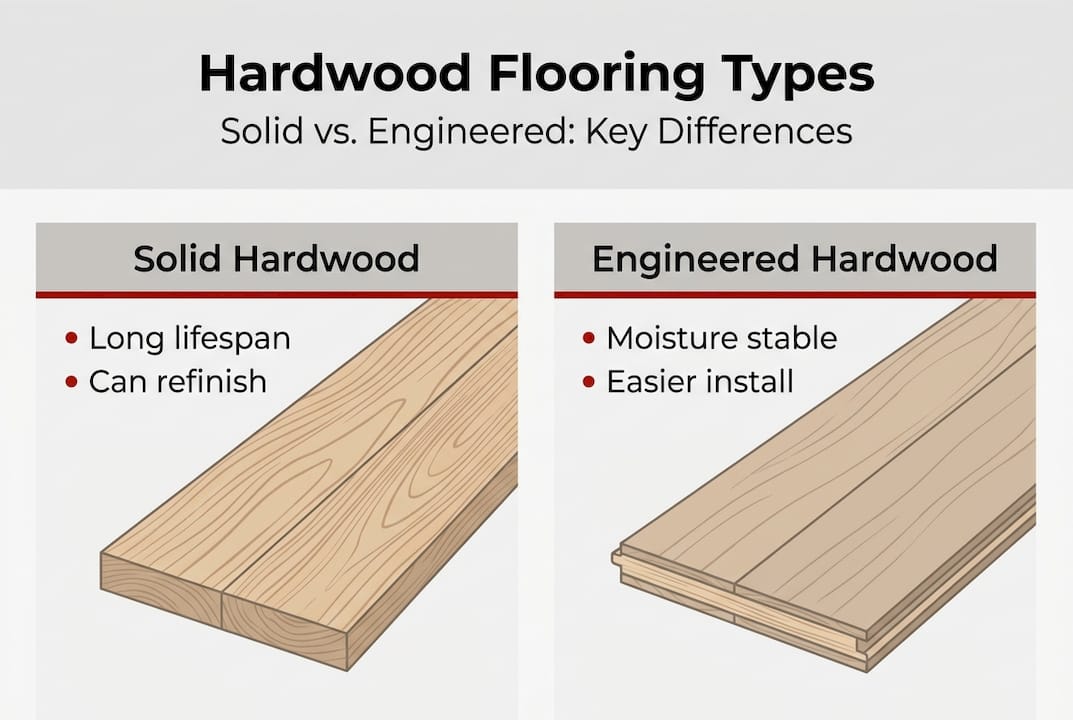
| Feature | Solid hardwood | Engineered hardwood |
|---|---|---|
| Lifespan | 50 to 100+ years | 20 to 40 years |
| Refinishing limit | 5 to 8 times | 1 to 3 times |
| Cost per sq ft | $8 to $15 installed | $6 to $12 installed |
| Humidity resistance | Lower | Higher |
| Best subfloor | Wood only | Wood or concrete |
For most Bay Area homes, especially those near the coast or with concrete slab foundations, engineered hardwood for Bay Area conditions is the smarter starting point. It gives you the real wood look and feel with better dimensional stability. If you want something that holds up long-term, look at durable hardwood flooring options built for local climate demands. You can also compare hardwood comparison data to see how products perform in lab tests.
When it comes to species, oak and hickory are the top picks for Bay Area homes. Both have Janka hardness ratings above 1300, which means they resist denting and wear far better than softer woods.
Pro Tip: In coastal or variable-climate areas of the Bay Area, engineered hardwood is often the smarter choice. You still get real wood on the surface, but with far less risk of warping or gapping over time.
Selecting the right hardwood is only part of success; maximizing its benefits in Bay Area homes requires careful installation and ongoing care.
Maximizing the benefits and minimizing hardwood’s risks
Once you have chosen your product, the way you install and maintain it makes all the difference. The single most important factor in Bay Area homes is moisture control. Maintain indoor humidity between 35 and 55% year-round using a humidifier in dry months and a dehumidifier during foggy, wet periods.
Before installation, let your new planks sit inside your home for at least 7 days. This acclimation period allows the wood to adjust to your home’s specific temperature and humidity, which dramatically reduces the risk of post-installation warping or gapping.
Recommended species for Bay Area homes:
| Species | Janka rating | Best for |
|---|---|---|
| White oak | 1360 | All Bay Area microclimates |
| Hickory | 1820 | High-traffic and coastal areas |
| Hard maple | 1450 | Inland, drier Bay Area zones |
| Red oak | 1290 | Moderate-traffic interior rooms |
For eco-friendly flooring options that also perform well in local conditions, some sustainable wood flooring species like white oak are both durable and responsibly sourced. Consumer Reports’ flooring lab tests can help you compare performance data before you buy.
Four steps to protect your Bay Area hardwood floors:
- Control moisture by keeping indoor humidity between 35 and 55%
- Acclimate new wood for at least 7 days before installation
- Choose stable species like white oak or hickory for your microclimate
- Maintain and refinish on schedule to prevent deep surface damage
Pro Tip: Schedule a professional floor inspection every 3 to 5 years. A trained eye can catch early signs of moisture damage, subfloor movement, or finish wear before they become expensive problems.
To sum it up, Bay Area homeowners can enjoy hardwood floors by understanding these pros, cons, and best practices.
Explore your Bay Area hardwood flooring options
At Kapriz Hardwood Floors, we work with Bay Area homeowners every day who have the same questions you just read through. The good news is that the right hardwood floor for your home absolutely exists, whether you are in a fog-heavy coastal neighborhood or a drier inland community.
We carry both solid and engineered hardwood floors from brands we trust and use ourselves. Our team can help you match the right species, grade, and finish to your specific subfloor, climate zone, and budget. If cost is a concern, our affordable hardwood flooring options deliver real quality without the premium price tag. Come talk to us, and we will help you find a floor you will love for decades.
Frequently asked questions
How long does hardwood flooring really last in Bay Area homes?
Solid hardwood lasts 50 to 100+ years, while engineered hardwood typically lasts 20 to 40 years when properly maintained and protected from moisture extremes.
Is real wood flooring a smart investment in terms of home value?
Yes. Hardwood flooring can add 3 to 5% to your home’s resale value and typically delivers a 70 to 80% return on investment, making it one of the stronger home improvement choices.
Does engineered hardwood resist Bay Area humidity better?
Engineered hardwood offers more moisture stability than solid wood in Bay Area conditions, making it a better fit for coastal areas, concrete subfloors, and homes with variable indoor humidity.
What are the real maintenance tasks for hardwood floors?
Regular vacuuming, occasional damp-mopping, keeping indoor humidity stable, and refinishing every 10 to 20 years are the core tasks that keep hardwood floors looking great and performing well.
Which wood species are best for high-traffic or coastal Bay Area homes?
White oak and hickory, both with Janka ratings above 1300, are the top picks for durability, scratch resistance, and humidity stability in Bay Area homes.


