

How to choose hardwood floors for your Bay Area home
Choosing the right hardwood flooring for your Bay Area home can feel overwhelming with so many options available. The region’s unique climate, characterized by mild winters and dry summers, combined with the prevalence of concrete slab foundations, creates specific challenges for hardwood floor installation. Many homeowners struggle to balance aesthetic preferences with practical concerns like moisture resistance, durability, and budget constraints. This comprehensive guide walks you through the essential factors to consider when selecting hardwood floors, from understanding your home’s specific needs to preparing for installation and maintaining your investment for years to come.
Table of Contents
- Key takeaways
- Understand your home’s flooring needs and Bay Area climate factors
- Prepare effectively: testing, acclimating, and choosing installation methods
- Choose the right hardwood type, style, and grade for your budget and tastes
- Ensure successful installation and maintenance for lasting beauty
- Explore quality hardwood flooring options at Kapriz Hardwood Flooring
- How to choose hardwood floors: frequently asked questions
Key Takeaways
| Point | Details |
|---|---|
| Engineered oak stability | Engineered European oak offers moisture resistance and dimensional stability well suited to Bay Area climate and concrete slab foundations. |
| Moisture testing essential | Test subfloor and hardwood moisture with appropriate methods and ensure readings meet manufacturer specs before installation, typically under 12 percent. |
| Solid versus engineered tradeoff | Weigh longevity, appearance, and moisture risk when choosing between solid and engineered hardwood for slab foundations and humid areas. |
| Professional installation advised | Hire professionals for glue down or nail down installations to minimize movement and warranty issues. |
| Budget style balance | Understand flooring grades and types to align cost with design goals while meeting Bay Area moisture and durability needs. |
Understand your home’s flooring needs and Bay Area climate factors
Your Bay Area home’s foundation type and local climate conditions play crucial roles in determining which hardwood flooring will perform best. Most homes in the region sit on concrete slabs rather than crawl spaces or basements, which creates unique moisture challenges. Concrete naturally retains moisture from the ground, and without proper barriers, this moisture can transfer to hardwood floors causing warping, cupping, or even mold growth.
The Bay Area’s climate presents another consideration. While the region enjoys mild temperatures year-round, humidity levels fluctuate between the wet winter months and dry summer season. These variations cause wood to expand and contract, which is why engineered hardwood floors in bay area climates have become increasingly popular. Engineered wood’s layered construction provides dimensional stability that solid hardwood cannot match in these conditions.
Before selecting your flooring, you need to assess several factors:
- Your home’s foundation type and current subfloor condition
- Existing moisture levels in concrete slabs or wooden subfloors
- Room-specific humidity variations, especially in kitchens and bathrooms
- Traffic patterns and usage intensity in different areas
- Your willingness to maintain consistent indoor humidity levels
Testing subfloor moisture levels is not optional. Concrete slabs can retain moisture for months or even years after construction. Avoid solid hardwood on concrete slabs or in high-humidity areas without proper barriers; engineered European oak offers better stability. This testing should happen during job preparation for hardwood floors to identify potential issues before they become expensive problems.
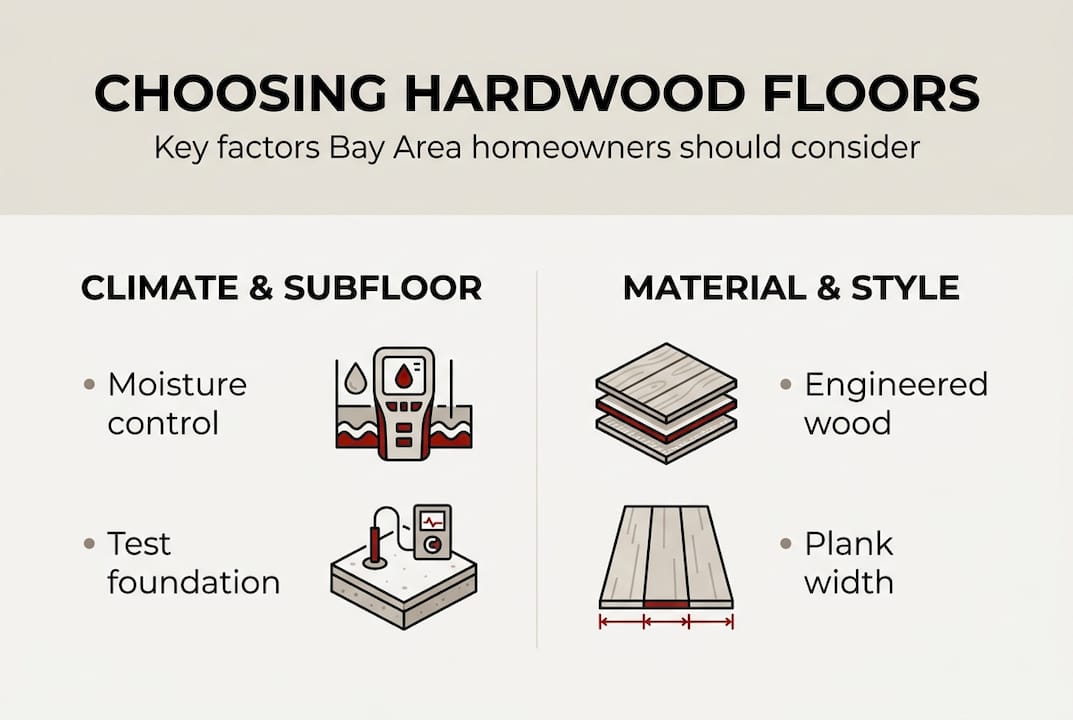
Pro Tip: Schedule moisture testing during the wettest part of the year to get the most accurate reading of your subfloor’s moisture levels.
European oak engineered flooring has emerged as the preferred choice for many Bay Area homeowners because it combines aesthetic appeal with practical performance. The engineered construction features a real hardwood veneer over multiple layers of plywood or high-density fiberboard, creating a product that resists moisture-related movement while maintaining the authentic look and feel of solid wood.
Prepare effectively: testing, acclimating, and choosing installation methods
Proper preparation separates successful hardwood floor installations from problematic ones. The preparation phase involves three critical steps: moisture testing, acclimation, and selecting the right installation method for your specific situation.
Moisture testing requires specialized equipment to measure the moisture content in both your subfloor and the hardwood flooring itself. For concrete slabs, calcium chloride tests or relative humidity probes provide accurate readings. Wooden subfloors need pin-type or pinless moisture meters. These readings must fall within manufacturer specifications before installation begins, typically below 12% for wood subfloors and below 4% for concrete slabs.
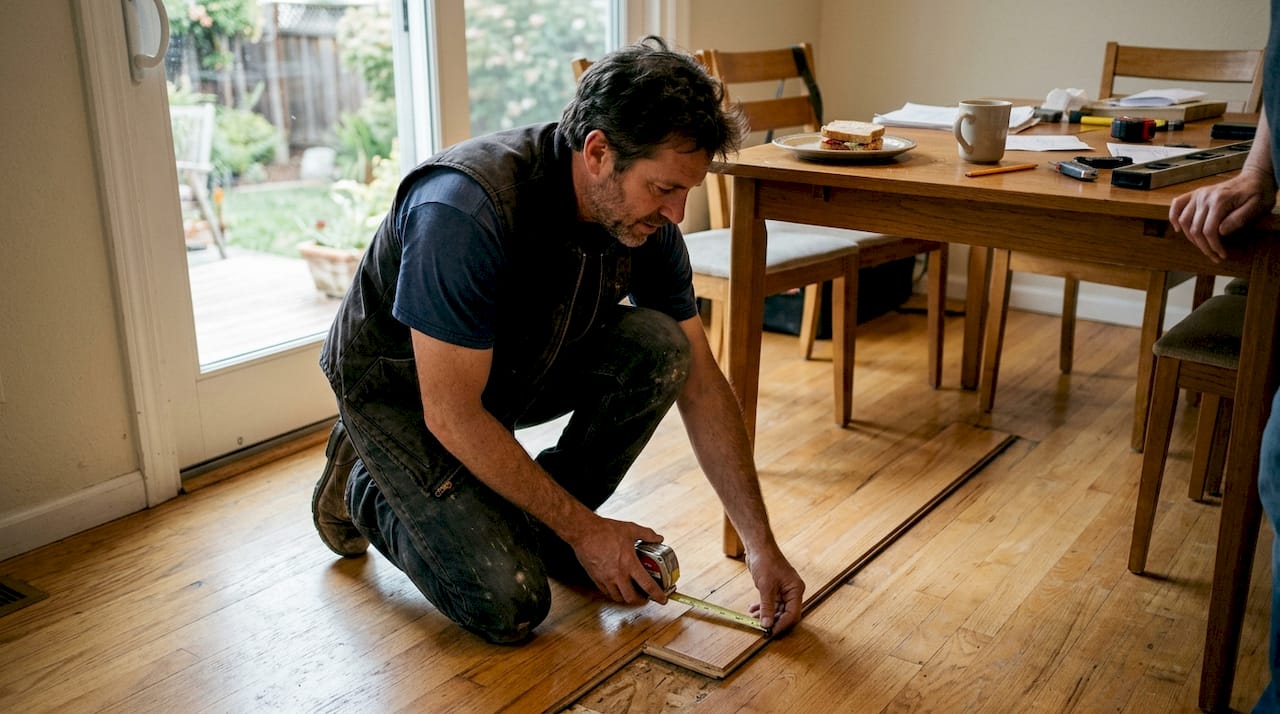
Acclimating hardwood flooring means allowing the material to adjust to your home’s temperature and humidity conditions before installation. DIY tip: Test subfloor moisture, acclimate properly; Pro install recommended for glue-down/nail-down to avoid squeaks/warping. This process prevents the wood from expanding or contracting dramatically after installation, which causes gaps, cupping, or buckling.
The acclimation process involves these steps:
- Deliver flooring to the installation site at least 72 hours before installation
- Store boxes in the room where installation will occur
- Maintain temperature between 60-80°F and relative humidity between 35-55%
- Open box ends to allow air circulation without removing protective wrapping
- Test moisture content daily until readings stabilize
Installation methods vary based on your subfloor type, flooring choice, and budget. The three primary methods are nail-down, glue-down, and floating installations. Nail-down works best over wooden subfloors and provides excellent stability for solid hardwood. Glue-down suits concrete slabs and engineered flooring, creating a permanent bond that minimizes movement. Floating installations, where planks click together without attachment to the subfloor, offer the easiest DIY option but may not provide the same long-term stability.
Pro Tip: Allow flooring to acclimate in the installation environment for at least 72 hours for best results.
Bay Area homes with concrete slabs typically require glue-down installation for engineered hardwood. This method creates a moisture barrier while securing the flooring permanently. Professional installers bring expertise in proper adhesive selection, trowel techniques, and timing that DIYers often lack. While acclimating hardwood flooring seems straightforward, mistakes in this phase cause more installation failures than any other factor.
Choosing between DIY and professional installation depends on several factors. Consider your experience level, available time, tool access, and the complexity of your space. Professional installation costs more upfront but includes warranties and expertise that protect your investment. Understanding hardwood floor installation methods helps you make an informed decision about whether to tackle the project yourself or hire experts.
Choose the right hardwood type, style, and grade for your budget and tastes
Selecting the perfect hardwood involves balancing aesthetic preferences with practical performance requirements and budget constraints. The fundamental choice between solid and engineered hardwood sets the foundation for all other decisions.
Solid hardwood consists of one piece of wood from top to bottom, typically 3/4 inch thick. This traditional option offers unmatched longevity because you can refinish it multiple times over its lifespan, potentially lasting 100 years or more. However, solid hardwood’s single-piece construction makes it vulnerable to moisture and temperature fluctuations. Contrasting views exist on solid versus engineered hardwood; consider longevity and Bay Area climate practicalities.
Engineered hardwood features a real hardwood veneer over multiple substrate layers. This construction provides superior dimensional stability, making it ideal for Bay Area homes with concrete slabs or variable humidity. While you can refinish engineered hardwood fewer times than solid wood, modern products with thicker wear layers still offer decades of service.
| Feature | Solid Hardwood | Engineered Hardwood |
|---|---|---|
| Durability | Excellent; multiple refinishing possible | Very good; limited refinishing based on wear layer |
| Moisture Resistance | Poor; warps easily on slabs | Excellent; stable in varying humidity |
| Installation Options | Nail-down only; requires wood subfloor | Nail, glue, or float; works on any subfloor |
| Maintenance | Regular cleaning; refinish every 10-15 years | Regular cleaning; refinish based on wear layer |
| Cost Range | $3-$12 per sq ft | $4-$15 per sq ft |
| Best For | Above-grade with wood subfloors | Concrete slabs and moisture-prone areas |
European oak floors advantages include natural durability, attractive grain patterns, and versatility across design styles. Oak’s hardness rating makes it resistant to dents and scratches, important for high-traffic Bay Area households. The wood accepts stains beautifully, allowing customization to match any interior design scheme.
Flooring grades significantly impact both appearance and price. Understanding hardwood flooring grades helps you make cost-effective choices:
- Clear grade features minimal knots and uniform color, commanding premium prices
- Select grade includes small knots and slight color variation, balancing beauty and value
- Common grade shows more knots and color diversity, offering character at lower cost
- Rustic grade embraces natural imperfections, providing unique aesthetics affordably
Pro Tip: Choose a grade and style that complements your home’s usage patterns and budget constraints.
Style considerations extend beyond wood species and grade. Plank width affects visual impact, with wider planks creating a more contemporary look while narrower planks suit traditional aesthetics. Finish options range from high-gloss to matte, with satin finishes offering the best balance of elegance and practicality for hiding minor scratches.
Color selection influences how your space feels. Light woods like natural oak make rooms appear larger and brighter, perfect for smaller Bay Area homes. Medium tones provide versatility and hide dirt well. Dark woods create drama and sophistication but show dust and scratches more readily.
For Bay Area homeowners seeking affordable hardwood flooring bay area homes, engineered options in select or common grades deliver excellent value without sacrificing quality. These choices provide authentic hardwood beauty with the stability needed for local conditions at price points that fit most budgets.
Ensure successful installation and maintenance for lasting beauty
Avoiding common installation mistakes protects your investment and ensures your hardwood floors perform beautifully for decades. Many problems that appear months or years after installation trace back to preparation and installation errors that were completely preventable.
The most frequent mistakes include skipping moisture testing, inadequate acclimation time, improper subfloor preparation, and incorrect installation techniques. Each of these errors can cause warping, cupping, squeaking, or premature wear. Professional install recommended for glue-down/nail-down to avoid squeaks/warping; acclimation prevents issues.
Professional installers bring value beyond technical skill. They understand how Bay Area climate conditions affect different wood species and installation methods. They know which adhesives work best on specific subfloor types and how to handle transitions between rooms and flooring materials. Their experience helps them identify potential problems before they occur, saving you from costly repairs later.
Professional installation is not just about laying boards correctly. It’s about understanding the complete system of subfloor, moisture barriers, adhesives, and environmental controls that work together to create a floor that performs flawlessly for decades.
Once your floors are installed, proper maintenance extends their lifespan and keeps them looking beautiful. Follow these essential maintenance steps:
- Sweep or vacuum daily to remove dirt and grit that can scratch the finish
- Clean weekly with hardwood-specific cleaners, never excessive water or harsh chemicals
- Maintain indoor humidity between 35-55% year-round using humidifiers or dehumidifiers
- Place rugs in high-traffic areas and entryways to reduce wear
- Trim pet nails regularly to prevent scratches
- Refinish floors every 10-15 years for solid hardwood or as needed for engineered products
- Address spills immediately to prevent water damage and staining
- Use furniture pads under all chair and table legs
Pro Tip: Use felt protectors on furniture legs to prevent scratches.
Humidity control deserves special attention in Bay Area homes. Winter heating systems dry indoor air, causing hardwood to contract and create gaps between boards. Summer moisture can cause expansion and cupping. Investing in a whole-house humidifier and dehumidifier system maintains consistent conditions that keep your floors stable.
Regular inspections help catch small problems before they become major issues. Look for signs of cupping, crowning, or gaps between boards. Check for loose boards or squeaks when walking across the floor. Notice any changes in finish appearance or areas of excessive wear. Addressing these issues promptly prevents them from spreading and requiring more extensive repairs.
For ideal hardwood flooring solutions bay area, combine quality materials with professional installation and diligent maintenance. This approach ensures your floors remain beautiful and functional throughout their lifespan. The stability of engineered hardwood floors in bay area climates makes them particularly low-maintenance while still delivering the authentic hardwood experience homeowners desire.
Explore quality hardwood flooring options at Kapriz Hardwood Flooring
Now that you understand how to choose and care for hardwood floors, finding the right products and professional support becomes your next priority. Kapriz Hardwood Flooring specializes in helping Bay Area homeowners navigate the selection process with confidence. Our showroom features an extensive range of hardwood floors from trusted manufacturers, allowing you to see and touch different species, grades, and finishes before making your decision.
We offer detailed guidance on hardwood flooring grades to help you understand how different options fit your budget and aesthetic goals. Our team takes time to assess your home’s specific conditions, including foundation type and moisture levels, to recommend products that will perform optimally in your space. Whether you’re interested in the stability of engineered hardwood floors in bay area climates or the timeless appeal of solid hardwood, we provide honest advice based on years of experience serving local homeowners.
How to choose hardwood floors: frequently asked questions
Why is engineered hardwood preferred in Bay Area homes?
Engineered hardwood’s layered construction provides superior dimensional stability compared to solid hardwood, making it ideal for Bay Area homes built on concrete slabs. The region’s humidity fluctuations between wet winters and dry summers cause solid hardwood to expand and contract significantly, leading to gaps, cupping, or warping. Engineered products resist these movements while delivering authentic hardwood beauty at comparable or lower costs.
How long should hardwood flooring acclimate before installation?
Hardwood flooring should acclimate for a minimum of 72 hours in the installation environment, though many manufacturers recommend 7-10 days for optimal results. During acclimation, maintain temperature between 60-80°F and relative humidity between 35-55%. Test the flooring’s moisture content daily until readings stabilize and match your subfloor levels within manufacturer specifications. Rushing acclimation causes more installation failures than any other single factor.
What is the best way to test for subfloor moisture?
For concrete slabs, calcium chloride tests or in-situ relative humidity probes provide the most accurate moisture readings. These tests measure moisture vapor emission rates or actual humidity levels within the concrete. For wooden subfloors, pin-type or pinless moisture meters work effectively. Always test multiple locations throughout the installation area, paying special attention to areas near exterior walls, plumbing, or previous water damage. Professional testing ensures accuracy and proper interpretation of results.
Can I install hardwood floors myself or should I hire a pro?
DIY installation is possible for experienced homeowners with proper tools and floating floor systems, but glue-down and nail-down methods benefit significantly from professional expertise. Bay Area homes with concrete slabs require precise adhesive application and moisture barrier installation that professionals handle more reliably. Consider your experience level, available time, and the complexity of your space. Professional installation includes warranties and reduces risks of squeaks, warping, and premature wear that often result from DIY mistakes.
Which hardwood flooring grade offers the best value for durability and aesthetics?
Select grade hardwood provides the best balance of value, durability, and aesthetics for most Bay Area homeowners. This grade includes minimal knots and slight color variation, delivering attractive floors at mid-range prices. While clear grade offers premium appearance, select grade performs identically in terms of structural integrity and longevity. Common and rustic grades cost less and provide unique character, making them excellent choices for homeowners who appreciate natural wood variations and want to maximize their budget.
Recommended
- What Are the Ideal Hardwood Flooring Solutions for Bay Area Homes? | Kapriz Hardwood Flooring Store
- Which Durable Hardwood Flooring Is Perfect For Your Bay Area Home? | Kapriz Hardwood Flooring Store
- Affordable hardwood flooring for Bay Area homes 2026 | Kapriz Hardwood Flooring Store
- Choose the perfect hardwood floor color for your home | Kapriz Hardwood Flooring Store


