

How to choose durable hardwood flooring for the Bay Area
Not all hardwood floors are created equal, and Bay Area homeowners often learn this the hard way after a few years of coastal humidity, foggy winters, and busy households. The species you pick, the construction type, and how well you maintain the floor all shape how long it actually lasts. Durability varies by wood species and construction, which means two floors that look identical in the showroom can perform very differently in your home. This guide breaks down everything you need to know to make a smart, lasting choice.
Table of Contents
- Understanding what makes hardwood flooring durable
- Comparing popular hardwood flooring species for the Bay Area
- Solid vs engineered hardwood: Which lasts longer?
- Practical steps for maximizing hardwood durability
- Our take: What most homeowners miss about hardwood durability
- Explore durable hardwood flooring options with Kapriz
- Frequently asked questions
Key Takeaways
| Point | Details |
|---|---|
| Choose the right species | Opt for hardwood with a Janka rating above 1300 for durability and affordability. |
| Engineered vs solid | Engineered hardwood is best for Bay Area humidity, while solid allows more refinishing cycles. |
| Maintenance matters | Regular care and proper refinishing ensure your hardwood floors last longer. |
| Lifestyle fit is key | Match hardwood options to your home’s traffic, pets, and climate for lasting results. |
Understanding what makes hardwood flooring durable
Before evaluating your options, it’s essential to understand what really makes hardwood flooring stand up to daily life. Durability is not a single number on a box. It’s the result of several factors working together, and knowing each one gives you real power when you shop.
Janka hardness is the most commonly cited measure. It tells you how much force is needed to embed a steel ball halfway into a plank. The higher the number, the harder the wood. For Bay Area durable flooring, species with a Janka rating above 1300 like White Oak and Hickory are strongly recommended. They resist dents from furniture legs, pet claws, and dropped items far better than softer species like Pine or Cherry.
Beyond hardness, construction type plays a huge role. Here’s a quick breakdown of what matters most:
- Species density: Denser grain means fewer dents and scratches over time.
- Wear layer thickness: On engineered planks, a thicker top layer allows more refinishing cycles.
- Finish quality: Aluminum oxide finishes last significantly longer than basic polyurethane.
- Plank stability: Wider planks can cup or gap more in humid conditions.
- Refinishing potential: Solid hardwood can be sanded and refinished multiple times; engineered has limits.
The choice between solid and engineered vs solid hardwood is especially important in the Bay Area. Our coastal climate brings humidity swings that cause wood to expand and contract. Solid hardwood, while refinishable, is more vulnerable to this movement. Engineered hardwood uses a cross-layered plywood core that resists warping much better.
“Think of engineered hardwood as a solid wood floor that’s been engineered to handle real-world conditions. You’re not sacrificing beauty. You’re adding stability.”
Pro Tip: Before buying, ask for the Janka rating and the wear layer thickness. If a retailer can’t give you both numbers, keep shopping.
Humidity control is the hidden variable most buyers overlook. Even the hardest species will buckle if your subfloor is damp or your home’s relative humidity swings wildly. Keeping indoor humidity between 35% and 55% year-round is one of the most effective things you can do for any hardwood floor.
Comparing popular hardwood flooring species for the Bay Area
Now that you know what affects durability, let’s dig into the most popular hardwood options for Bay Area homes. Each species brings a different mix of hardness, price, and real-world performance.
| Species | Janka rating | Price range (per sq ft) | Best for |
|---|---|---|---|
| White Oak | 1360 | $4 to $8 | General use, moisture-prone rooms |
| Maple | 1450 | $3 to $7 | Moderate traffic, clean aesthetics |
| Hickory | 1820 | $5 to $10 | Pets, heavy traffic, active families |
| Ipe | 3680 | $8 to $15 | Extreme durability, premium installs |
White Oak is arguably the best all-around choice for Bay Area homes. It sits above the 1300 Janka threshold, handles moisture better than Red Oak, and comes in a wide range of stain colors. It’s also priced reasonably, making it a top pick for homeowners who want quality without overpaying.
Maple is harder than Oak and gives a clean, modern look. It’s a great fit for kitchens and open-plan living areas with moderate foot traffic. The trade-off is that Maple can show scratches more visibly because of its light, uniform grain.
Hickory is the go-to for homes with dogs, kids, or heavy daily traffic. High-traffic and pet homes need Janka above 1800, and Hickory clears that bar comfortably. It has a bold, rustic grain pattern that also does a good job of hiding minor scuffs. If you’re looking at pet-friendly flooring, Hickory is almost always our first recommendation.
Ipe is in a category of its own. With a Janka rating near 3680, it’s nearly indestructible. It’s also expensive and harder to work with during installation. Most Bay Area homeowners use it for premium projects or outdoor-adjacent spaces where extreme durability is non-negotiable.
Here are a few quick rules of thumb when choosing your species:
- Pets or kids in the house? Go Hickory or harder.
- Prefer a lighter, contemporary look? Maple or White Oak.
- Budget-conscious but want durability? White Oak is your best value.
- Want the most ideal Bay Area hardwood for resale value? White Oak and Hickory both perform well.
Pro Tip: Darker stains on lighter species like Maple can show scratches as light streaks. If you love dark floors, choose a naturally darker species like Walnut or use a hand-scraped texture to camouflage wear.
Solid vs engineered hardwood: Which lasts longer?
Choosing the right wood species is only half the equation. The construction type you select can make or break long-term durability, especially in a climate like ours.
Engineered hardwood is preferable for humidity stability, while solid hardwood allows more refinishing cycles over its lifetime. Neither is universally better. The right answer depends on where you’re installing and how you plan to maintain the floor.
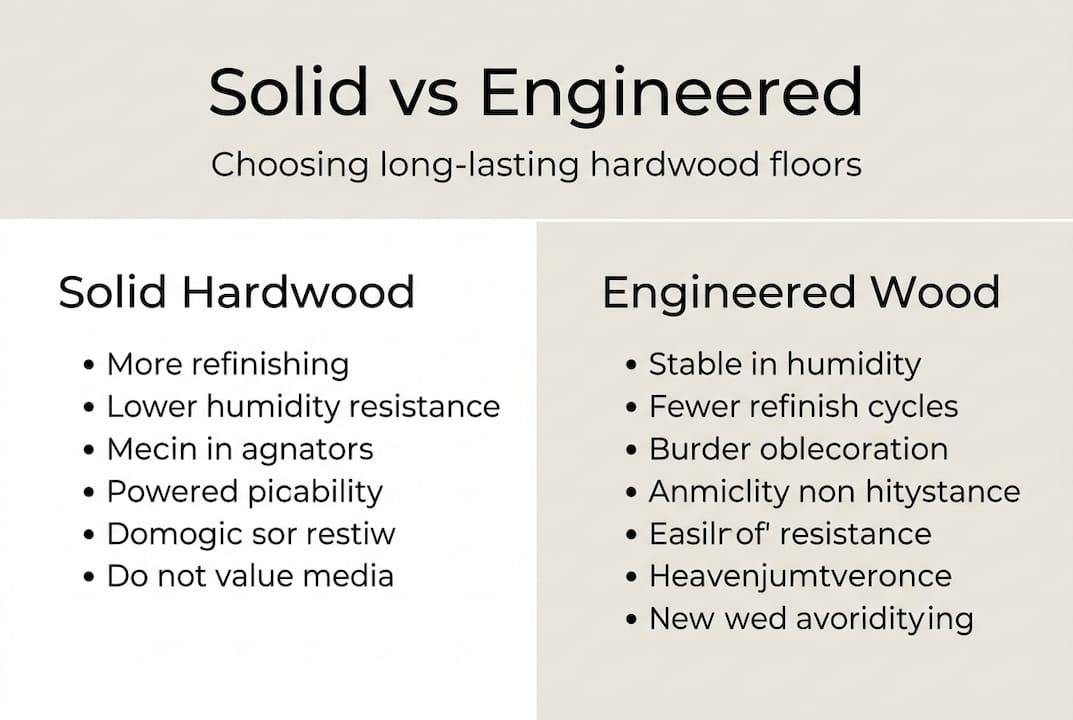
| Feature | Solid hardwood | Engineered hardwood |
|---|---|---|
| Humidity resistance | Lower | Higher |
| Refinishing cycles | 5 to 8 times | 1 to 3 times |
| Installation flexibility | Nail-down only | Float, glue, or nail |
| Lifespan (well-maintained) | 80 to 100 years | 25 to 50 years |
| Cost | Moderate to high | Moderate |
For most Bay Area homes, engineered hardwood is the smarter starting point. The reason is simple: our coastal fog, marine air, and seasonal humidity swings put constant pressure on wood. A solid plank that’s nailed to a subfloor with no moisture barrier can start cupping within a year. Engineered construction, with its cross-layered plywood core, resists that movement much better. You can explore solid vs engineered details to see side-by-side comparisons for specific rooms.
Here’s how to think through the decision step by step:
- Assess your subfloor. Concrete slabs or below-grade areas almost always require engineered hardwood.
- Check your home’s humidity patterns. If you run AC or heat heavily, humidity swings are larger.
- Decide how long you plan to stay. If you’re in for 30 or more years, solid’s refinishing advantage pays off.
- Set your budget. Quality affordable engineered flooring can deliver decades of performance at a lower upfront cost.
- Factor in installation complexity. Engineered flooring is more forgiving for DIY installs.
“The floors that fail early in Bay Area homes almost always have one thing in common: the wrong construction type for the moisture conditions in that specific room.”
If you do go with solid hardwood, invest in a quality moisture barrier and make sure your installer checks the subfloor moisture content before laying a single plank. That one step prevents the most common and costly failures.
Practical steps for maximizing hardwood durability
Even after you’ve selected the best species and construction, how you care for your floors determines their real-world lifespan. A Hickory floor that’s never cleaned properly will look worse in five years than a White Oak floor that’s been well maintained.
Start with smart shopping decisions:
- Prioritize Janka ratings above 1300 for any room with regular foot traffic.
- Choose engineered with a wear layer of at least 3mm if you want to refinish it once or twice.
- Read the warranty carefully. A strong structural warranty (25 years or more) signals real quality.
- Buy from a source that knows Bay Area conditions, not a big-box store with generic national inventory.
- Ask about finish hardness. Aluminum oxide finishes are far more scratch-resistant than standard polyurethane.
Once your floors are installed, a consistent care routine makes a huge difference:
- Sweep or vacuum with a soft-bristle attachment at least twice a week.
- Use a pH-neutral hardwood cleaner. Avoid steam mops entirely.
- Place felt pads under all furniture legs and replace them every six months.
- Use entry mats at every door to catch grit before it scratches the surface.
- Keep blinds or curtains drawn during peak sun hours to prevent UV fading.
Humidity control is just as important after installation as before. A whole-home humidifier or dehumidifier keeps your indoor air in the 35% to 55% range that hardwood needs. This single investment can add years to your floor’s life.
Pro Tip: Don’t wait until your floors look bad to refinish them. Refinishing extends hardwood life most effectively when done proactively, before the finish wears all the way through to bare wood. Catching it early means a lighter sand and a faster job. You can also upgrade hardwood affordably with spot refinishing between full sanding cycles. For homeowners interested in long-term value, sustainable wood flooring options also tend to be denser and more resilient by nature.
Our take: What most homeowners miss about hardwood durability
After years of working with Bay Area homeowners, here’s the pattern we see most often: people obsess over the Janka score and completely ignore everything else. They buy the hardest wood they can afford, skip the moisture barrier, install it over a questionable subfloor, and then wonder why it’s cupping by year two.
The uncomfortable truth is that installation quality and moisture management matter more than species hardness in most real-world failures. A well-installed White Oak floor on a properly prepared subfloor will outlast a poorly installed Hickory floor every single time.
Lifestyle fit is another factor that product specs can’t capture. A family with three dogs and muddy boots needs a different floor than a couple in a quiet condo. Matching the floor to how you actually live, not how you wish you lived, is the smartest durability decision you can make. Our Bay Area flooring experts can help you think through exactly that before you spend a dollar.
Stop chasing the highest Janka number. Start asking whether the floor fits your home, your climate, and your life.
Explore durable hardwood flooring options with Kapriz
Ready to take the next step? Finding the right hardwood floor is easier when you work with people who know Bay Area homes and stock products they’d put in their own houses.
At Kapriz Hardwood Floors, we carry a curated selection of durable options for Bay Area homes across every budget, from affordable engineered White Oak to premium Hickory and beyond. Every product we carry meets our own quality standards. Nothing gets on our floor if we wouldn’t use it ourselves. Browse our full hardwood floor collection and get personalized recommendations from our team. We’re here to help you find a floor that lasts, looks great, and fits your budget without compromise.
Frequently asked questions
Which hardwood flooring species last longest in high-traffic Bay Area homes?
Hickory and Ipe, with Janka ratings above 1800, are especially durable for high-traffic areas and homes with pets.
Is engineered hardwood better for Bay Area humidity than solid hardwood?
Yes. Engineered hardwood offers greater stability in humid conditions, making it the preferred choice for most Bay Area rooms.
How often can hardwood floors be refinished and does this impact durability?
Solid hardwood can be refinished five to eight times over its life, significantly extending its lifespan compared to engineered options.
What maintenance routine helps hardwood floors last longer?
Regular sweeping, pH-neutral cleaning, humidity control, and proactive refinishing before the finish wears through are the most effective habits for long-lasting hardwood floors.
Recommended
- Which Durable Hardwood Flooring Is Perfect For Your Bay Area Home? | Kapriz Hardwood Flooring Store
- How to choose hardwood floors for your Bay Area home | Kapriz Hardwood Flooring Store
- What Are the Ideal Hardwood Flooring Solutions for Bay Area Homes? | Kapriz Hardwood Flooring Store
- Sustainable wood flooring types for Bay Area homes 2026 | Kapriz Hardwood Flooring Store
