

Hardwood Flooring for Rentals: Value, Durability, and ROI
TL;DR:
- Hardwood floors last over 30 years with proper refinishing, reducing replacement costs.
- Hardwood enhances tenant appeal, is easy to clean, and speeds up turnover.
- Long-term financial benefits stem from durability, longevity, and property differentiation rather than rent premiums.
Most Bay Area property owners assume carpet is the safe, affordable choice for rentals. It’s soft, it’s familiar, and it seems easy to replace. But carpet traps allergens, absorbs odors from pets and cooking, and often needs full replacement after just one or two tenants. Hardwood flooring flips that equation entirely. It cleans in minutes, lasts decades with proper care, and signals quality to the kind of tenants who treat a property well. If you manage one unit or twenty, understanding what hardwood actually delivers for rental properties can change how you think about your flooring budget.
Table of Contents
- What makes hardwood a standout choice for rental properties?
- Comparing hardwood to other flooring options for rentals
- ROI, rent premium, and empirical results: What can landlords expect?
- Choosing, maintaining, and refinishing hardwood for rentals
- Our take: What most property owners miss about hardwood in rentals
- Explore hardwood flooring solutions for rental properties
- Frequently asked questions
Key Takeaways
| Point | Details |
|---|---|
| Longevity outperforms carpet | Hardwood’s 30+ year service life makes it a durable investment for rental properties. |
| Tenant appeal boosts marketability | Hardwood’s upscale look and hypoallergenic qualities attract quality tenants and faster leasing. |
| Maintenance is simple | Quick cleaning, refinishing options, and odor resistance make hardwood easy between tenant turnarounds. |
| ROI backed by longevity | Even without hard rent data, hardwood pays off in property value and lower vacancy rates. |
| Careful selection is key | Choosing the right wood type, finish, and installation methods ensures long-term performance. |
What makes hardwood a standout choice for rental properties?
Walk into any well-maintained Bay Area rental and you’ll notice something immediately: the flooring sets the tone for everything else. Hardwood floors communicate quality before a tenant even opens a closet. That first impression matters more than most landlords realize, and it shapes not just who applies, but how much they’re willing to pay.
Durability that outlasts multiple tenancies
Hardwood is one of the few flooring materials that genuinely improves with age when maintained correctly. The hardwood lifespan in Bay Area conditions can easily reach 30 years or more, compared to carpet which typically needs replacement every 5 to 8 years. That’s a fundamental difference in how you plan your renovation budget. With carpet, you’re scheduling replacement as a regular cost. With hardwood, you’re scheduling refinishing, which is far cheaper and far less disruptive.
Tenant appeal and allergen reduction
Hardwood is easy to clean and hypoallergenic, unlike carpet which traps dust mites, pet dander, and mold spores. For tenants with allergies or young children, this is a genuine quality-of-life difference. In the Bay Area’s competitive rental market, where tenants have options, this distinction can move your listing to the top of someone’s shortlist.
The tenant appeal goes beyond health. Hardwood looks upscale. It photographs well for listings. It pairs with any furniture style, from minimalist Scandinavian to warm mid-century modern. This flexibility means your unit appeals to a broader pool of applicants.
Faster turnover between tenants
Cleaning hardwood between tenants takes a fraction of the time carpet requires. There’s no deep shampooing, no waiting for fibers to dry, no lingering odor from the previous occupant’s cooking or pets. A good sweep and mop, and the floor looks fresh. That speed matters when you’re trying to minimize vacancy days.
Here’s a quick summary of hardwood’s core advantages for rental properties:
- Lasts 30 or more years with refinishing
- Hypoallergenic and easy to sanitize between tenants
- Photographs well for listings, attracting more applicants
- Resistant to odors unlike carpet
- Refinishing restores appearance without full replacement
- Compatible with the Bay Area hardwood durability guide recommendations for high-traffic use
Pro Tip: Choose a satin or matte finish rather than high-gloss for rental units. Matte finishes hide everyday scuffs and scratches far better, which means the floor looks good longer without needing refinishing as frequently.
Comparing hardwood to other flooring options for rentals
Now that we know hardwood’s core strengths, it’s vital to see how it stacks up against common alternatives. Property owners in the Bay Area typically weigh hardwood against carpet, laminate, and luxury vinyl plank (LVP). Each has a place, but the long-term math often favors hardwood.
The carpet comparison
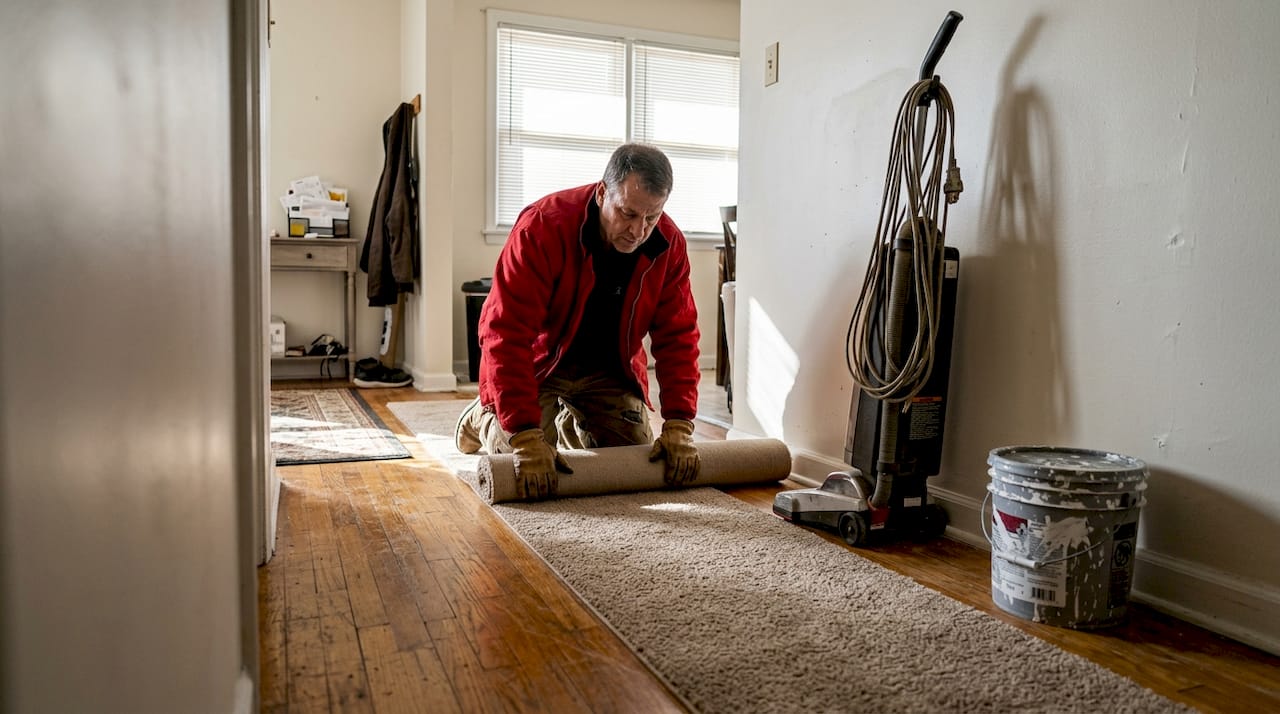
Carpet costs less upfront, typically $3 to $6 per square foot installed, compared to hardwood at $8 to $15 or more. But carpet in a rental unit rarely survives more than two tenants without needing replacement. Factor in cleaning costs, odor treatments, and the occasional full replacement after a difficult tenancy, and the lifetime cost of carpet often exceeds hardwood. You can learn more about the carpet vs tile pros and cons to see how surface materials compare in real-world rental settings.
Laminate and vinyl
Laminate looks like hardwood but cannot be refinished. Once it’s scratched or swollen from moisture, it needs replacement. LVP is more water-resistant and durable than laminate, but it still lacks the refinishing advantage that makes hardwood a genuinely long-term investment. For a detailed breakdown, the vinyl vs laminate vs hardwood comparison covers the differences in depth. If you’re deciding between budget-friendly alternatives, the laminate vs LVP comparison is also worth reading before you commit.
What the numbers show
Hardwood lasts 30 or more years when refinished multiple times, and it delivers ROI through longevity and rent premium rather than a single transaction. That’s a fundamentally different financial model than carpet or laminate, which are replacement-cost assets.
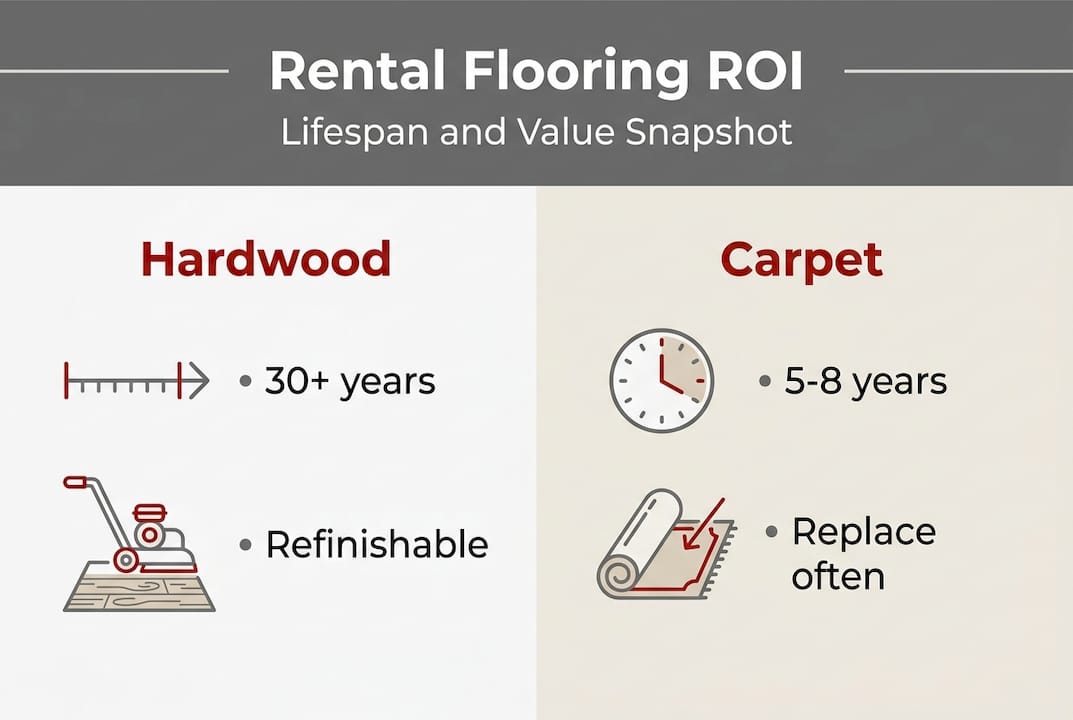
Here’s how the main flooring options compare for rental properties:
| Flooring type | Average lifespan | Refinishable | Upfront cost (per sq ft) | Tenant appeal | Odor resistance |
|---|---|---|---|---|---|
| Hardwood | 30+ years | Yes | $8 to $15 | Very high | Excellent |
| Carpet | 5 to 8 years | No | $3 to $6 | Moderate | Poor |
| Laminate | 10 to 15 years | No | $4 to $8 | Moderate | Good |
| Luxury vinyl plank | 15 to 25 years | No | $5 to $10 | High | Good |
“Upgrading flooring to hardwood is one of the most consistent ways to differentiate a rental unit in a competitive market. Tenants notice it immediately and associate it with a higher standard of property management.” — Property management consultant, Bay Area
The numbered list below captures the key reasons hardwood outperforms alternatives over a full rental lifecycle:
- Refinishing resets the clock. You can sand and refinish hardwood multiple times, restoring it to near-new condition without full replacement.
- No replacement cycle. Carpet forces a replacement budget every tenant cycle. Hardwood doesn’t.
- Better photography. Listings with hardwood floors consistently generate more inquiries because the units photograph with more warmth and quality.
- Tenant self-selection. Quality tenants who care for a property are more drawn to units with hardwood floors, which reduces wear and damage over time.
ROI, rent premium, and empirical results: What can landlords expect?
Understanding the comparisons, let’s look at the financial and market impacts for rental property owners. This is where many landlords get confused because the marketing around hardwood flooring can be enthusiastic without being precise.
What the evidence actually says
There is no strong empirical data proving a specific rent uplift from hardwood floors alone. Many sources claim higher rents and faster leasing, and those claims are consistent across property managers and landlords, but they’re largely qualitative. Controlled studies isolating hardwood as the single variable driving rent increases are rare.
That said, the qualitative consensus is hard to dismiss. Property managers across the Bay Area consistently report that units with hardwood floors lease faster and attract more applicants. In a market where a unit sitting vacant for two extra weeks costs a landlord real money, that leasing speed has direct financial value.
Where the real ROI lives
The strongest financial case for hardwood isn’t a rent premium. It’s longevity. Hardwood’s 30-plus-year lifespan means you’re not replacing flooring every few years. Over a 20-year ownership period, a landlord with carpet might replace it three or four times. A landlord with hardwood refinishes once or twice. The cost difference is significant.
Here’s a data snapshot to put the ROI picture in perspective:
| Metric | Hardwood | Carpet |
|---|---|---|
| Average lifespan | 30+ years | 5 to 8 years |
| Refinishing cost (per sq ft) | $3 to $5 | N/A |
| Replacement cost (per sq ft) | $8 to $15 | $3 to $6 |
| Replacements over 30 years | 0 to 1 | 3 to 5 |
| Reported rent premium | 1% to 5% (qualitative) | Baseline |
Hardwood also supports boosting property value when you eventually sell. Buyers respond to hardwood the same way tenants do. It signals quality and reduces their concern about immediate renovation costs. The hardwood resale advantage over vinyl and other alternatives is real, even if it’s difficult to pin to a single dollar figure.
Vacancy reduction as a financial metric
One underappreciated ROI factor is vacancy reduction. If hardwood helps your unit lease two weeks faster than a comparable carpet unit, and your monthly rent is $3,000, that’s $1,500 in recovered income per vacancy cycle. Over ten years with multiple tenant transitions, that adds up to a meaningful figure that rarely appears in flooring ROI calculations.
Choosing, maintaining, and refinishing hardwood for rentals
With ROI clarified, let’s walk through how to maximize hardwood’s longevity and ease for rentals. The right choices at installation make a significant difference in how the floor performs over years of tenant use.
Step 1: Choose the right species and grade
Not all hardwood is equally suited for rental use. Harder species like white oak, hickory, and maple resist denting and scratching better than softer options like pine or cherry. For rental properties, white oak is a particularly strong choice because it’s hard, widely available, and accepts stain well. The best hardwood for multifamily settings covers species selection in detail for high-traffic environments.
Step 2: Select a durable finish
Aluminum oxide finishes are the most durable option for rental properties. They resist scratching and scuffing significantly better than oil-based polyurethane. Matte and satin sheens hide daily wear better than high-gloss finishes, which show every footprint and scratch.
Step 3: Install correctly from the start
Poor installation creates problems that no amount of maintenance can fix. Gaps, squeaks, and uneven boards often trace back to installation shortcuts. Review hardwood installation tips before your project starts to avoid common mistakes that reduce floor lifespan.
Step 4: Set tenant expectations in writing
Include a flooring care section in your lease. Specify that tenants should use felt pads under furniture, avoid dragging heavy items, and clean with appropriate products. This simple step reduces damage and gives you documentation if a security deposit dispute arises.
Step 5: Schedule refinishing proactively
Refinishing hardwood floors at the right time, before damage becomes severe, costs far less than waiting until the wood is deeply scratched or stained. A good rule of thumb is to assess the floor every five to seven years and refinish when surface scratches become noticeable. The 30-plus-year lifespan of hardwood depends directly on this proactive approach.
Pro Tip: When a tenant moves out, do a quick floor assessment before returning the security deposit. Light scratches are normal wear and tear, but deep gouges or stains may justify a partial deduction. Documenting the floor condition at move-in and move-out protects you legally and financially.
Maintenance between tenancies
Between tenants, a thorough clean and a fresh coat of finish (if needed) can make floors look nearly new. This is far less disruptive and expensive than ripping out carpet and installing new flooring. The turnaround time is typically one to three days, minimizing vacancy.
Our take: What most property owners miss about hardwood in rentals
Here’s where we’ll be direct with you, because we’ve seen a lot of landlords make flooring decisions based on inflated expectations.
The rent premium story gets oversold. Many guides promise that hardwood will automatically command 10% or 15% higher rent. The reality is more nuanced. As the data shows, there’s no strong empirical evidence for a specific rent uplift tied to hardwood alone. The Bay Area rental market is driven by location, unit size, and amenities as a package. Hardwood is one piece of that package, not a magic lever.
What hardwood does deliver, consistently, is tenant quality and property differentiation. Tenants who choose a unit with hardwood floors tend to care more about the property. They’re often more stable, longer-term renters. That stability has real financial value that doesn’t show up in a rent-per-square-foot comparison.
The pitfalls we see most often are installation shortcuts, mismatched finishes, and no tenant education. A beautiful floor installed poorly, or finished with a high-gloss coat that shows every scratch, creates frustration for everyone. Focus on resilience and tenant satisfaction first. The ROI follows from boosting value with hardwood through longevity and marketability, not from chasing a specific rent number.
Explore hardwood flooring solutions for rental properties
If you’re ready to upgrade your rental property, here are resources and solutions for making hardwood work for you.
At Kapriz Hardwood Floors, we work with Bay Area property owners and rental managers who need flooring that performs beautifully under real-world conditions. Our product range covers everything from high-end hardwood species to durable, budget-conscious options that don’t sacrifice quality. Whether you’re outfitting a single unit or a multi-property portfolio, we can help you find the right species, finish, and installation approach for your specific needs. Browse our selection, explore our guides, or reach out to our team for personalized recommendations. Visit Kapriz Hardwood Floors to get started.
Frequently asked questions
How long does hardwood flooring typically last in a rental property?
High-quality hardwood lasts 30 years or more, especially with regular refinishing and proper tenant care, making it one of the longest-lasting flooring investments available for rental properties.
Is hardwood flooring actually easier to clean than carpet?
Yes, hardwood is much easier to clean and hypoallergenic compared to carpet, which traps allergens and odors, reducing cleaning time and costs significantly between tenancies.
Does hardwood increase the rent premium for Bay Area rentals?
While no strong empirical data confirms a specific rent uplift, many Bay Area property managers consistently report faster leasing and stronger applicant interest when hardwood is installed.
Is refinishing hardwood floors a cost-effective option for rentals?
Yes, refinishing costs a fraction of full replacement and can restore floors to near-new condition, supporting the 30-plus-year lifespan that makes hardwood a smart long-term investment for rental properties.


