

How hardwood flooring impacts Bay Area real estate value
TL;DR:
- Hardwood flooring influences Bay Area home value based on species, condition, and upgrade strategy. Proper assessment and selecting the right type and finish optimize ROI, with refinishing often costing less and recovering more than new installation. Trusting local experts ensures the floors enhance market appeal, longevity, and resale potential.
Not every hardwood floor adds dollars to your home’s sale price. That might surprise you, but the Bay Area real estate market rewards specificity: the right wood species, the right condition, and the right upgrade strategy all determine whether your flooring investment pays off or falls flat. A tired, scratched floor in a Palo Alto listing tells a buyer something very different than a gleaming, wide-plank white oak floor in a Marin County bungalow. This guide breaks down the evidence, the benchmarks, and the exact strategies that move the needle for Bay Area homeowners and investors.
Table of Contents
- Why hardwood floors matter in Bay Area real estate
- How condition and upgrade strategy affect ROI
- Comparing hardwood types for value and versatility
- Practical steps to maximize real estate benefit from hardwood floors
- A fresh take: What most Bay Area sellers miss about hardwood value
- Enhance your home’s value with the right hardwood experts
- Frequently asked questions
Key Takeaways
| Point | Details |
|---|---|
| ROI depends on condition | Refinishing provides the highest return only if the existing floor is in good shape. |
| Solid vs engineered | Solid hardwood outperforms engineered types in long-term resale value and refinishing potential. |
| Upgrade strategy matters | Choosing between refinishing and replacing directly impacts Bay Area real estate return. |
| Expert guidance pays off | Professional advice and local insights reduce risk and maximize flooring investments. |
Why hardwood floors matter in Bay Area real estate
Bay Area buyers are not average. They research materials, they notice finish quality, and they compare listings like stock portfolios. For this market, hardwood flooring is rarely just a cosmetic preference. It functions as a value anchor that can push a listing above asking or pull it below expectations.
The 2025 Remodeling Impact Report from the National Association of Realtors frames flooring upgrades as one of the few remodel categories that delivers both joy scores for current owners and measurable resale outcomes. That dual payoff is rare in renovation. Most upgrades either improve daily living or boost sale price. Quality hardwood often does both.
Bay Area buyers tend to prioritize three things beyond price per square foot: design authenticity, sustainability credentials, and low maintenance over time. Hardwood checks all three boxes when it is sourced and installed correctly. Hardwood resale value boost data for this region consistently shows listings with upgraded hardwood outperforming comparable homes with carpet or luxury vinyl plank.
Here is what makes hardwood a competitive asset in Bay Area listings:
- Buyers associate real wood with quality construction, even in newer builds
- Wide-plank formats and matte finishes trend strongly in San Francisco and East Bay staging
- Hardwood signals durability, reducing buyer concerns about near-term maintenance costs
- Sustainably sourced or FSC-certified wood resonates with environmentally conscious Silicon Valley buyers
- Open floor plans, which dominate Bay Area architecture, look dramatically better with continuous hardwood runs
“When two otherwise identical homes compete for the same buyer, the one with refinished or updated hardwood almost always closes faster and closer to asking price.” This is the kind of pattern that shows up across Marin, the Peninsula, and South Bay neighborhoods consistently.
For investors specifically, hardwood flooring is among the top flooring picks for ROI when the goal is tenant retention in rental properties or a clean exit on a fix-and-flip. Renters and buyers alike respond to the material, and that demand translates to negotiating strength for sellers.
How condition and upgrade strategy affect ROI
The upgrade method you choose matters just as much as the material itself. Two homeowners can both invest in hardwood and get wildly different returns, simply because one refinished sound existing floors while the other installed new engineered boards over a troubled subfloor.
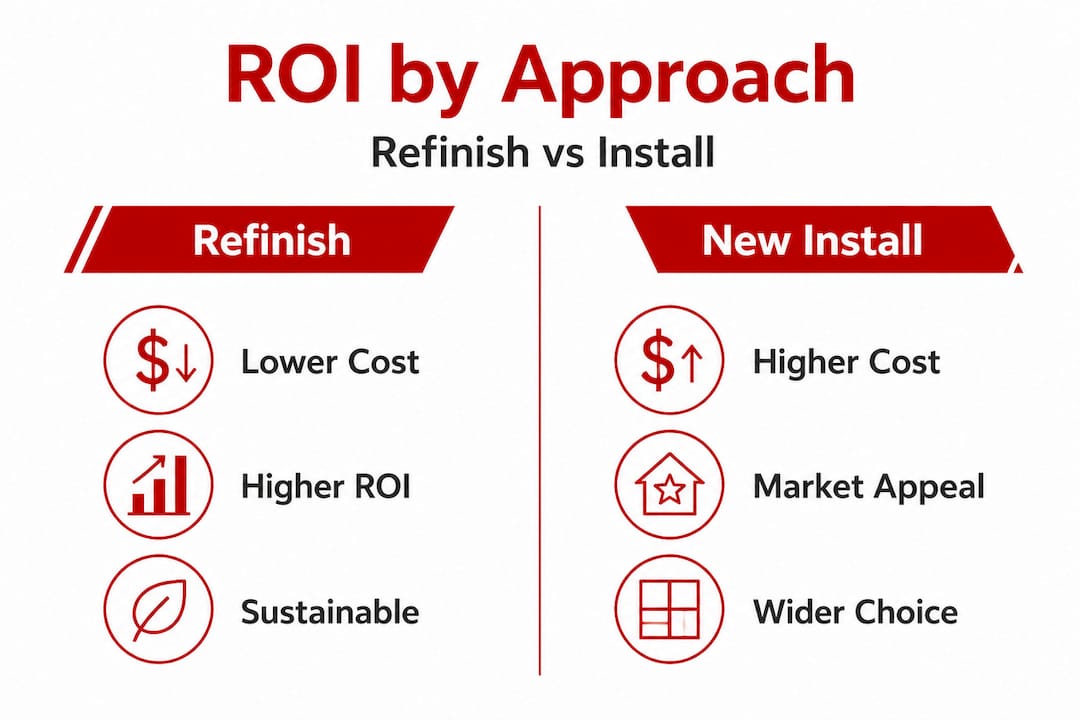
Industry data makes a compelling case for refinishing. Refinishing tends to outperform new installation in cost recovery: 147% versus 118%. That gap is significant. When you refinish a solid hardwood floor in good structural condition, you recover more than you spend. New installation, while still positive, costs more upfront and recovers less proportionally.
But refinishing is not always an option. Water-damaged or beyond-refinishing floors require full replacement. Engineered wood can typically only be refinished once or twice before the wear layer is gone. If you are buying a property with engineered floors that have already been sanded once, refinishing again may not be structurally possible.
Before committing to any upgrade approach, inspect your floors with these criteria in mind:
- Wear layer thickness: Solid hardwood usually has 3/4 inch thickness and can be refinished multiple times; engineered boards vary widely
- Structural integrity: Soft spots, squeaks, or visible warping indicate subfloor issues that refinishing cannot fix
- Moisture damage: Cupping, buckling, or staining often means the problem starts below the wood surface
- Existing finish depth: If previous refinishing has already reduced board thickness, another pass may expose tongue-and-groove joints
Pro Tip: Before calling a refinishing contractor, pour a few drops of water on a worn area. If it absorbs quickly, the finish is gone and the wood is exposed. If it beads up, you likely have more life left in that floor than you think.
| Upgrade approach | Average cost per sq ft | Estimated cost recovery | Best for |
|---|---|---|---|
| Refinishing existing solid hardwood | $3 to $5 | 147% | Sound floors, pre-sale preparation |
| New solid hardwood installation | $8 to $14 | 118% | Damaged floors, older homes, full renovations |
| New engineered hardwood installation | $6 to $11 | 100 to 115% | Basements, radiant heat systems, budget renovations |
| Engineered floor replacement | $6 to $12 | 95 to 110% | Worn-out engineered floors past refinishing limit |
The right flooring choices for a Bay Area renovation depend heavily on this condition assessment. Investors who skip the inspection step often over-invest in cosmetic work while ignoring structural issues, and savvy buyers spot that during their own walkthrough. A professional flooring assessment before listing can prevent that outcome and help you target the most cost-effective path.
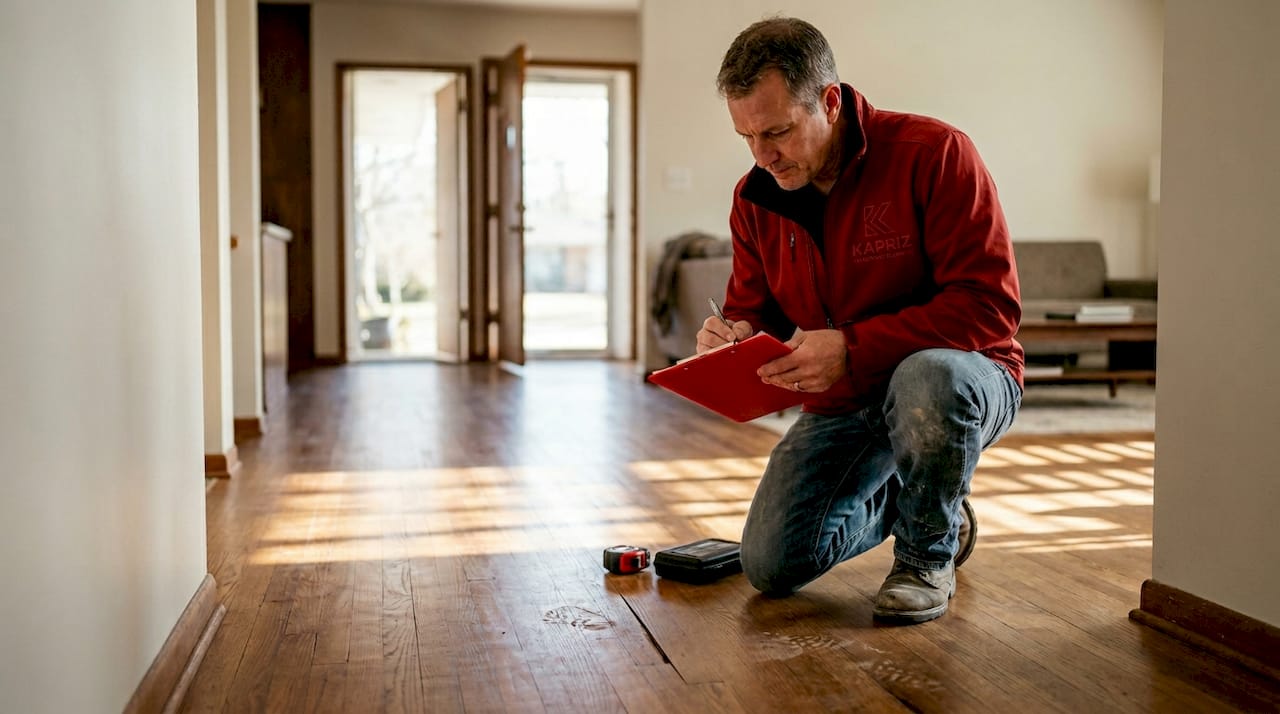
Working with experienced local contractors who understand Bay Area flooring upgrades also matters. Local professionals know which finishes photograph well, which wood tones align with current buyer preferences, and how regional humidity levels affect product selection. That local knowledge is worth paying for.
Comparing hardwood types for value and versatility
Beyond upgrade method, the type of hardwood chosen is just as critical for Bay Area property ROI. The solid versus engineered debate is not about which is better in general. It is about which is better for your specific property, your goals, and your timeline.
Solid hardwood is milled from a single piece of wood and typically runs 3/4 inch thick. It can be sanded and refinished many times over decades. For a Victorian in Noe Valley or a Craftsman in Berkeley, solid hardwood is historically appropriate and resonates strongly with buyers who value authenticity. The higher initial cost is offset by long-term solid hardwood value due to its refinishing potential. Thirty years from now, those floors can still be refinished and look brand new.
Engineered hardwood uses a real wood veneer over a plywood core. It handles humidity fluctuations and radiant heat better than solid wood, making it appropriate for slab-on-grade foundations or rooms with heating systems embedded in the floor. The Bay Area’s coastal fog and temperature swings do create more movement in solid wood, which is a genuine consideration. However, engineered floors can only be refinished a limited number of times, which affects long-term ROI for investors with a 15 or 20-year horizon.
Here is how to choose between them based on your situation:
- Check your subfloor type: Slab concrete typically rules out solid hardwood unless you use a floating or glue-down install method; engineered handles this better
- Assess your timeline: Flipping within two years favors engineered for cost control; holding for a decade or more favors solid for longevity
- Research your neighborhood: Noe Valley, Pacific Heights, and older East Bay neighborhoods have buyers who specifically seek out solid wood floors
- Factor in climate: Ground-floor rooms in San Francisco’s foggy neighborhoods see more humidity fluctuation, which can cause solid hardwood to gap or cup if not acclimated properly
- Look at wear layer specs: Choosing hardwood type for ROI requires checking that engineered boards have at least a 3mm wear layer; anything thinner and refinishing becomes nearly impossible
| Feature | Solid hardwood | Engineered hardwood |
|---|---|---|
| Typical thickness | 3/4 inch | 3/8 to 9/16 inch |
| Refinishing potential | 5 to 7 times | 1 to 2 times |
| Moisture tolerance | Lower | Higher |
| Resale premium | Higher | Moderate |
| Best application | Main floors, dry conditions | Basements, radiant heat |
Understanding engineered hardwood pros and cons before you commit helps avoid expensive mistakes. A buyer who installs engineered floors in a property they plan to hold for 20 years may find themselves needing full replacement earlier than expected, eating into the ROI they thought they were locking in.
Practical steps to maximize real estate benefit from hardwood floors
Armed with the above comparisons and evidence, here is how to translate that knowledge into practical action for your property.
Step 1: Assess before you commit. Walk every room and probe for soft spots, moisture stains, and floor movement. Look at transition strips between rooms. Check closets and corners, where wear and damage often start. If you find issues, get a flooring professional in before finalizing your upgrade plan.
Step 2: Confirm refinish eligibility. For existing solid wood, check the board thickness. Hire a flooring expert to measure remaining wear layer depth with a gauge tool. Refinishing often beats replacement for ROI, but only when the existing floor’s condition allows. Forcing a sand on boards that are too thin creates rippling and uneven surfaces that look worse than the original worn finish.
Step 3: Match finish and tone to the Bay Area market. Matte and satin finishes are the current standard for upscale Bay Area listings. High-gloss polyurethane finish tends to look dated and is harder to keep clean. Light to medium wood tones in oak, maple, and hickory photograph beautifully and read as move-in ready to buyers scrolling through listings on their phones.
Pro Tip: Wide-plank formats (5 inches and above) are commanding premiums in Peninsula and North Bay listings right now. If you are selecting new flooring, going wider costs slightly more per board but can meaningfully impact buyer perception and your asking price.
Step 4: Address the hardwood preparation guide essentials before installation. Acclimate wood to the home’s humidity for at least 72 hours before installation. Make sure subfloor is level to within 3/16 inch per 10 feet. Seal concrete slabs before any floating or glue-down install. These steps prevent the warping, gapping, and squeaking that buyers notice immediately.
Step 5: Stage to showcase the floors. Remove area rugs from key rooms during listing photography. Let the flooring speak. Add a few strategically placed accent rugs to define seating areas without covering the most photogenic sections of floor. Good natural light and clean lines make hardwood look dramatically better in photos, and photos drive Bay Area buyer interest more than almost any other factor.
A fresh take: What most Bay Area sellers miss about hardwood value
Here is something the standard real estate advice rarely says out loud: refinishing is not a universal fix, and treating it like one is how sellers lose money.
The conventional playbook says “add hardwood, boost value.” But the real story is that condition issues can make hardwood a liability instead of an asset. Subfloor moisture issues or thin wear layers do not disappear under a fresh coat of stain. Experienced buyers notice the bounce in a soft spot. Inspectors flag moisture readings. And a refinished floor with underlying structural problems can actually raise buyer concerns more than an honestly worn floor would.
Many sellers skip professional inspection entirely, trusting a contractor who has financial incentive to recommend full refinishing even when it is not warranted. Others over-invest in high-gloss finishes and trendy stains that narrow buyer appeal instead of broadening it.
The investors we see getting the best returns treat hardwood as a long-term strategy, not a pre-sale cosmetic patch. They select species and finishes that will still feel current in ten years. They buy floors they would actually want to live on. They think about ease of maintenance and long-term refinishing potential, not just how things will look in listing photos taken next month.
Check out our flooring trend analysis if you want data on whether hardwood’s dominance in the Bay Area market is holding steady or shifting. The short answer is that real wood is not going anywhere, but how you install and finish it matters enormously for whether it functions as a genuine asset in your portfolio.
The emotional impact of well-installed hardwood is real and measurable. A buyer who walks into a home and immediately feels warmth, quality, and care is already leaning toward an offer before the kitchen tour even begins. That feeling does not come from just any hardwood. It comes from the right wood, finished correctly, in excellent condition.
Enhance your home’s value with the right hardwood experts
Hardwood flooring is one of the highest-leverage investments you can make in a Bay Area property, but only when the product and strategy are right for your specific situation. Getting expert input before you spend money on refinishing or new installation can be the difference between a strong return and a costly mistake.
At Kapriz Hardwood Floors, we carry premium hardwood floors that range from high-end luxury species to quality affordable Bay Area options that hold up in the real world and look great in any listing. We only stock products we believe in and would install ourselves. Whether you are prepping a flip, refreshing a rental, or upgrading your primary home before selling, our durable flooring guide can help you navigate the options with Bay Area market insight. Come talk to us before you commit to any flooring investment.
Frequently asked questions
Does refinishing hardwood always boost my home’s resale value?
Refinishing can boost resale value significantly, but only when the flooring is structurally sound. Damaged or worn-through floors may require full replacement to achieve a real value gain.
What type of hardwood offers the best ROI for Bay Area homes?
Solid hardwood generally delivers the highest long-term ROI because of its durability and capacity for multiple refinishes. Solid hardwood often allows more refinishes and stronger resale premiums, especially in older Bay Area neighborhoods.
Can engineered hardwood floors be refinished?
Yes, but typically only once or twice. Engineered floors have limited refinishing potential due to their thin real-wood wear layer, which affects their long-term ROI compared to solid wood.
Is replacing all carpet with hardwood a smart investment?
Replacing carpet with hardwood almost always improves both buyer appeal and sale price in the Bay Area, but you should assess subfloor condition first to avoid compounding problems with a fresh install on a troubled base.
What are signs my hardwood floors are beyond refinishing?
Extensive water damage, visible subfloor buckling, or a completely worn wear layer are clear signals. Major damage or lost wear layer mean refinishing will not restore structural integrity or appearance, making replacement the only sound investment.


