

What is distressed wood flooring? A complete guide
TL;DR:
- Distressed wood flooring is designed to look aged and textured, adding warmth and character.
- It effectively hides scratches and dents, making it ideal for high-traffic and active households.
- Compared to traditional and reclaimed options, distressed wood offers a practical, affordable, and stylish choice.
Distressed wood flooring carries a reputation it doesn’t deserve. Many homeowners assume “distressed” means worn-out, cheap, or dated, but interior designers have long known the opposite is true. This flooring style is intentionally crafted to look aged and textured, and that quality is exactly what makes it so practical and visually striking. Whether you’re renovating a family home or refreshing a rental property, distressed wood brings warmth, character, and serious durability to any space. This guide walks you through what it is, why it works, how it compares to other options, and how to care for it properly.
Table of Contents
- Understanding distressed wood flooring
- Top reasons to choose distressed wood flooring
- Distressed wood vs. other hardwood flooring: A practical comparison
- Making the most of distressed wood flooring: Design, installation, and care tips
- Our take: Why distressed wood flooring is the smart style upgrade
- Ready to transform your floors? Explore your flooring options today
- Frequently asked questions
Key Takeaways
| Point | Details |
|---|---|
| Aged appearance, modern benefits | Distressed wood floors deliver a vintage look while masking everyday wear and tear. |
| Versatile design fit | These floors blend smoothly with styles from farmhouse to contemporary. |
| Easy to maintain | The textured surface hides scuffs, scratches, and dirt better than smooth hardwood. |
| Affordable character | Distressed wood often costs less than reclaimed wood, giving you style for less. |
Understanding distressed wood flooring
Distressed wood flooring is not old wood that has been salvaged from a barn or warehouse. It is new wood that has been deliberately treated to look aged. As how distressing is done explains, distressed wood flooring involves processes that intentionally create an aged appearance using mechanical or manual techniques. The result is a floor that looks like it has decades of history, even if it was made last year.
There are three main types of distressed wood flooring you will encounter:
- Machine-distressed: Boards are run through automated equipment that scrapes, dents, and brushes the surface consistently across large batches. This is the most affordable option.
- Hand-scraped: Craftspeople manually scrape each plank, creating subtle variation from board to board. No two planks look exactly alike.
- Reclaimed wood: Actual salvaged wood from old buildings, barns, or industrial spaces. It carries genuine history but comes at a higher price and with more variability.
The techniques used to create that aged look include wire brushing, skip planing, chain dragging, and deliberate denting. Wire brushing, for example, removes the soft grain between growth rings, leaving a tactile, raised texture that catches light beautifully. Skip planing creates an uneven surface that mimics the look of old-growth timber.
“The beauty of distressed wood is that every imperfection is intentional. You are buying a floor that was designed to look lived-in from day one.”
Finishes on distressed wood tend to lean toward matte or satin sheens rather than high gloss, which reinforces the natural, aged aesthetic. Color trends in 2026 favor warm browns, cool grays, and whitewashed tones. These palettes work with both traditional and modern interiors.
If you are curious about wood that has genuine history rather than manufactured texture, reclaimed wood flooring is worth exploring as a comparison point. The two options serve different budgets and design goals, but both deliver that rich, storied look that smooth floors simply cannot replicate.
Top reasons to choose distressed wood flooring
Understanding the basics gives context to why this flooring is so often chosen. The practical advantages go well beyond looks.
The single biggest selling point is how well distressed wood hides daily wear. Distressed wood flooring is celebrated for its ability to mask daily wear and imperfections, making it ideal for high-traffic areas. When a smooth hardwood floor gets a scratch, it stands out against the flat surface. On a distressed floor, that same scratch blends right into the existing texture. This is a game-changer for families with kids, pets, or heavy foot traffic.
Here are the top reasons homeowners and designers keep coming back to distressed wood:
- Hides scratches and dents without requiring touch-ups or refinishing
- Adds warmth and character that new, smooth floors often lack
- Fits multiple design styles including rustic farmhouse, industrial, transitional, and even modern minimalist
- Performs well in high-traffic zones like hallways, kitchens, and living rooms
- Lower visual maintenance because imperfections are part of the design
- Often more affordable than premium smooth hardwood with the same species and grade
One thing designers love about distressed wood is its design flexibility. It pairs naturally with exposed brick, shiplap walls, and vintage furniture, but it also grounds contemporary spaces by adding an organic contrast to clean lines and neutral palettes. If you want to stay current, check out the latest hardwood flooring trends to see how distressed wood fits into today’s most popular interior styles.
Pro Tip: If you have an open-plan living area where the kitchen, dining room, and lounge all flow together, distressed wood is one of the easiest ways to unify the space visually without making it feel flat or sterile.
The lower-maintenance appeal is real. You are not going to stress every time someone drags a chair or drops something heavy. That peace of mind has genuine value, especially in a home that gets used hard every day.
Distressed wood vs. other hardwood flooring: A practical comparison
With the pros in mind, it’s helpful to see how distressed wood stacks up against popular alternatives.
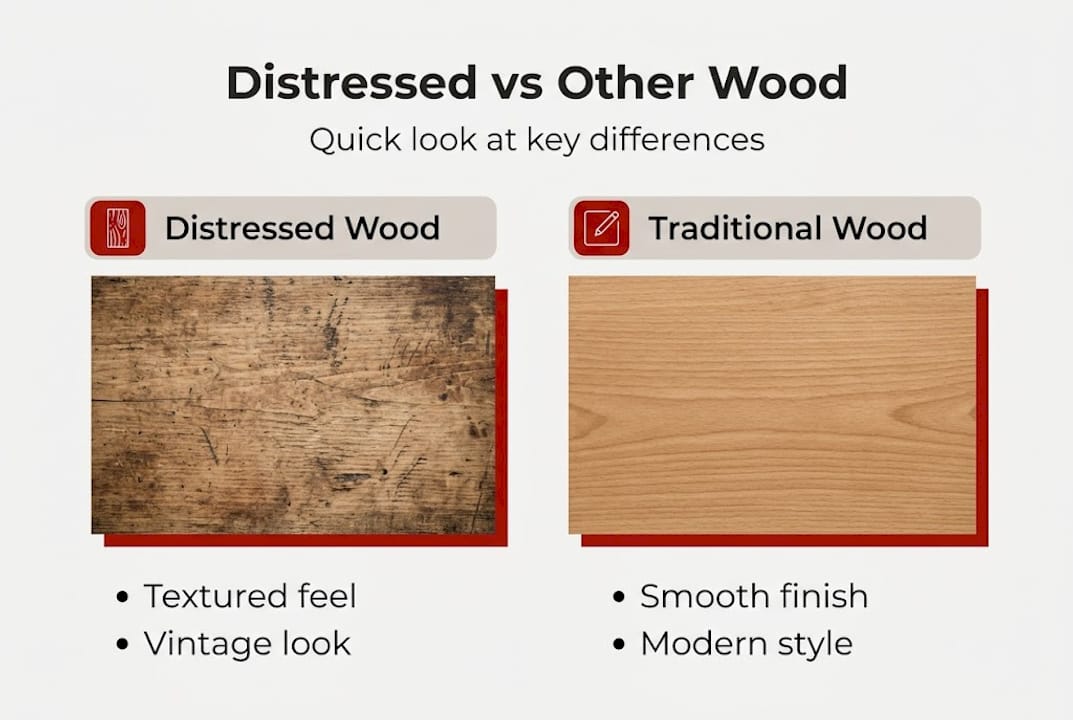
| Feature | Distressed wood | Traditional hardwood | Reclaimed wood |
|---|---|---|---|
| Appearance | Aged, textured, warm | Smooth, polished, uniform | Rustic, authentic, variable |
| Price range | Moderate | Moderate to high | High |
| Durability | High (hides wear) | High (shows wear) | Variable |
| Maintenance | Low visual upkeep | Requires more care | Requires more care |
| Eco-friendliness | Standard | Standard | High |
| Best for | Busy homes, rentals | Formal spaces | Design-forward projects |
As noted in a House Beautiful review, reclaimed and distressed wood flooring both offer unique aesthetics but differ in source and price significantly. Reclaimed wood carries genuine history, but sourcing it consistently is difficult and costs can be unpredictable. Distressed wood gives you a similar look with far more control over budget and availability.
Here is when to choose distressed wood over the alternatives:
- You want the aged aesthetic without the premium price of reclaimed wood.
- Your household is active and you need a floor that forgives daily use.
- You are designing a space that blends traditional and modern elements.
- You want faster installation with consistent plank sizing and finish.
- You are working with a set budget and need reliable quality throughout.
If you are still weighing hard flooring options more broadly, comparing laminate vs LVP flooring can help you decide whether real wood is the right call for your project. For environmentally conscious buyers, reviewing sustainable wood flooring types will show you where distressed wood sits on the green spectrum.
Making the most of distressed wood flooring: Design, installation, and care tips
Ready to bring distressed wood into your space? Here is how to do it right.
Distressed wood works especially well in living rooms, dining areas, bedrooms, and home offices. It is less ideal in bathrooms or laundry rooms where moisture exposure is constant. In kitchens, it performs well as long as spills are cleaned up quickly.
Before installation, proper preparation is essential for maximizing the lifespan and appearance of distressed wood flooring. The subfloor must be clean, level, and dry. Any high spots or low spots greater than 3/16 of an inch over 10 feet should be corrected before laying planks. Moisture readings matter too. Wood flooring should only be installed when subfloor moisture levels are within the manufacturer’s recommended range.
| Maintenance task | Frequency | Notes |
|---|---|---|
| Sweeping or vacuuming | Daily or every other day | Use a soft-bristle attachment |
| Damp mopping | Weekly | Avoid soaking the floor |
| Recoating finish | Every 3 to 5 years | Preserves the surface texture |
| Full refinishing | Every 10 to 15 years | Consult a professional |
| Checking for gaps | Seasonally | Humidity changes cause movement |
For detailed guidance on the installation process, our wood flooring installation tips page covers the full sequence from subfloor prep to final inspection. You can also review our floor prep steps to make sure your space is ready before the first plank goes down.
Pro Tip: Always acclimate distressed wood planks in the room where they will be installed for at least 48 to 72 hours before laying them. This allows the wood to adjust to the room’s humidity and temperature, reducing the risk of warping or gapping after installation.
Common mistakes to avoid include skipping acclimation, using too much water when cleaning, and choosing a finish sheen that conflicts with the distressed texture. High-gloss finishes on distressed wood look out of place and actually highlight inconsistencies rather than celebrating them.
Our take: Why distressed wood flooring is the smart style upgrade
Here is a perspective that most flooring guides skip over. The biggest misconception about distressed wood is not that it looks cheap. It is that people assume it is a trend that will date their home. We disagree strongly.
Distressed wood has been a design staple for decades because it reflects how people actually live. Homes are not showrooms. They get used, loved, and marked up over time. A floor that was designed to absorb that reality without looking worse for it is not a compromise. It is a smarter choice.
We have seen homeowners spend more on smooth premium hardwood only to stress over every scratch and scuff. Distressed wood removes that anxiety entirely. You get a floor that looks better with age rather than worse. That is a fundamentally different relationship with your own home.
If you want to see how distressed wood fits into current design directions, our coverage of hardwood style trends shows it holding strong across multiple aesthetics. When you choose quality distressed wood from a trusted source, you are not settling. You are making a practical, design-forward decision that will serve your home for decades.
Ready to transform your floors? Explore your flooring options today
If this guide has you thinking seriously about distressed wood, the next step is finding the right product for your space and budget. At Kapriz Hardwood Floors, we carry a wide range of hardwood flooring options that includes distressed styles in dozens of species, finishes, and price points.
We believe great floors should be accessible to everyone, which is why we focus on affordable hardwood floors without cutting corners on quality. Whether you are working with a tight budget or looking for a premium product, browse our budget hardwood flooring selection to find something that fits. Our team is ready to help you choose the right distressed wood floor for your home.
Frequently asked questions
Is distressed wood flooring more durable than traditional hardwood?
Distressed floors mask scratches and dents better than smooth wood surfaces, making them more practical for busy households even though the underlying hardness is similar.
Can I refinish or repair distressed wood flooring?
Most distressed hardwood floors can be refinished, but refinishing distressed floors requires extra care to preserve the original surface texture rather than sanding it away completely.
What spaces are best for distressed wood flooring?
Distressed flooring works well in active households, open living spaces, and high-traffic areas because its textured surface naturally conceals the marks that come with everyday use.
How do I clean and maintain distressed wood floors?
Sweep or vacuum regularly and wipe spills immediately. Routine sweeping and spill cleanup preserve wood floor condition far better than occasional deep cleaning sessions.


