

Hardwood Flooring Grades Explained: Choose With Confidence
TL;DR:
- Hardwood flooring grades determine appearance, influence cost, and affect installation, not durability.
- Choosing the right grade based on room function and lifestyle can save money and meet aesthetic goals.
- Mixing grades offers a personalized, practical approach, balancing beauty, budget, and wear resistance.
Most buyers walk into a flooring store focused on color and wood species, completely unaware that grade is quietly driving up the price or limiting their design options. Hardwood flooring grades control how a floor looks, how much it costs, and how smoothly installation goes. A Clear grade plank and a No. 2 Common plank can come from the same tree but look dramatically different in your home. Understanding what grades mean, how they compare, and how to match them to your space will save you money and regret. This guide breaks it all down in plain language so you can shop with real confidence.
Table of Contents
- What are hardwood flooring grades?
- Comparing popular hardwood grades
- How grade impacts your flooring project
- Making the best grade choice for your space
- The mistake most shoppers make about hardwood grades
- Find your perfect hardwood flooring grade with Kapriz
- Frequently asked questions
Key Takeaways
| Point | Details |
|---|---|
| Grades define appearance | Hardwood flooring grades reflect natural variation and character, not durability. |
| Choosing by space matters | Pick your grade based on room use, design vision, and lifestyle needs. |
| Cost and grade link | Higher grades usually cost more and look more uniform, but mid-grades can offer great value. |
| Mixing is possible | Combining different hardwood grades can enhance design and help manage your budget. |
What are hardwood flooring grades?
Hardwood flooring grades are a standardized way to sort planks by their visual appearance. They do not measure structural strength or how long a floor will last. Instead, they describe how uniform, clean, or characterful a plank looks when laid in your home.
The two major grading bodies in the United States are the National Wood Flooring Association (NWFA) and the National Hardwood Lumber Association (NHLA). Both organizations have established criteria for what qualifies a board for each grade level. Most manufacturers follow standardized grading for hardwood floors, which makes shopping easier once you know the terminology.
Here are the main grade names you will encounter:
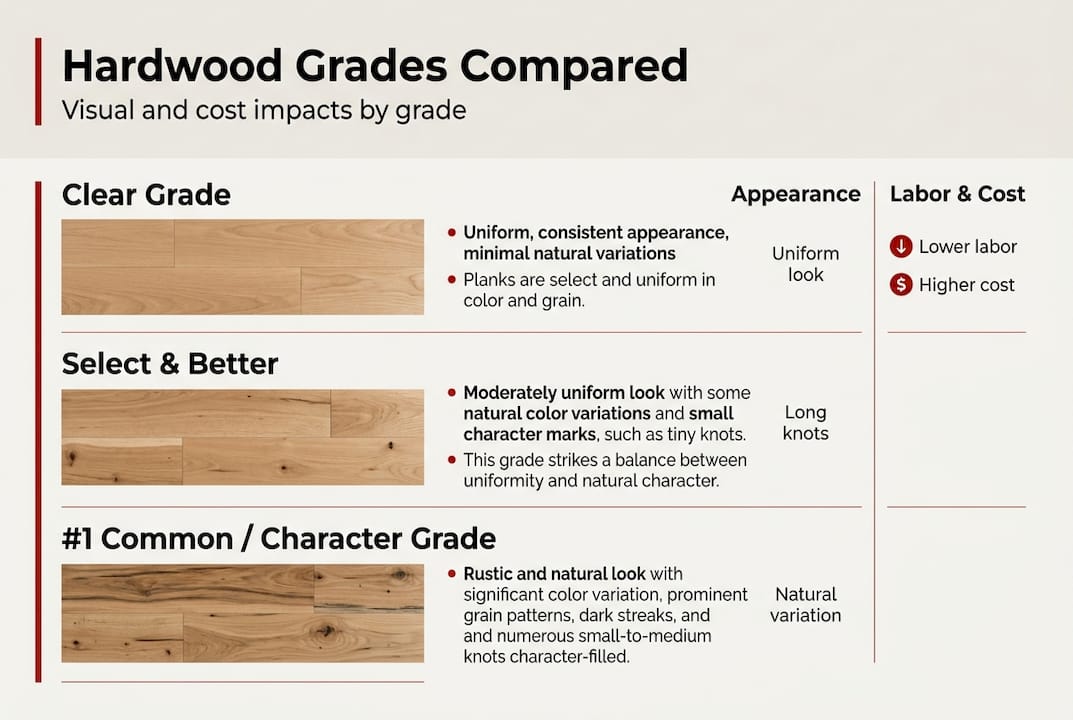
- Clear: The cleanest option, featuring minimal knots, color variation, or natural markings. Very uniform appearance.
- Select: Allows slight color variation and very small, tight knots. Still looks refined and consistent.
- No. 1 Common: Noticeably more character. Includes knots, color variation, and natural mineral streaks.
- No. 2 Common: The most rustic option. Larger knots, more color swings, and visible natural markings are expected and embraced.
These grades apply to the face of the board, meaning the side you see. The back of the plank may have imperfections regardless of grade.
Pro Tip: Always ask your supplier to show you the grade certification paperwork or the mill’s grading stamp. This protects you from mislabeled products and ensures you are getting what you paid for when comparing hardwood grades across brands.
Understanding these terms removes the guesswork from shopping. You can walk into any flooring store or browse any website and immediately know what you are looking at.
Comparing popular hardwood grades
Each hardwood grade offers distinct aesthetic appeal and price points, which means the right choice truly depends on your design goals and your budget.
Here is a side-by-side breakdown to make those differences concrete:
| Grade | Appearance | Allowed defects | Relative price |
|---|---|---|---|
| Clear | Uniform, minimal variation | Tiny knots only | Highest |
| Select | Slight variation, refined look | Small tight knots | High |
| No. 1 Common | Visible character, moderate variation | Knots, streaks, color swings | Moderate |
| No. 2 Common | Rustic, bold variation | Large knots, checks, heavy color | Lowest |
One thing many shoppers overlook: grade can affect price by up to 30% or more between Clear and Common options. That difference adds up fast across a 500 or 1,000 square foot project.
Knowing when to use each grade saves money and creates a better result. Here is a simple guide:
- Choose Clear or Select for formal living rooms, dining rooms, and spaces where you want a sleek, gallery-like look.
- Choose No. 1 Common for family rooms, bedrooms, or any space where warmth and a lived-in feel suits your lifestyle.
- Choose No. 2 Common for rustic interiors, cabin-style homes, or high-character design projects where imperfection is the point.
When spotting quality flooring in a showroom, pay attention to how evenly the planks are sorted. A reputable supplier will have consistent boards within each grade bin, not a mix of grades lumped together.
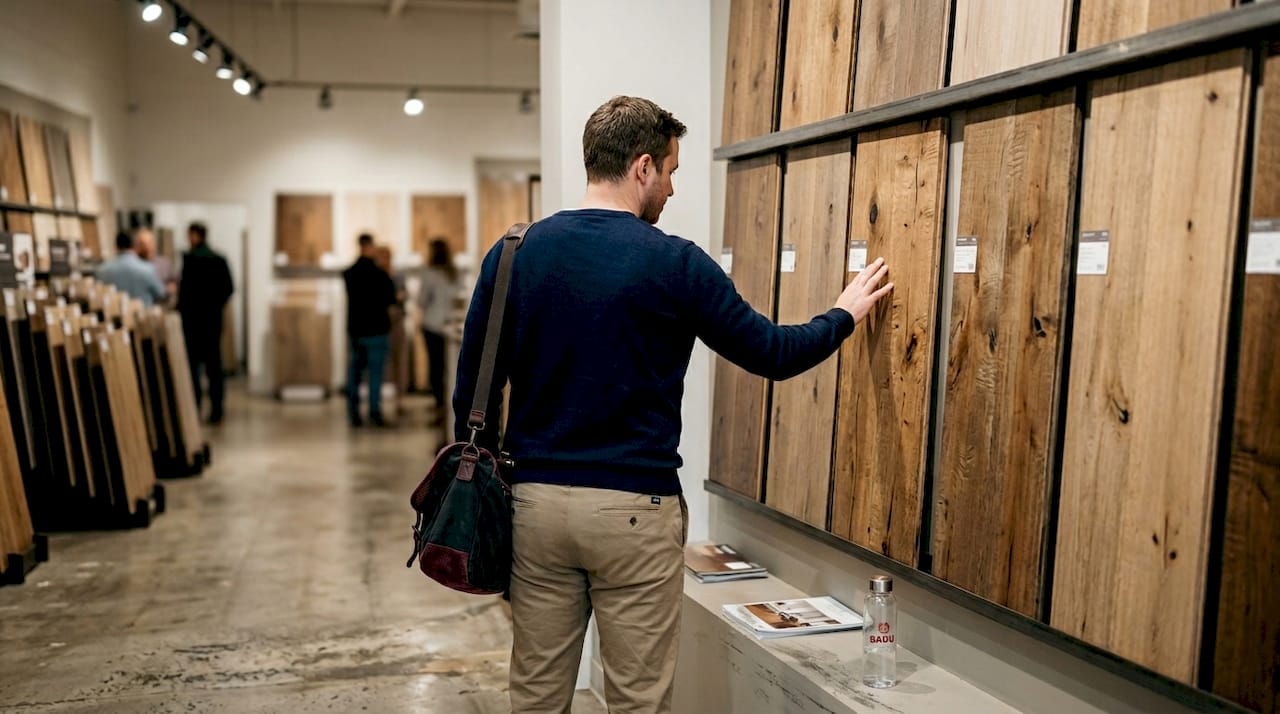
The visual difference between grades is the single biggest factor in buyer satisfaction. Seeing samples in person, in your actual lighting conditions, is worth far more than any description on a product page.
How grade impacts your flooring project
Grade does not stop influencing your project once you pick a plank. Higher grades require less onsite finishing and result in faster installations, which directly affects your labor bill.
Here is how grade ripples through each stage of a real flooring project:
- Delivery and inspection: Higher grade floors arrive with fewer planks needing rejection. Lower grades require more sorting on-site to manage the variation.
- Subfloor preparation: Floor prep tips apply across all grades, but Common grade floors may need extra attention to hide variation patterns through layout planning.
- Installation layout: Common grades require more deliberate planning to mix planks evenly and avoid clustering knots or color jumps in one area.
- Sanding and finishing: Clear grade floors sand more predictably. Common grade floors with larger knots may need extra filler work before finishing.
- Ongoing maintenance: Lighter finishes on Common grades can reveal dirt between knots more visibly. Higher grades with fewer surface interruptions clean up faster.
The table below summarizes estimated labor impact:
| Grade | Installation complexity | Relative labor cost |
|---|---|---|
| Clear | Low | Lower |
| Select | Low to moderate | Moderate |
| No. 1 Common | Moderate | Moderate to higher |
| No. 2 Common | Higher | Highest |
Review costs by grade before finalizing your budget so there are no surprises when the installer quotes the job.
Pro Tip: If you are planning to sell your home within five years, lean toward Select or Clear grade in main living areas. Buyers respond well to uniform, clean floors, and it can meaningfully support your asking price.
Making the best grade choice for your space
Lifestyle and space function are key in grade selection, and no single grade is perfect for every room in a home.
Follow these steps to land on the right choice:
- Set your budget first. Know the total square footage and get rough pricing for each grade tier before falling in love with a specific look.
- Define the room’s purpose. A formal dining room and a mudroom have completely different demands on a floor.
- Decide on your aesthetic. Do you want clean and refined, or warm and characterful? Be honest about what fits your actual taste, not just what looks good in a magazine.
- Consider resale goals. If you plan to sell, neutral and clean grades tend to photograph better and appeal to more buyers.
- Request physical samples. Look at them in your actual room, at different times of day, before committing.
Here is how different rooms typically match up with grades:
- Entryways: No. 1 or No. 2 Common are smart. Scuffs and character blend right in.
- Bedrooms: Any grade works, but Clear or Select creates a calm, restful atmosphere.
- Kitchens: Select or No. 1 Common balances beauty with practicality.
Explore wood flooring options that match different grade needs, and check budget hardwood tips if you want strong value without sacrificing quality.
Avoid these common mistakes:
- Choosing grade based on photos alone without seeing real samples
- Buying the highest grade for a high-traffic area where character marks would actually look better
- Ignoring how grade interacts with your chosen stain or finish color
- Skipping samples and committing to a full order based on a single small chip
The mistake most shoppers make about hardwood grades
Here is something we see constantly: a homeowner comes in convinced they need Clear grade throughout the entire house. They have heard it is the “best” and they want the best. But when we ask them about their two dogs, their three kids, and the mudroom that connects directly to the backyard, something clicks.
The highest grade is not always the right grade. Clear floors show every scratch, every dog nail mark, every tracked-in piece of gravel in sharp detail. A No. 1 Common floor in that same mudroom? The natural variation absorbs visual wear the way a dark car hides dirt better than a white one.
There is also a creative argument for mixing grades. Use Clear in the formal living and dining areas where it shines. Drop to Select or No. 1 Common in the bedrooms and family room. The transition reads as intentional design, not compromise. It also keeps your total project cost in check.
“Imperfections” in lower grades are not flaws. They are the grain, the knots, the mineral streaks that tell the story of a real tree. When you understand choosing wood species alongside grade, you realize that character and context create beauty, not flawlessness.
The grade you choose should reflect how you actually live, not how you imagine a perfect home looks in an Instagram post.
Find your perfect hardwood flooring grade with Kapriz
At Kapriz Hardwood Floors, we carry a curated selection of hardwood floors across every grade level, from pristine Clear to character-rich Common options. Every product we stock meets our own quality standards, because we only sell what we would put in our own homes.
Whether you are a homeowner navigating your first flooring project or a designer sourcing materials for a client, our team is here to help you match the right grade to your space and budget. Explore hardwood floors across all grade categories, or get personalized grade selection guidance from our flooring specialists. The right grade is closer than you think, and we make it simple to find it.
Frequently asked questions
Do hardwood flooring grades affect durability?
Grades refer to visual characteristics more than structural strength, so a Common grade floor is not weaker than a Clear grade floor. All grades must meet basic performance standards to be sold as hardwood flooring.
Which hardwood flooring grade is best for kitchens?
Select or No. 1 Common works best in kitchens because these grades balance a refined look with enough natural variation to mask everyday scuffs and spills. Room purpose and foot traffic should always guide your grade choice in functional spaces.
Is high-grade hardwood flooring worth the extra cost?
It depends on the room and your goals. Upgrading to a higher grade increases costs but can benefit resale value in key living areas, though it may be unnecessary in spaces with heavy daily use.
Can I mix hardwood grades in my home for a custom look?
Absolutely. Blending grades suits design and budget goals at the same time. Using Clear in formal spaces and Common in casual areas creates a layered, intentional aesthetic without overspending on every square foot.


