


Reclaimed wood flooring: beauty, benefits & sustainability
Sustainable flooring has a reputation problem. Many homeowners assume that choosing an eco-friendly option means settling for something bland, fragile, or oddly expensive. Reclaimed wood flooring blows that assumption apart. It delivers rich character, proven durability, and a genuinely smaller environmental footprint, all in one product. For Bay Area homeowners who care about both how their home looks and how their choices affect the planet, reclaimed wood is worth a serious look. This guide covers what it is, why people love it, how it compares to new hardwood, and what you need to know before installation.
Table of Contents
- What is reclaimed wood flooring?
- Why homeowners choose reclaimed wood flooring
- Comparing reclaimed wood to traditional hardwood
- Design versatility and aesthetic appeal
- Considerations before installing reclaimed wood flooring
- Bring reclaimed wood flooring into your home
- Frequently asked questions
Key Takeaways
| Point | Details |
|---|---|
| Eco-friendly choice | Reclaimed wood saves trees and reduces landfill waste, making it a sustainable flooring option. |
| Unique aesthetic | Every plank offers distinct character and history, elevating home design beyond new hardwood. |
| Requires careful installation | Professional prep and acclimation are crucial for reclaimed wood to perform well, especially in the Bay Area. |
| Available for all budgets | Though sometimes pricier initially, reclaimed wood offers long-term value and options for various projects. |
What is reclaimed wood flooring?
Reclaimed wood flooring is not a trend. It is a practical, beautiful solution with deep roots in sustainable building. As salvaged timber from old buildings, barns, factories, and warehouses, reclaimed wood gets a second life as flooring instead of ending up in a landfill or incinerator. Workers carefully remove nails, clean the planks, kiln-dry them to remove moisture and pests, and then mill them to consistent dimensions.
The result is flooring with genuine history. You might be walking on wood that once framed a 19th-century warehouse in Ohio or a century-old barn in the Pacific Northwest. That history and character of reclaimed wood is impossible to replicate with new lumber, no matter how skilled the finishing team.
Common species found in reclaimed flooring include:
- Heart pine: Dense, tight-grained, and rich amber in color
- Douglas fir: Strong, straight-grained, and widely available in the West
- Oak: Classic grain patterns with warm brown tones
- Chestnut: Rare and prized, mostly from pre-blight trees
- Elm: Interlocking grain that resists splitting
For Bay Area homeowners exploring sustainable wood options, reclaimed flooring sits at the top of the list for both environmental impact and visual payoff.
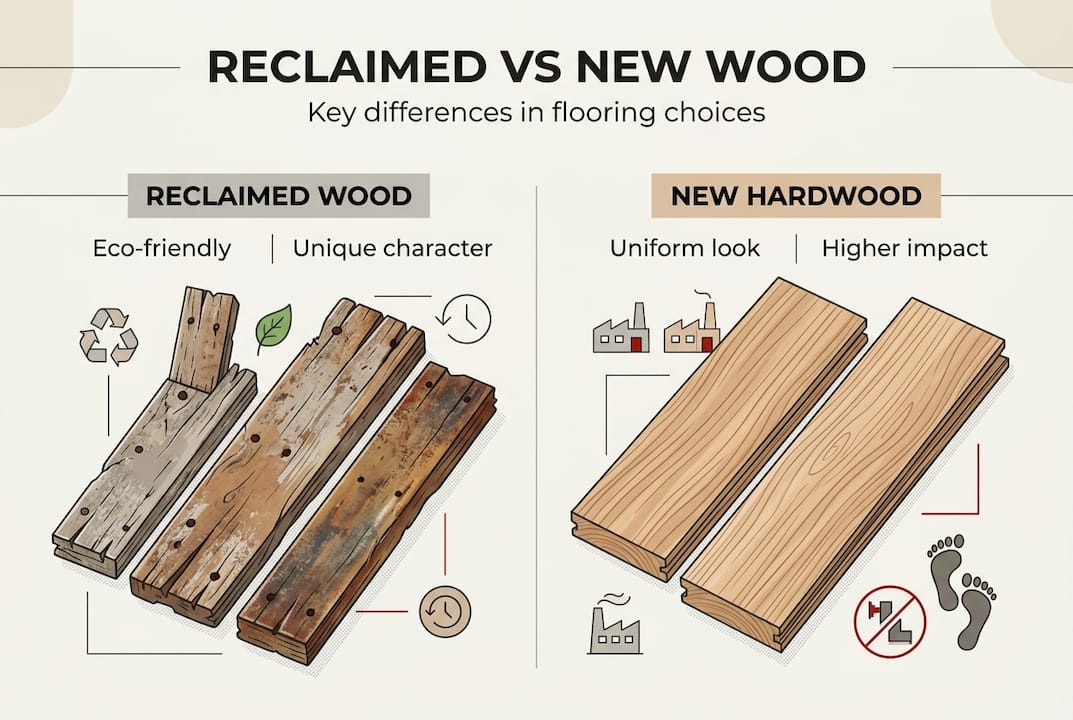
| Feature | Reclaimed wood | New hardwood |
|---|---|---|
| Eco impact | Very low (reused material) | Moderate (new harvest) |
| Durability | High (old-growth density) | High (varies by species) |
| Appearance | Unique, aged patina | Uniform, consistent |
| Price | Moderate to high | Moderate to high |
| Availability | Limited by source | Widely available |
Why homeowners choose reclaimed wood flooring
The demand for reclaimed wood has grown steadily because of sustainability concerns and a rising appetite for materials with genuine history. But sustainability alone does not explain the surge. People also choose it because it simply looks incredible.
Here is what drives most buying decisions:
- Lower environmental impact: Reusing existing timber reduces deforestation and cuts the carbon emissions tied to logging, milling, and transport of new lumber
- Unique aesthetics: No two planks are identical. The grain, knots, nail holes, and color variation tell a story that factory-fresh wood cannot match
- Proven durability: Much of the reclaimed wood available today comes from old-growth forests that were harvested before modern clear-cutting. That wood is denser and more dimensionally stable than most new-growth lumber
- Conversation starter: Guests notice it. It adds personality to a room in a way that standard flooring rarely does
- Reduced landfill contribution: Quality timber that would otherwise be demolished and dumped gets a productive second life
“Reclaimed wood carries the marks of time, and those marks are exactly what make it irreplaceable in a modern home.”
Pro Tip: Ask your supplier for Forest Stewardship Council (FSC) certification or a chain-of-custody document. This confirms the wood was legally sourced and properly processed, not just labeled “reclaimed” for marketing purposes.
Understanding the full wood flooring costs overview before you shop helps you budget realistically and avoid sticker shock at the checkout.
Comparing reclaimed wood to traditional hardwood
Side-by-side comparisons help cut through the noise. Reclaimed wood often costs a similar or slightly higher amount than new hardwood due to sourcing and preparation, but its durability and environmental benefits frequently justify the difference.
| Category | Reclaimed wood | New hardwood |
|---|---|---|
| Upfront cost per sq ft | $8 to $20+ | $6 to $18+ |
| Longevity | 50 to 100+ years | 25 to 50 years |
| Refinishing potential | Multiple times | Multiple times |
| Environmental savings | High | Low to moderate |
| Visual consistency | Low (unique) | High (uniform) |
One statistic worth knowing: up to 40% of landfill waste in the US comes from construction and demolition materials. Choosing reclaimed wood directly reduces that number.
Before you commit, here are the key installation considerations unique to reclaimed floors:
- Moisture testing: Reclaimed planks need thorough moisture testing before installation. Inconsistent moisture content causes warping after install.
- Subfloor assessment: Older homes in the Bay Area may have subfloors that need leveling or reinforcement before reclaimed wood goes down.
- Nail and metal detection: Planks must be scanned for embedded nails, screws, or other metal fragments that could damage cutting equipment or create uneven surfaces.
- Acclimation period: Allow planks to sit in your home for at least 5 to 7 days before installation so they adjust to your indoor humidity levels.
- Professional installation: Reclaimed wood is less dimensionally uniform than new hardwood, which means installation requires more skill and patience.
For detailed wood flooring installation tips, it pays to review the process before hiring a contractor so you know what questions to ask.
Design versatility and aesthetic appeal
Reclaimed wood does not lock you into one style. That is one of its most underrated qualities. Whether your Bay Area home leans toward modern minimalism, warm farmhouse, industrial loft, or classic craftsman, there is a reclaimed wood finish and species that fits.
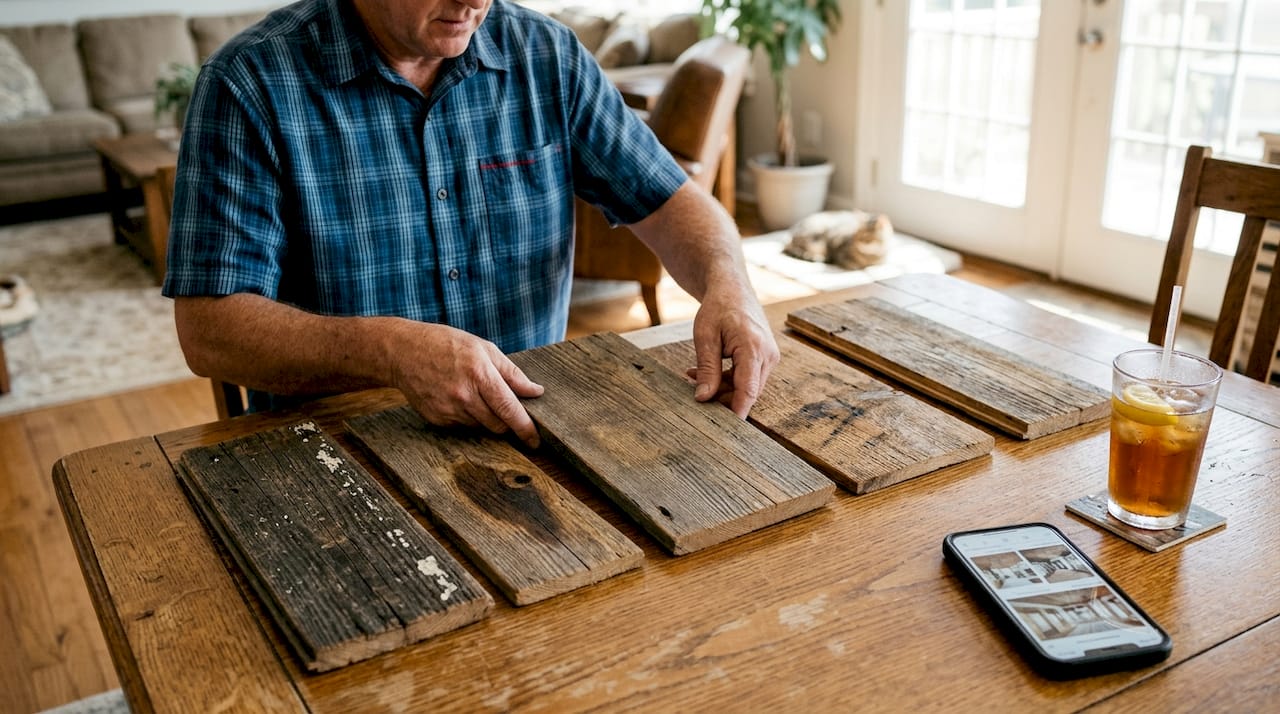
Reclaimed wood can be finished in countless ways, from rustic and raw to sleek and contemporary. The base material does the heavy lifting. You choose how much of the original character to preserve and how much to refine.
Design options worth exploring:
- Wide-plank farmhouse: Broad planks with visible knots and nail holes create a warm, lived-in feel
- Industrial chic: Dark-stained reclaimed oak or fir pairs well with exposed concrete and metal fixtures
- Contemporary neutral: Lightly sanded and whitewashed reclaimed pine reads as modern without losing texture
- Traditional craftsman: Medium-toned heart pine or chestnut complements built-ins and wainscoting beautifully
Blending reclaimed wood with new materials is also very effective. Pairing reclaimed floors with new cabinetry, fresh tile, or modern lighting creates contrast that makes both elements stand out. The key is balance. Too much reclaimed material in one space can feel heavy. One strong surface, like the floor, anchors the room without overwhelming it.
For inspiration on how reclaimed wood fits into current luxury flooring design trends, it helps to see finished examples before committing to a species or finish.
Pro Tip: Bring a photo of your existing furniture and wall colors when you visit a flooring showroom. Matching the undertones of your reclaimed wood to your existing palette makes the whole room feel intentional rather than accidental.
Considerations before installing reclaimed wood flooring
Proper preparation and acclimation are the foundation of long-term performance for reclaimed wood flooring. Skipping these steps is the most common reason reclaimed floors fail within the first few years.
Here is a practical step-by-step approach:
- Source a reputable supplier: Look for suppliers who provide documentation on wood origin, treatment history, and moisture content. Avoid sellers who cannot answer basic questions about sourcing.
- Check for chemical treatment: Some reclaimed wood from industrial buildings may have been treated with pesticides or preservatives. Ask directly and request testing if the source is unclear.
- Test moisture content: Use a moisture meter to confirm planks are between 6% and 9% moisture content before installation. Bay Area homes typically run between 45% and 65% relative humidity, which affects how wood behaves.
- Acclimate the planks: Stack planks loosely in the installation room for at least 5 to 7 days. This step prevents expansion and contraction after the floor is laid.
- Hire a professional: Reclaimed wood requires more skill to install than standard hardwood. Gaps, cupping, and squeaking are common when installation is rushed or done without experience.
- Plan for maintenance: Reclaimed floors benefit from regular sweeping, occasional damp mopping with a pH-neutral cleaner, and refinishing every 7 to 10 years depending on traffic.
“The investment in proper installation pays for itself many times over. A well-installed reclaimed floor can outlast the house it’s in.”
For Bay Area homes specifically, humidity control matters year-round. The coastal climate creates seasonal swings that affect wood movement. A whole-home humidifier or dehumidifier helps keep your floor stable between seasons.
Before your installer arrives, review the preparing for installation checklist to make sure your subfloor and space are ready. And if you ever want to refresh an older reclaimed floor, the process of refinishing reclaimed hardwood is very similar to refinishing new hardwood, just with a bit more attention to existing character marks you may want to preserve.
Bring reclaimed wood flooring into your home
If you are ready to move from research to reality, the right guidance makes all the difference. At Kapriz Hardwood Floors, we work with Bay Area homeowners every day to find flooring that fits their style, their values, and their budget. We carry a wide range of hardwood floors including reclaimed, engineered, and new solid options across every price point.

We believe beautiful flooring should not be out of reach. Whether you want the raw character of reclaimed oak or something more refined, our team helps you see real samples and understand exactly what you are buying before you commit. Explore our durable hardwood options built for Bay Area conditions, or browse our affordable hardwood flooring selection if budget is your first priority. Stop by or reach out and let us help you find the floor your home deserves.
Frequently asked questions
Is reclaimed wood flooring more expensive than new hardwood?
Reclaimed wood can carry a higher upfront cost because sourcing and restoring it is labor-intensive, but its long lifespan and environmental value often make it the smarter investment over time.
How do I maintain reclaimed wood flooring?
Sweet it regularly, clean with a damp mop and mild pH-neutral cleaner, and refinish every 7 to 10 years. Proper care extends the lifespan of reclaimed floors significantly beyond what neglect allows.
Can I install reclaimed wood flooring in kitchens or bathrooms?
Kitchens work well with proper sealing and prompt cleanup of spills. Bathrooms are a different story. Wood floors including reclaimed are not ideal for high-moisture areas where standing water is common.
What should I watch for when buying reclaimed wood flooring?
Always ask for certification and documentation on wood origin, check moisture content before purchase, and ask whether the wood was ever treated with industrial chemicals.
Is reclaimed wood really sustainable?
Yes. It conserves resources and reduces landfill waste by giving quality timber a second life instead of sending it to demolition disposal or replacing it with newly harvested lumber.
Recommended
- Sustainable wood flooring types for Bay Area homes 2026 | Kapriz Hardwood Flooring Store
- How Can I Embrace Eco-Friendly Elegance with Sustainable Hardwood Flooring | Kapriz Hardwood Flooring Store
- Eco-Friendly Hardwood Flooring – Sustainable Options for a Greener Home | Kapriz Hardwood Flooring Store


