

Matte finish wood floors: Benefits, looks, and care
TL;DR:
- Matte finishes reflect minimal light, highlighting wood grain and natural texture.
- They are ideal for busy households, hiding scratches, dust, and wear better than glossy surfaces.
- Maintenance is simple with regular sweeping and gentle cleaning, making matte a practical and stylish choice.
Shiny wood floors have long been seen as the gold standard, but that assumption is worth questioning. A matte finish on hardwood reflects just 5 to 25% of light, giving you that calm, natural look that lets the wood speak for itself. More homeowners and interior designers are choosing matte not just for style, but for the very real day-to-day advantages it brings. This guide covers what matte finish actually is, how it compares to satin and gloss options, why it works so well in modern and traditional spaces alike, and exactly how to keep it looking great for years to come.
Table of Contents
- What is a matte finish wood floor?
- Matte finish vs. other wood floor finishes: Appearance and performance
- Design advantages: Why choose matte finish for your home?
- Caring for matte finish wood floors: Maintenance and cleaning tips
- Our perspective: Why matte finish is more than just a trend
- Discover stunning matte finish options for your home
- Frequently asked questions
Key Takeaways
| Point | Details |
|---|---|
| Natural, low-glare look | Matte finish wood floors highlight the character of the wood with minimal shine for an organic appearance. |
| Hides wear and dust | Matte finishes are great for busy homes as they conceal scratches, smudges, and dust better than glossy surfaces. |
| Versatile design appeal | Matte finish complements both contemporary and traditional interiors, making it a choice that stays fashionable. |
| Easy maintenance | With proper care, matte finish wood floors are easy to clean and maintain in daily life. |
What is a matte finish wood floor?
A matte finish wood floor has a low-sheen protective coating that reflects minimal light. According to flooring specialists, a matte finish reflects just 5 to 25% of light, which is far less than satin or glossy alternatives. The result is a floor that looks organic and understated, like freshly sanded wood that still has its natural character fully intact.
What makes this finish so visually appealing is the way it shows off wood grain. Without a reflective layer bouncing light around, your eye goes straight to the texture and pattern of the wood itself. Species like white oak, hickory, and walnut look particularly striking with a matte coating because their grain patterns become the focal point of the floor.
To understand hardwood floor finishing options more broadly, it helps to see where matte sits on the sheen scale. Here is a quick breakdown:
- Matte: 5 to 25% gloss level. Almost no light reflection. Very natural appearance.
- Satin: 25 to 40% gloss level. A soft sheen. Popular middle ground.
- Semi-gloss: 40 to 60% gloss level. Noticeably shiny. Reflects more imperfections.
- High gloss: 60 to 90% gloss level. Very shiny. Traditional formal look.
“A matte finish on wood floors creates a natural, non-reflective appearance that emphasizes wood grain without glare, with a gloss level typically between 5 and 25%.”
The design world has shifted noticeably toward matte in recent years. Contemporary minimalist homes, Scandinavian interiors, and farmhouse style spaces all lean into the idea that less shine equals more sophistication. This is not just about aesthetics. It is about choosing a finish that fits the way real families live.
Matte finish vs. other wood floor finishes: Appearance and performance
Now that you know what a matte finish is, let’s compare it directly to other wood floor finishes to see where it stands out.
The most important thing to understand is that finish choice affects both how your floor looks and how it performs over time. A floor that looks great in the showroom but shows every footprint and scratch within a week is not a good investment.
| Feature | Matte | Satin | High Gloss |
|---|---|---|---|
| Gloss level | 5 to 25% | 25 to 40% | 60 to 90% |
| Light reflection | Very low | Moderate | Very high |
| Shows scratches | Rarely | Sometimes | Frequently |
| Shows dust and pet hair | Less noticeable | Moderate | Very noticeable |
| Maintenance difficulty | Low | Moderate | High |
| Best for | Busy households, rustic or modern designs | Versatile everyday use | Formal spaces with low traffic |
| Style compatibility | Contemporary, farmhouse, transitional | Most interior styles | Traditional, formal |
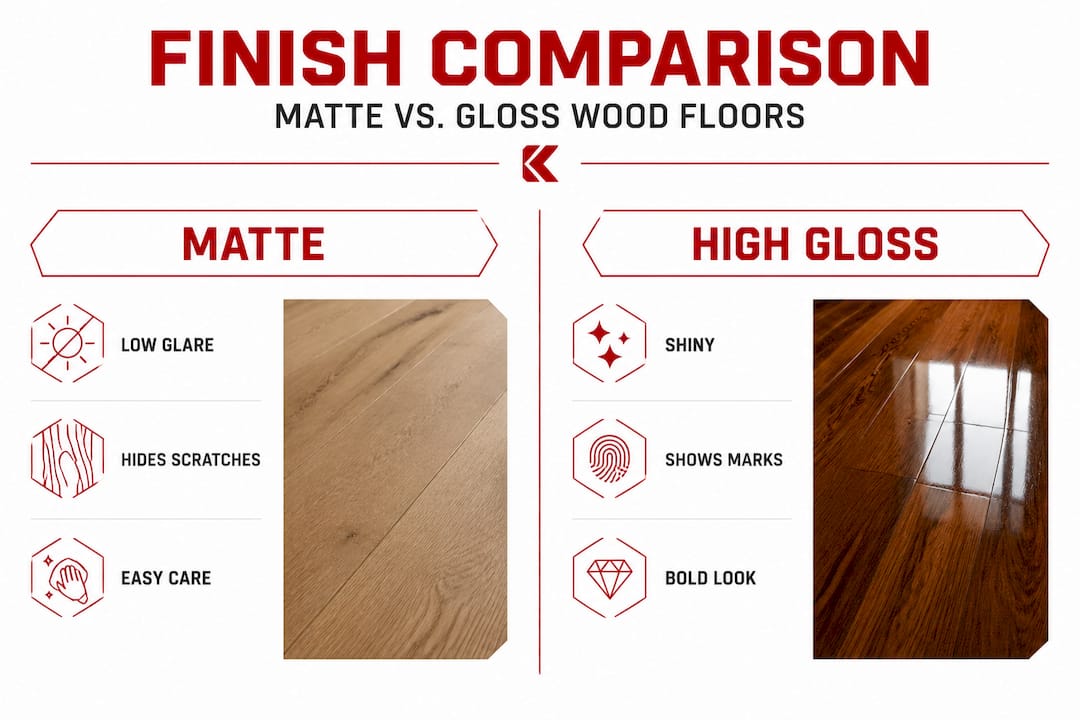
As the table shows, matte finish has a real advantage for homes with kids, pets, and heavy foot traffic. Because matte reflects minimal light, small scratches, everyday scuffs, and surface dust simply do not stand out the way they do on a glossy floor.
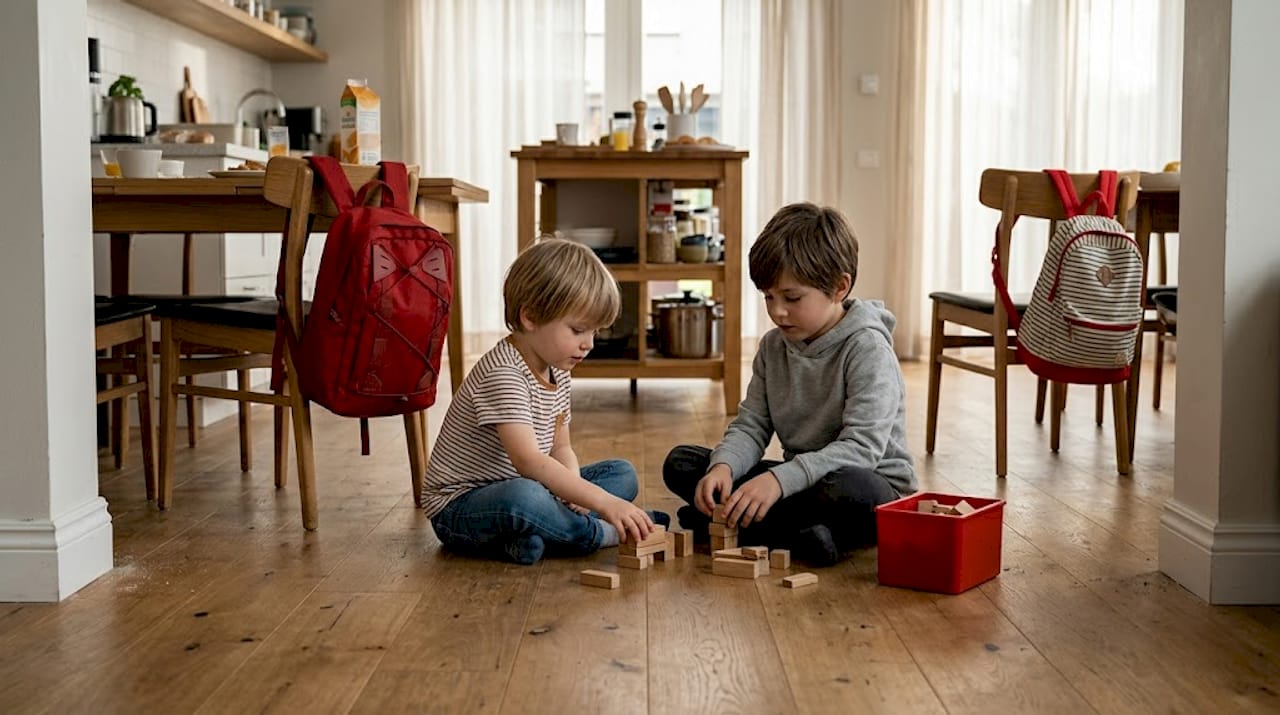
Gloss finishes can look spectacular in controlled environments. Think designer showrooms or formal dining rooms that rarely see shoes. But in a real home, that shine becomes a liability. Every footprint shows. Every smudge is visible from across the room. Dust practically glows under sunlight.
Satin sits comfortably in the middle. It has some sheen without the high-maintenance drama of gloss. For many homeowners, it is the safe choice. But matte goes further in hiding wear and offering a distinctly modern aesthetic that satin cannot fully deliver.
When choosing the best wood species to pair with a matte finish, open-grain woods like oak and ash tend to work best because the finish settles into the grain texture rather than sitting on top of it. Tighter-grained species like maple can also look beautiful in matte, though the effect is more subtle.
Considering hardwood floor color choices alongside finish level matters too. Darker stains in matte create a very dramatic, moody effect. Lighter natural tones in matte feel airy and Scandinavian. The combination of color and finish sheen together defines the whole mood of a room.
Pro Tip: If you are torn between matte and satin, request physical samples and place them in your actual room under your actual lighting conditions. Showroom lighting is almost always brighter and more controlled than home lighting, which can make satin look far shinier than it will in your space.
Design advantages: Why choose matte finish for your home?
Understanding the practical differences is important, but design is just as crucial. Let’s look at why matte finish is a popular designer pick.
One of the most underrated qualities of a matte wood floor is its versatility. It does not announce itself loudly. It lets your furniture, art, rugs, and other design elements take center stage. This is why interior designers so frequently recommend matte for clients who want their floors to be foundational rather than flashy.
The matte finish’s low-reflection quality is particularly valuable in sunlit rooms. South-facing living rooms and open-plan kitchen areas with skylights can become uncomfortable with glossy floors because the reflected glare gets intense by midday. A matte finish absorbs that light rather than bouncing it back at you. The room stays calm and comfortable visually throughout the day.
Here is a breakdown of the design scenarios where matte really excels:
- Contemporary and minimalist homes: Clean lines and neutral palettes pair naturally with the understated tone of matte.
- Rustic and farmhouse interiors: Matte gives the impression of aged, naturally worn wood, which is exactly the look these styles are after.
- Transitional spaces: Matte bridges the gap between modern and traditional, making it easy to change up your furniture or decor without feeling like the floor is fighting your new direction.
- Open-plan living areas: With multiple zones sharing one floor, matte creates visual continuity without being distracting.
- High-sunlight rooms: As mentioned, matte dramatically reduces glare and keeps spaces visually comfortable.
When choosing hardwood floors for a renovation project, the finish level often gets treated as an afterthought. Species choice, color, and width get most of the attention. But finish is what changes how you actually experience the floor every single day. It affects how warm or cool the room feels, how formal or casual the space reads, and whether your floor looks like a feature or a backdrop.
Interior designers who follow hardwood flooring design trends have noted a consistent shift toward matte finishes, particularly in high-end residential projects. The reasoning is straightforward. Gloss finishes can date a space quickly. The hyper-shiny look popular in the early 2000s now reads as dated in many design contexts. Matte, by contrast, has a timeless quality rooted in how wood actually looks in nature.
Pro Tip: Pair matte finish floors with matte or satin paint finishes on your walls for a cohesive, intentional look. Mixing high-gloss walls with matte floors can feel disjointed, while keeping similar sheen levels throughout creates a polished, pulled-together space.
Caring for matte finish wood floors: Maintenance and cleaning tips
Style and appearance matters, but any homeowner or designer wants surfaces that hold up. Let’s dig into what it takes to keep matte finish wood floors looking their best.
The good news is that matte finish floors are among the easier hardwood floors to maintain. Because there is less light reflection, smudges, fine dust, and minor scuffs simply do not show up as obviously as they do on glossy surfaces. That said, there are specific care habits that protect the finish and keep it looking great long term.
Daily and weekly care routine:
- Sweep or dry microfiber mop daily. Fine grit and sand particles act like sandpaper under foot traffic. Removing them regularly prevents micro-scratches from building up over time.
- Use a damp, not wet, mop for weekly cleaning. Excessive moisture is the enemy of any hardwood floor. A lightly dampened microfiber mop removes residue without pushing water into the wood.
- Choose pH-neutral, hardwood-safe cleaners. Avoid harsh chemicals, vinegar, or anything with a wax base. These can cloud the finish or leave residue that dulls the matte appearance.
- Clean up spills immediately. Even though matte finish floors show fewer watermarks, standing liquid can still penetrate the wood over time and cause damage.
- Place felt pads under furniture legs. This single step prevents the majority of scratches and gouges that come from daily chair and table movement.
- Use area rugs in high-traffic zones. Entry points, hallways, and areas in front of kitchen sinks benefit from protective rugs that take the daily wear before it reaches your floor.
“Matte finish floors require consistency rather than intensity. A simple daily sweep and a weekly damp mop will keep them looking new for decades.”
For long-term durability, understanding the relationship between cleaning products and finish chemistry matters. Many commercial floor cleaners contain surfactants or silicone compounds that build up on matte finishes and create a subtle sheen over time. This can actually shift your beautiful matte floor toward a satin appearance without you realizing what is happening.
Learning more about maintaining prefinished flooring can help you understand how factory-applied matte finishes differ from site-finished floors and what that means for your specific care routine.
Top mistakes to avoid:
- Using steam mops. The heat and moisture combination can warp planks and break down the finish bond.
- Applying wax or polish products. These are designed for different finish types and will ruin the matte look.
- Using oil-based soaps. They leave residue and can create a sticky layer that attracts more dirt.
- Scrubbing with abrasive pads. Even light scrubbing can create visible marks on a matte surface.
Pro Tip: If your matte floor starts looking slightly dull or uneven in sheen, it is often due to product buildup rather than finish wear. A deep clean with a dedicated hardwood floor cleaner can restore it to its original appearance without the need for refinishing.
Our perspective: Why matte finish is more than just a trend
We have guided countless clients through the finish selection process, and the pattern we see repeatedly is this: people who choose matte rarely regret it, while people who choose high gloss sometimes wish they had gone in a different direction after a year of living with their floors.
That is not a knock on gloss finishes. They have their place, and they can be genuinely beautiful in the right context. But gloss requires a certain lifestyle to look its best. Low foot traffic, disciplined cleaning habits, no pets, careful shoe management. For most families, that is simply not realistic.
Matte finish, on the other hand, works with your life rather than against it. The scuff your kid leaves dragging a backpack across the floor? Largely invisible. The paw prints after a rainy afternoon walk? Easy to wipe and practically undetectable. The slight wear that develops in a high-traffic corridor over three years? Part of the charm rather than a source of anxiety.
We also think there is something worth saying about sustainability and longevity. Floors that show wear quickly tend to prompt refinishing sooner. Refinishing is expensive, disruptive, and generates waste. A matte finish that gracefully absorbs daily life without demanding constant attention is, in a real sense, the more eco-friendly hardwood flooring choice when you factor in the full lifespan of the floor.
That said, we are honest with clients about when matte is not the right call. If you love the look of a formal, polished interior with high-shine surfaces throughout, matte might feel flat and underwhelming to you. Some people find the low-reflection quality almost too casual for their taste. That is a valid response to a finish that prioritizes naturalness over drama.
The key insight we share with every client is this: choose your finish based on how you actually live, not how you imagine you might live after the renovation. If your household is busy and energetic, matte will serve you for decades. If your home is a calm, low-traffic space and you love a polished aesthetic, satin or even semi-gloss might be more satisfying day to day.
Discover stunning matte finish options for your home
If this guide has you leaning toward matte for your next flooring project, the natural next step is seeing the real options available to you.
At Kapriz Hardwood Floors, we carry a carefully curated range of hardwood floors in matte, satin, and gloss finishes, from high-end luxury brands down to genuinely affordable options that do not compromise on quality. You can browse hardwood floors across a wide range of species, colors, and finish levels to find exactly what matches your space and budget. If you are thinking about how matte finish might work across multiple rooms, exploring wood flooring options for your whole home is a great place to start. Our team loves helping homeowners and designers find the right finish the first time, so you can move forward with confidence rather than guesswork.
Frequently asked questions
Does matte finish make scratches less visible on wood floors?
Yes, a matte finish tends to mask scratches, dust, and minor wear better than glossier finishes because the low light reflection does not highlight surface imperfections the way a shiny coating does.
Can matte finish be used on any wood species?
Matte finish works on most wood species, but it looks especially striking on woods with prominent grain or texture, like oak or hickory, because the non-reflective coating draws the eye directly to the natural wood character rather than the surface sheen.
Is matte finish more difficult to clean than shiny finishes?
Matte finish is actually easier to maintain for most households because it shows fewer smudges and watermarks. Regular cleaning with gentle, hardwood-safe products keeps it looking sharp without the extra upkeep that high-gloss surfaces demand.
Does a matte finish floor need to be resealed more often?
No. Matte finish floors do not require more frequent sealing than other finish types. Consistent, correct cleaning and avoiding harsh chemicals are what protect the finish long-term and keep resealing intervals on a normal schedule.


