


Wide plank hardwood meaning: Bay Area homeowner guide
You’ve probably heard that wide plank hardwood floors are stunning but too difficult to maintain or prone to warping. That’s not the full story. Wide plank hardwood flooring delivers exceptional aesthetic appeal and can be remarkably durable when you choose the right species and installation methods for the Bay Area’s unique climate. This guide clarifies what wide plank hardwood means, weighs its benefits and challenges, and provides actionable selection and care advice tailored for local homeowners and property investors.
Table of Contents
- What Does Wide Plank Hardwood Mean?
- Aesthetic And Spatial Benefits Of Wide Plank Hardwood
- Durability And Maintenance In The Bay Area Climate
- Pros And Cons Of Wide Plank Hardwood Flooring
- Common Misconceptions About Wide Plank Hardwood
- Choosing The Right Wide Plank Hardwood For Your Bay Area Property
- Installation And Maintenance Best Practices
- Enhance Your Home With Expert Wide Plank Hardwood Flooring Solutions
- Frequently Asked Questions About Wide Plank Hardwood Flooring
Key takeaways
| Point | Details |
|---|---|
| Definition | Wide plank hardwood floors typically measure 5 inches or wider, showcasing more wood grain and fewer seams than standard narrow planks. |
| Climate fit | Bay Area humidity demands moisture-resistant species and engineered options to minimize expansion and contraction. |
| Aesthetic impact | Wider planks create a spacious, seamless look that enhances room perception and reveals rich wood character. |
| Cost and complexity | Expect higher upfront costs and professional installation requirements, balanced by increased home value and timeless style. |
| Maintenance essentials | Control indoor humidity, use proper cleaning methods, and schedule refinishing to preserve beauty and durability. |
What does wide plank hardwood mean?
Wide plank hardwood flooring refers to boards that measure 5 inches or wider, contrasting sharply with traditional narrow planks that typically span 2 to 4 inches. This broader width creates a distinctive visual statement by reducing the number of seams across your floor and displaying more of the wood’s natural grain patterns. Two primary types exist: solid hardwood, which consists of a single piece of wood milled from a tree, and engineered hardwood, which features multiple layers bonded together for enhanced dimensional stability.
Historically, wide planks dominated early American homes when builders used full-width boards from old-growth trees. Modern manufacturing techniques now make wide plank options accessible across various best wood species for hardwood floors, blending traditional charm with contemporary style. However, wide plank hardwood floors typically cost more than narrow planks due to increased material usage and installation labor.
Key characteristics of wide plank hardwood include:
- Plank width of 5 inches or greater, with some reaching 10 to 12 inches
- Solid or engineered construction options to suit different stability needs
- Enhanced showcase of wood grain, knots, and natural character
- Reduced seam visibility compared to narrow plank installations
- Premium pricing reflecting material and skilled labor requirements
Aesthetic and spatial benefits of wide plank hardwood
Wide plank hardwood transforms rooms by creating a clean, expansive visual flow. Fewer seams mean your eye travels across the floor without constant interruption, making even modest spaces feel larger and more cohesive. Each board displays a broader canvas of wood grain, highlighting the unique patterns, color variations, and natural character that give hardwood its warmth and depth.
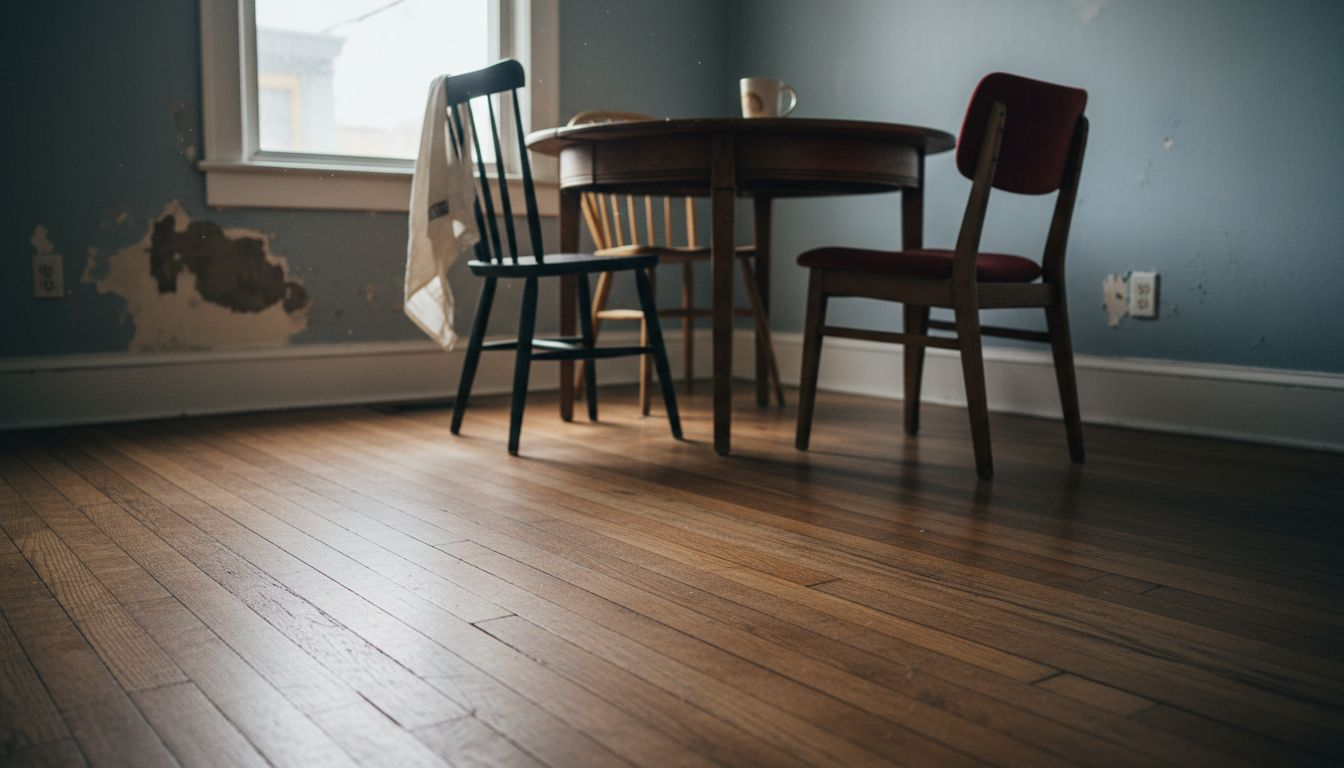
This flooring style adapts beautifully to diverse design aesthetics. Rustic interiors benefit from the traditional, farmhouse appeal of wide planks with visible knots and texture. Contemporary spaces gain sophistication from smooth, uniform wide boards with minimalist finishes. The versatility extends to both small and large rooms, though choosing the best plank width and finish for small spaces requires careful consideration of proportions.
Visual advantages include:
- Seamless appearance that visually enlarges room dimensions
- Rich grain display that emphasizes wood’s organic beauty
- Timeless elegance aligned with current trends in hardwood flooring in the Bay Area
- Fewer seams that simplify maintenance and reduce dirt accumulation
Pro Tip: Pair wide plank hardwood with light stains and matte finishes to maximize the spacious, airy feel in smaller Bay Area homes or condos.
Durability and maintenance in the Bay Area climate
The Bay Area’s humidity fluctuations challenge hardwood flooring, causing wood to expand during moist periods and contract when dry. Wide planks amplify this movement because their larger surface area reacts more noticeably to moisture changes. Engineered hardwood offers superior stability compared to solid wood, making it the smart choice for kitchens, bathrooms, or properties near the coast where humidity levels vary significantly.
Selecting the right wood species dramatically impacts longevity. Species with high Janka hardness ratings like White Oak, Brazilian Cherry, or Hickory resist dents, scratches, and moisture damage better than softer woods. These durable best wood species for hardwood floors maintain their appearance even in high-traffic Bay Area homes.
Maintenance begins before installation. Wide plank hardwood flooring is more prone to expansion and contraction due to humidity changes, requiring a well-prepared, flat subfloor to avoid warping or cupping. Ongoing care involves controlling indoor humidity between 30 to 50 percent using dehumidifiers or humidifiers, cleaning with pH-neutral hardwood cleaners, and refinishing every 7 to 10 years to restore the protective finish.
Critical durability factors:
- Engineered wood provides better dimensional stability than solid in humid Bay Area climates
- High Janka hardness species withstand daily wear and moisture exposure
- Proper subfloor moisture barriers prevent warping from below
- Regular humidity monitoring protects against seasonal expansion and contraction
Pro Tip: Install engineered hardwood floors smart investment in moisture-prone rooms and reserve solid wide planks for stable, climate-controlled living areas.
Pros and cons of wide plank hardwood flooring
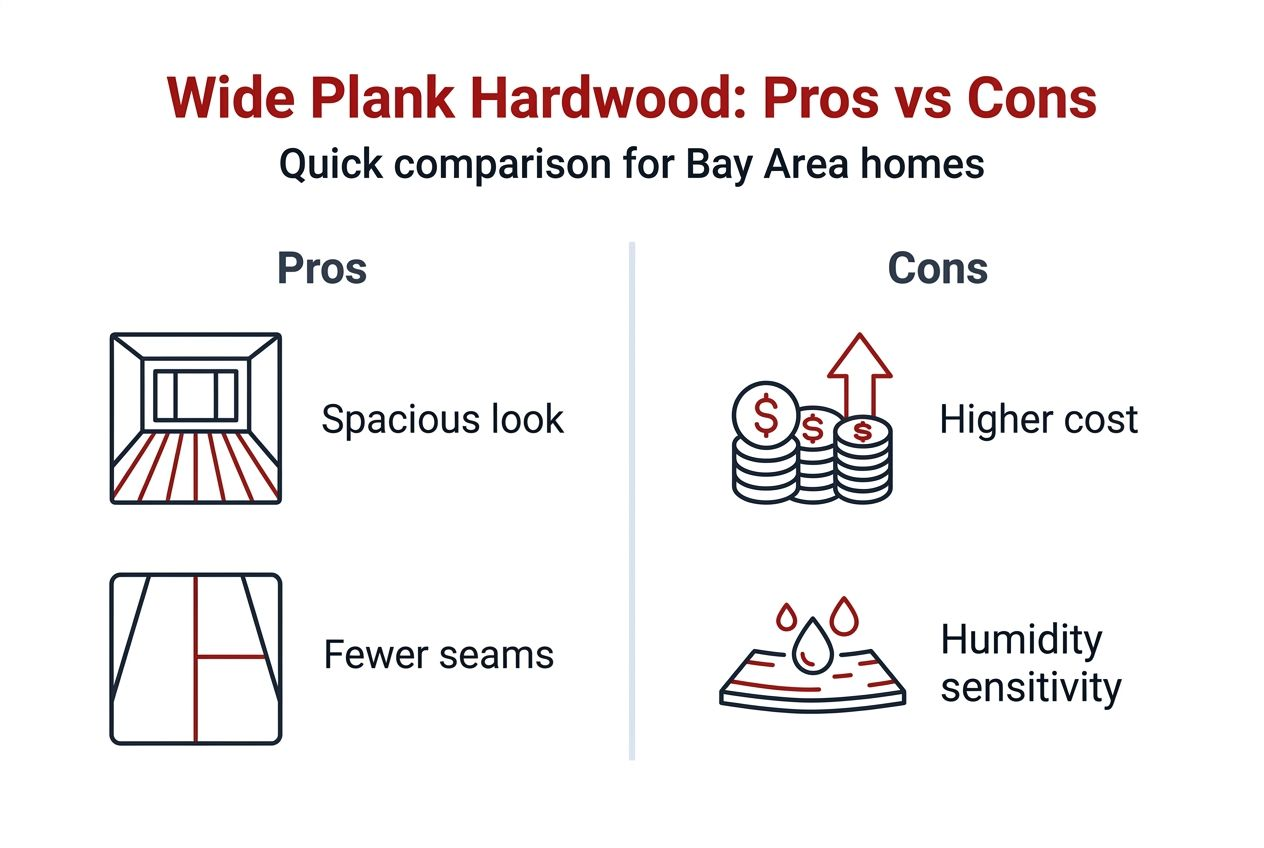
Balancing the benefits and limitations of wide plank hardwood helps you make an informed investment decision. The advantages center on aesthetics, home value, and timeless appeal, while the challenges involve cost, installation complexity, and climate sensitivity.
| Pros | Cons |
|---|---|
| Creates spacious, seamless room appearance | Higher upfront costs than narrow plank options |
| Showcases rich wood grain and natural character | More susceptible to expansion and contraction |
| Increased market appeal and higher resale values in Bay Area | Requires skilled professional installation |
| Fewer seams simplify cleaning and maintenance | Limited suitability in very small or irregular spaces |
| Versatile styling from rustic to contemporary | Longer acclimation time before installation |
Financial considerations matter. Wide plank hardwood floors typically cost more than narrow planks due to material usage and labor. However, homes with wide plank hardwood floors command higher resale values when paired with quality materials and finishes, making this a strategic long-term investment for Bay Area property owners.
Installation complexity increases with plank width because wider boards demand flatter subfloors and more precise fitting to prevent gaps or buckling. Professional installers familiar with Bay Area climate conditions can mitigate expansion risks through proper acclimation and fastening techniques. Comparing wide vs narrow plank options reveals that narrow planks may better suit compact rooms or DIY projects, while wide planks shine in open floor plans where their visual impact justifies the added effort.
Additional considerations:
- Budget for professional installation to avoid costly mistakes
- Expect longer project timelines for acclimation and careful fitting
- Plan for higher material costs offset by increased property value
- Assess room dimensions to ensure wide planks enhance rather than overwhelm the space
For more insights on wide plank hardwood market appeal, explore external resources that detail resale value impacts.
Common misconceptions about wide plank hardwood
Several myths persist about wide plank hardwood that can mislead homeowners during the selection process. Clearing up these misconceptions ensures you base your decision on facts, not fiction.
Myth one: Wide planks are less durable than narrow planks. Reality: Durability depends on wood species, finish quality, and installation precision, not plank width. Engineered wide plank hardwood with a high Janka rating can outlast poorly installed narrow planks. The key lies in choosing the right species and ensuring professional installation.
Myth two: Installation is easier because fewer boards are needed. Reality: Wide plank installation is more complex, not simpler. Larger boards require flatter subfloors, precise moisture control, and skilled fastening techniques to prevent warping or gapping. DIY installations often fail because homeowners underestimate these technical demands.
Myth three: All wide plank floors cost significantly more. Reality: Cost varies more by wood species, finish, and source than by plank width alone. You can find affordable wide plank options in engineered formats or domestic species, while exotic solid wide planks command premium prices. Budget-conscious buyers should compare total project costs, including installation.
Myth four: Wide planks suit any room size. Reality: Proportion matters. Wide planks look stunning in larger, open spaces but can overwhelm very small rooms or narrow hallways. Conversely, narrow planks may appear busy in expansive areas. Matching plank width to room dimensions creates the most harmonious result.
Additional clarifications:
- Engineered wide planks perform well in humid climates, contradicting beliefs that only solid wood lasts
- Maintenance requirements for wide and narrow planks are essentially identical
- Refinishing wide plank floors is no more difficult than refinishing narrow planks
For further myth-busting, visit our hardwood flooring myths clarified resource library.
Choosing the right wide plank hardwood for your Bay Area property
Selecting the ideal wide plank hardwood involves balancing aesthetic preferences, climate demands, budget constraints, and room characteristics. Start by identifying wood species with high moisture resistance and hardness ratings suited to the Bay Area’s humidity patterns. White Oak, Hickory, and Maple top the list for durability and stability.
Next, determine the appropriate plank width. Rooms over 300 square feet can handle 7 to 10-inch planks that create dramatic visual impact. Smaller spaces benefit from 5 to 6-inch widths that provide wide plank character without overwhelming proportions. Consider your design style: rustic aesthetics pair well with wire-brushed or distressed wide planks, while modern interiors favor smooth, uniform boards with subtle grain.
Engineered versus solid wood remains a critical decision. Engineered wide plank hardwood excels in high-moisture areas like kitchens or coastal properties because its layered construction resists expansion and contraction. Solid wide planks suit stable, climate-controlled environments and offer unlimited refinishing potential over decades. Review Bay Area hardwood flooring trends to see what local buyers and designers currently favor.
Budget considerations should account for both material and installation costs. Premium solid wide planks from exotic species can exceed $15 per square foot, while quality engineered options range from $6 to $12 per square foot. Installation typically adds $3 to $8 per square foot depending on project complexity and subfloor preparation needs.
Selection checklist:
- Choose wood species for durability with Janka ratings above 1,200
- Match plank width to room size: wider for large spaces, moderate for smaller areas
- Opt for engineered in moisture-prone zones, solid in stable environments
- Factor total project costs including installation, subfloor prep, and finishing
- Test samples in your space to evaluate color and grain under natural lighting
Installation and maintenance best practices
Successful wide plank hardwood installation begins with thorough subfloor preparation. The surface must be flat within 3/16 inch over 10 feet and completely dry with moisture content below 12 percent. Any deviation risks warping, cupping, or gapping as the wide boards respond to imperfections. Professional installers use moisture meters, leveling compounds, and vapor barriers to create the ideal foundation.
Acclimation comes next. Wide plank hardwood floors require skilled installation due to their size and sensitivity to subfloor flatness and moisture, potentially making DIY installation impractical. Allow boards to acclimate in the installation room for 7 to 14 days, matching the wood’s moisture content to the local environment. This step prevents post-installation movement that causes squeaks or separation.
Ongoing maintenance preserves your investment. Sweep or vacuum daily to remove abrasive dirt. Clean weekly with a damp microfiber mop and pH-neutral hardwood cleaner, avoiding excessive water that can penetrate seams. Monitor indoor humidity year-round, using dehumidifiers in summer and humidifiers in winter to maintain the 30 to 50 percent sweet spot.
Maintenance timeline:
- Daily: Sweep or vacuum to remove dirt and debris
- Weekly: Damp mop with hardwood-specific cleaner
- Monthly: Inspect for scratches, gaps, or finish wear
- Seasonally: Check and adjust indoor humidity levels
- Every 7 to 10 years: Refinish to restore protective coating and appearance
Pro Tip: Schedule installation during mild weather months when Bay Area humidity levels are most stable, reducing acclimation time and minimizing expansion risks.
Never attempt wide plank installation without professional experience. The size and weight of wide boards demand specialized tools, techniques, and expertise to achieve a flawless result. For reliable professional hardwood flooring installers, seek contractors familiar with Bay Area climate challenges and wide plank specifications. Additional guidance on wide plank flooring installation challenges can help you understand the technical demands involved.
Enhance your home with expert wide plank hardwood flooring solutions
Ready to transform your Bay Area property with the timeless elegance of wide plank hardwood? Kapriz Hardwood Flooring Store offers an extensive selection of best wood species for hardwood floors from domestic favorites to exotic imports, all backed by our commitment to quality without compromise. Our experienced team understands the unique climate demands of the Bay Area and can guide you through species selection, width choices, and finish options that match your aesthetic vision and practical needs.
Whether you’re considering engineered hardwood floors benefits for moisture-prone areas or exploring budget hardwood look options that deliver style and savings, we provide transparent pricing and honest advice to help you make the right investment. Our professional installation services ensure your wide plank hardwood performs beautifully for decades. Contact Kapriz today to schedule a consultation and discover why we’re the perfect place to buy hardwood floors for unbeatable value and quality.
Frequently asked questions about wide plank hardwood flooring
What is the minimum width for wide plank hardwood floors?
Wide plank hardwood floors typically start at 5 inches wide, distinguishing them from standard narrow planks that measure 2 to 4 inches. Many homeowners choose 7 to 10-inch widths for dramatic visual impact in larger rooms.
Is engineered wood suitable for humid Bay Area rooms?
Yes, engineered wide plank hardwood excels in humid environments because its layered construction resists expansion and contraction better than solid wood. It’s ideal for kitchens, bathrooms, or coastal properties where moisture levels fluctuate.
How do I maintain wide plank hardwood floors?
Sweep or vacuum daily, damp mop weekly with pH-neutral hardwood cleaner, and maintain indoor humidity between 30 to 50 percent. Refinish every 7 to 10 years to restore the protective finish and keep your floors looking new.
Do wide plank floors cost more than narrow plank options?
Generally, yes. Wide plank hardwood requires more material per board and skilled installation to handle its size and weight, increasing both material and labor costs. However, the investment often pays off through increased home value and timeless aesthetic appeal.
Will wide plank hardwood increase my Bay Area home’s value?
Wide plank hardwood floors enhance market appeal and can command higher resale values, especially when paired with quality materials and finishes. Bay Area buyers value the spacious, elegant look that wide planks deliver, making this a strategic upgrade for property investors.
Can I install wide plank hardwood in small rooms?
You can, but proportion matters. Planks in the 5 to 6-inch range work well in smaller spaces, while very wide boards may overwhelm compact rooms. Consider your room dimensions and test samples before committing to ensure the scale feels balanced.
Recommended
- Flooring Articles | Kapriz Hardwood Flooring Store
- Hardwood flooring trends in San Jose, Santa Clara and SF Bay area. | Kapriz Hardwood Flooring Store
- What plank width and finish are best for small spaces? | Kapriz Hardwood Flooring Store
- What plank width and finish are best for small spaces? | Kapriz Hardwood Flooring Store

