

Best wood floors for families: durable, stylish, affordable
TL;DR:
- Families should prioritize scratch and water resistance, ease of maintenance, and safe finishes when choosing wood floors.
- Engineered hardwood often outperforms solid hardwood in moisture-prone areas and offers better stability.
- Proper maintenance and realistic expectations about imperfections contribute significantly to flooring longevity and satisfaction.
You love your kids, your dog, and your home. But keeping all three happy at once? That’s where most families hit a wall. Wood floors are beautiful, but between muddy paws, crayon drops, juice spills, and the daily stampede of little feet, choosing the right one feels overwhelming. The wrong choice means refinishing costs, constant frustration, or floors that look worn out in two years. This guide cuts through the noise and walks you through everything from species and construction type to finishes and budget, so your family gets floors that look great and actually last.
Table of Contents
- How to choose wood floors for active families
- Top wood species for busy households
- Engineered vs solid hardwood: Which is best for families?
- Finishes, textures, and kid-safe options
- Budget comparison: Balancing cost, quality, and looks
- Our perspective: Rethinking wood flooring choices for real-life families
- Find your perfect family wood floor with Kapriz
- Frequently asked questions
Key Takeaways
| Point | Details |
|---|---|
| Choose family-ready features | Prioritize scratch resistance, water protection, and child-safe finishes when selecting wood floors for your home. |
| Top species perform | Oak, maple, and hickory are the best species for busy families thanks to their hardness and resilience. |
| Engineered often wins | Engineered hardwood combines authentic looks with superior moisture resistance and flexibility for family life. |
| Finish and texture matter | Matte or hand-scraped finishes hide wear and are safer for kids, making upkeep much easier. |
| Quality at every budget | You can get stylish, durable wood floors without overspending by choosing the right species and protective finish. |
How to choose wood floors for active families
Before you even look at color swatches or pricing, you need a checklist of non-negotiable features. Active families need floors built for the real world, not showrooms.
Here are the essential criteria every family should evaluate before buying:
- Scratch resistance: Kids drag chairs, toys skid across the floor, and pets dig in their claws on every turn. The harder the wood, the better it holds up.
- Water and moisture resistance: Spills happen every single day. You need a floor that gives you a few minutes to grab a paper towel without leaving a permanent stain.
- Ease of maintenance: Your floor should be easy to sweep, mop, and spot-clean without special products or weekly rituals.
- Non-toxic finishes: Children spend a lot of time on the floor. Low-VOC and water-based finishes keep indoor air quality safe, especially for toddlers and babies.
- Style and budget: You still want a floor that looks beautiful. Thankfully, there are great options at every price point.
The first major decision is whether to go with solid hardwood or engineered hardwood. Solid hardwood is exactly what it sounds like: one thick plank of wood. Engineered hardwood is built with a real wood veneer on top bonded to layered plywood underneath. For families, this construction difference matters a lot. Engineered hardwood resists movement and moisture better, making it suitable for kitchens and basements where solid wood would warp or buckle.
Finish durability is equally important. Aluminum oxide finishes last the longest and resist scratches well. Polyurethane is a solid middle-ground option. And if you want to hide everyday wear, the finish sheen matters more than people realize.
Pro Tip: Choose a matte or satin finish over glossy. High-gloss floors look stunning in a showroom but reveal every scratch, footprint, and smudge in a busy home. Matte finishes hide the daily evidence of family life much better.
Before finalizing any product, explore this child-safe hardwood flooring guide to ensure the product you pick meets safety standards for your youngest family members. It’s also worth comparing durable flooring types side by side before committing to wood specifically.
Top wood species for busy households
Once you know what features to look for, the next step is picking the right species. Not all wood is created equal. Some species are soft enough to dent if you drop a book; others can handle a stampede.
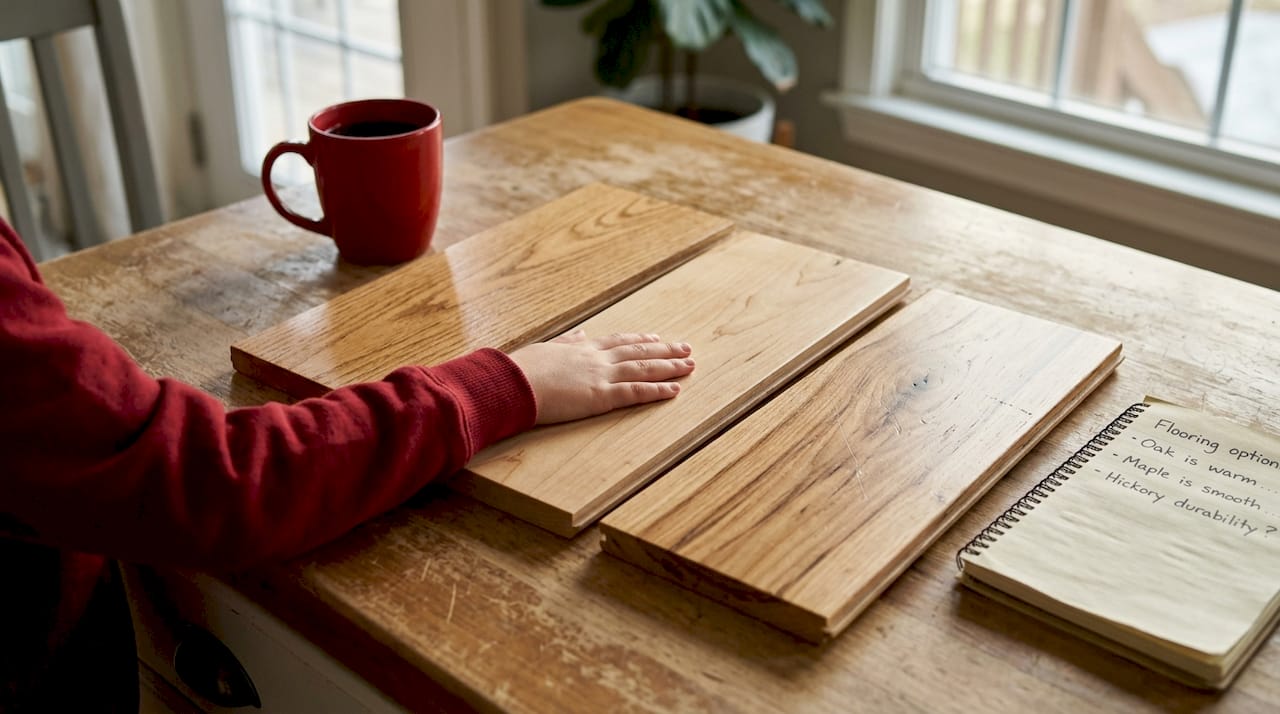
Oak, maple, and hickory are among the most durable species for family homes, and each one brings something different to the table.
| Wood species | Janka hardness | Scratch resistance | Color variety | Best rooms |
|---|---|---|---|---|
| Red oak | 1,290 lbf | Good | Medium to warm tones | Living rooms, hallways |
| Maple | 1,450 lbf | Very good | Light, creamy tones | Kitchens, playrooms |
| Hickory | 1,820 lbf | Excellent | Wide, rustic variation | High-traffic areas |
| Walnut | 1,010 lbf | Fair | Rich, dark tones | Bedrooms, dining rooms |
Here is a quick breakdown of each species and how they fit family life:
- Oak: The most popular choice for a reason. Red and white oak are both widely available, budget-friendly, and genuinely hard. The natural grain pattern hides minor scratches beautifully. Great for living rooms and hallways where traffic is constant but style still matters.
- Maple: Slightly harder than oak and with a tighter grain, maple is a workhorse. It is a top pick for playrooms and kitchens because it resists dents and is easy to keep clean. The light color can show dirt more readily, so it needs regular sweeping.
- Hickory: The toughest of the bunch. Hickory’s Janka rating of 1,820 makes it nearly bulletproof for family use. The dramatic grain variation also does a great job camouflaging wear over time. It is the best call for mudrooms, entryways, and any room that sees constant foot traffic.
- Walnut: Rich and elegant, but softer than the others. Walnut works beautifully in lower-traffic spaces like master bedrooms or formal dining rooms where looks matter more than pure toughness.
Pro Tip: Lighter woods like maple and natural oak are more forgiving when it comes to surface scratches. Why? Small scratches in light wood simply do not catch the eye the same way they do on darker species like walnut, where every mark stands out against the deep color.
Engineered vs solid hardwood: Which is best for families?
Most people assume solid hardwood is always the premium choice. It is not. For families, engineered hardwood often wins on every practical metric that matters.
Solid hardwood is a single plank of wood, typically three-quarters of an inch thick. It can be sanded and refinished many times over decades. However, it expands and contracts with humidity changes, which makes it risky in kitchens, bathrooms, or below-grade spaces.
Engineered hardwood handles temperature and moisture changes better, minimizing warping. The cross-layered plywood core stabilizes the floor in conditions that would destroy solid wood.
Here is how the two options compare directly:
| Feature | Engineered hardwood | Solid hardwood |
|---|---|---|
| Moisture resistance | High | Low |
| Installation areas | Any room, including basements | Above-grade only |
| Refinishing | 1 to 3 times (veneer depth) | 5 or more times |
| Cost | Moderate | Higher |
| Stability | Excellent | Fair to good |
| Best for families | Yes | Situational |
When does solid hardwood make sense for families? When you are installing in above-grade bedrooms with stable humidity, when you plan to stay in the home for 30 or more years and want multiple refinishing cycles, or when budget is not a constraint and you simply prefer traditional construction.
For most family scenarios, though, engineered hardwood benefits outweigh solid hardwood’s advantages. Think about the kitchen, the basement playroom, the first-floor open layout connecting living and dining. These are all areas where moisture and temperature fluctuation are real concerns.
Engineered hardwood is also often easier to install. Many products use floating click-lock systems that do not require nailing or gluing down, which cuts labor costs significantly. For families working within a budget, this is a big deal. And if you think of it as a long-term investment, engineered hardwood as a smart investment is well supported by both performance data and resale value research.
Situations where engineered clearly outperforms solid:
- Kitchens with frequent mopping and water exposure
- Basement playrooms or family rooms
- Homes with radiant floor heating systems
- Regions with high humidity or wide seasonal temperature swings
Finishes, textures, and kid-safe options
The species and construction type you choose matter enormously. But the finish on top is what families will interact with every single day. It protects the wood, defines the look, and determines how safe your indoor environment actually is for children.
“Child-safe finishes are essential. Look for low-VOC and water-based options to protect your family’s indoor air quality and keep the environment safe for children who spend time on the floor.”
There are two primary finish categories to understand:
- Water-based finishes: Dry quickly, lower odor, and significantly lower VOC emissions. They tend to have a clearer, lighter appearance that preserves the wood’s natural color. These are the top pick for homes with young children.
- Oil-based finishes: More durable and richer in color, but they take longer to dry and release more VOCs during curing. If you choose an oil-based product, ventilate thoroughly and keep kids out of the space for several days.
Surface texture is another underrated factor. Many families choose hand-scraped or distressed textures because they look rustic and warm. But there is also a practical reason: textured surfaces hide scratches, dents, and dings far better than smooth, flat surfaces. A distressed hickory floor in a playroom is almost impossible to visibly damage in ways that matter. Wire-brushed textures offer a similar benefit with a slightly more modern look.
How to choose a kid-safe and pet-safe finish in five steps:
- Confirm the VOC rating. Look for products labeled as low-VOC or zero-VOC, especially if you have infants or children with respiratory sensitivities.
- Check for water resistance. Make sure the finish creates a moisture barrier, not just a surface coat.
- Test scratch resistance. Ask for samples and run a key lightly across the surface. The best finishes for families should show minimal marking.
- Choose sheen wisely. As noted earlier, matte and satin sheens hide daily wear and reduce the appearance of scuffs.
- Verify certification. Look for child-safe hardwood options that carry FloorScore or GREENGUARD Gold certification, both of which confirm low chemical emissions.
Budget comparison: Balancing cost, quality, and looks
Let’s talk money, because this is where families often feel the most pressure. The good news is that there are affordable, high-quality hardwood options that do not require you to compromise on durability or looks.
| Budget tier | Cost per sq ft (installed) | Typical lifespan | Best features | Looks |
|---|---|---|---|---|
| Budget-friendly | $4 to $7 | 15 to 20 years | Solid performance, fewer species options | Good |
| Mid-range | $7 to $12 | 20 to 30 years | More species, better finishes, wider selection | Very good |
| High-end | $12 to $20+ | 30 to 50+ years | Premium species, custom finishes, refinishing cycles | Excellent |
Smart places to save money:
- Bedrooms and closets: These are low-traffic areas where a budget-friendly engineered option looks great and performs just fine.
- Choose in-stock species: Custom or exotic woods add significant cost. Oak and maple are widely stocked and competitively priced.
- Simpler installation patterns: Straight-lay patterns cost less to install than diagonal, herringbone, or chevron layouts.
Worth spending more on:
- Main living areas and hallways: These get the most foot traffic, so invest in a harder species and a better finish here.
- Finish quality: A superior finish extends the life of your floor by years. Do not cut corners here, even if you go with a more affordable species.
Pro Tip: You do not need to spend a fortune to get a floor that lasts. Focus your budget on the right species and finish combination rather than chasing brand names. Finding affordable hardwood at the right quality level is absolutely possible if you know what specs to prioritize. And when you’re ready to compare products in detail, a durable hardwood guide helps you match value to your specific needs.
Our perspective: Rethinking wood flooring choices for real-life families
Here is something most flooring guides will not tell you: obsessing over durability alone is just as big a mistake as obsessing over looks alone. We have seen families choose the hardest floor possible, install it, and then live in frustration because the color shows every speck of dust, or the texture feels cold and industrial underfoot.
The families who end up happiest with their floors are the ones who make peace with imperfection. A ding in a hand-scraped hickory floor is not a failure; it is character. A scuff on a matte oak floor disappears into the natural grain. These things are not signs your floor is falling apart. They are signs your home is lived in.
What actually gets overlooked most often is maintenance habits. The right floor with poor maintenance habits will always look worse than a decent floor cared for consistently. Teaching kids to remove shoes, placing felt pads under furniture, and cleaning spills quickly adds years to any floor’s life regardless of the species.
We also encourage families to weight environmental safety higher than most guides suggest. Indoor air quality matters, and it is shaped partly by what your floor is finished with. When you explore perfect durable hardwood choices, factor in low-VOC certifications alongside Janka ratings. Style, safety, and durability do not have to be trade-offs when you know what to look for.
Find your perfect family wood floor with Kapriz
At Kapriz Hardwood Floors, we understand that buying floors for a busy family is not just a design decision; it is a practical one that affects your daily life for decades. That is why we carry only products we trust at every budget level, from entry-level engineered options to premium hardwood collections.
Browse our full selection of hardwood floors curated specifically for real family life, or explore our affordable flooring options if budget is your top priority right now. Our team is ready to help you match your household’s needs to the right species, construction type, and finish without ever pushing you toward something that does not fit your life or your wallet. Beautiful, durable floors are not a luxury. They are what we do.
Frequently asked questions
What is the most scratch-resistant wood flooring for families?
Hickory and maple are among the most scratch-resistant hardwoods available, making them excellent choices for homes with active kids and pets. Hickory tops the list with a Janka rating of 1,820 lbf.
Is engineered hardwood safe for families with small children?
Yes, engineered hardwood is safe when you select a product with a low-VOC, child-safe finish. Look for GREENGUARD Gold or FloorScore certification to confirm low chemical emissions.
Can wood floors handle everyday spills and messes?
Engineered wood handles moisture better than solid wood and resists warping from spills when paired with a water-resistant finish. Just clean up liquids promptly rather than letting them sit.
What is the best way to maintain wood floors in a busy household?
Regular dry sweeping or vacuuming, immediate spill cleanup, and felt pads under all furniture legs are the three habits that make the biggest difference in keeping wood floors looking great year after year.
Are affordable hardwood floors as durable as expensive ones?
Many affordable hardwood options deliver excellent durability, particularly engineered products in oak or maple paired with a tough aluminum oxide finish. Price matters less than species and finish quality.


