

Choose the best child-safe hardwood flooring for peace of mind
TL;DR:
- Child-safe hardwood floors prioritize low-VOC finishes, high dent resistance, and slip-resistant surfaces.
- Wood species like hickory and oak are durable choices, especially when combined with proper maintenance.
- Regular cleaning, strategic rug placement, and safe installation are essential for ongoing family safety.
Not all hardwood floors are created equal when your household includes crawling toddlers, running kids, and the occasional juice box disaster. Lab testing consistently shows that wood species, finish chemistry, and surface texture vary widely in how well they protect young families. Many parents spend hours comparing wood grain photos online while overlooking the factors that actually matter most for safety. This guide cuts through the marketing noise and gives you a practical, evidence-based path to finding hardwood flooring that works hard for your family without costing you peace of mind.
Table of Contents
- What makes a hardwood floor child-safe?
- Comparing wood species for families: Hickory, oak, and more
- Finish, installation, and maintenance: Ingredients for a safer floor
- Design choices: Making your floor safe and stylish
- Key mistakes to avoid when choosing child-safe hardwood flooring
- Our perspective: What most parents don’t realize about child-safe hardwood flooring
- Get professional help choosing the perfect child-safe floor
- Frequently asked questions
Key Takeaways
| Point | Details |
|---|---|
| Wear resistance matters | Choose wood species like hickory or oak for better performance in active households. |
| Finish impacts safety | Opt for low-VOC, water-based finishes and matte textures to improve child comfort and health. |
| Add rugs for extra protection | Supplement dent-prone floors with area rugs and runners in children’s play areas. |
| Design can prevent slips | Matte finishes and practical color choices help reduce visible wear and slip risk. |
| Maintenance prolongs safety | Regular, proper cleaning is essential to keep hardwood floors safe and long-lasting for families. |
What makes a hardwood floor child-safe?
Child safety and flooring safety are not the same conversation. A floor can look beautiful and still off-gas harmful chemicals, develop slippery patches, or dent under the weight of a dropped wooden toy. Understanding what actually makes a floor safe for kids means looking past the surface.
The first concern for most pediatric health experts is volatile organic compounds, or VOCs. These are chemicals released from floor finishes, adhesives, and sealants that can linger in indoor air for months after installation. Children breathe more air relative to their body weight than adults do, so VOC exposure hits them harder. Water-based finishes and low-VOC adhesives dramatically reduce this risk compared to older oil-based products.
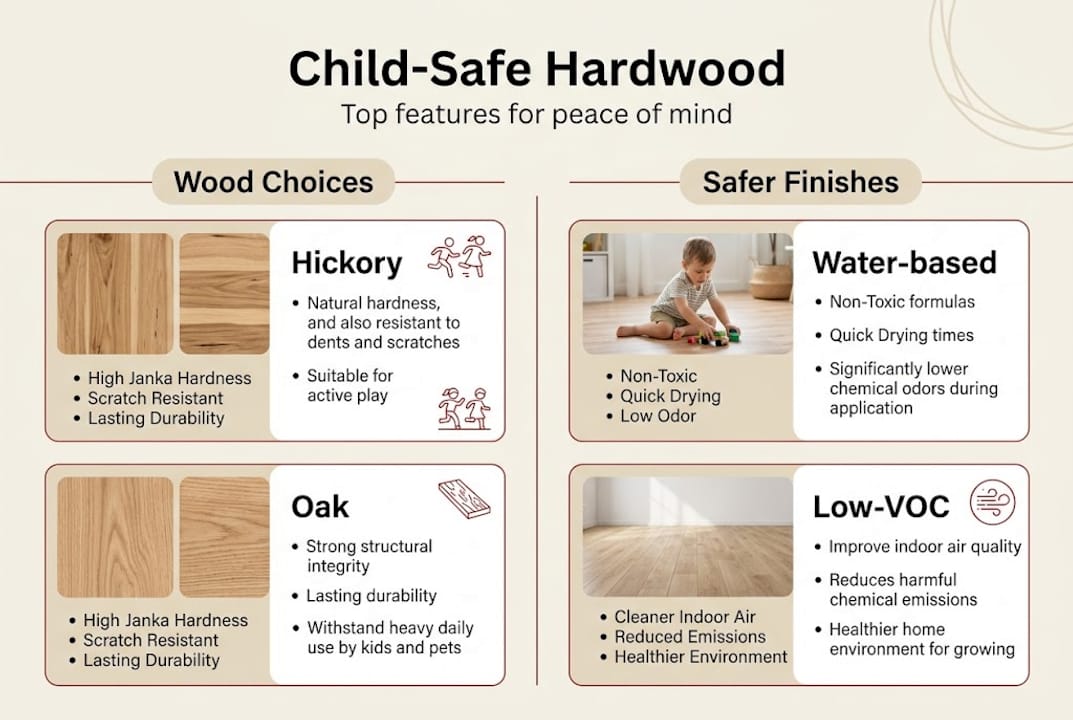
Beyond chemistry, physical safety matters just as much. A smooth but not slick surface keeps little feet from sliding, especially in socks. Installing hardwood floors safely means paying attention to transitions between rooms, securing loose planks, and eliminating trip hazards before your kids find them first.
Here are the core features to look for in a child-safe hardwood floor:
- Low or zero VOC finish applied at the factory or on-site
- Janka hardness rating (a measure of dent resistance) above 1,000 for active households
- Matte or satin surface that reduces glare and slipping
- Smooth, splinter-free grain with no open knots
- Easy-clean surface that resists moisture absorption
Pro Tip: Ask your flooring retailer for the finish’s VOC content in grams per liter. Anything under 50 g/L is considered low-VOC and safer for indoor air quality around children.
“Wood floors vary in dent and wear resistance, affecting suitability for active children.”
Think about a typical Tuesday afternoon at your house. Blocks get thrown, snacks get dropped, and someone inevitably drags a chair across the floor. A child-safe floor needs to handle all of that without becoming a hazard itself.
Comparing wood species for families: Hickory, oak, and more
Choosing the right wood species is one of the most impactful decisions you will make for your family’s floor. Each species has a different Janka hardness rating, grain pattern, and response to moisture, and those differences show up fast in a home with kids.
Hickory sits near the top of the hardness scale among domestic species, scoring around 1,820 on the Janka scale. Its wild, varied grain pattern also does a great job of hiding minor scuffs and scratches, which is a genuine bonus in a playroom. The tradeoff is that hickory can be harder to refinish because of its density.
Red oak is the most popular hardwood flooring species in North America for good reason. It scores around 1,290 on the Janka scale, which is solid for everyday family life. It takes stain beautifully and is widely available at multiple price points. White oak scores slightly higher and offers a tighter grain that resists moisture a bit better.
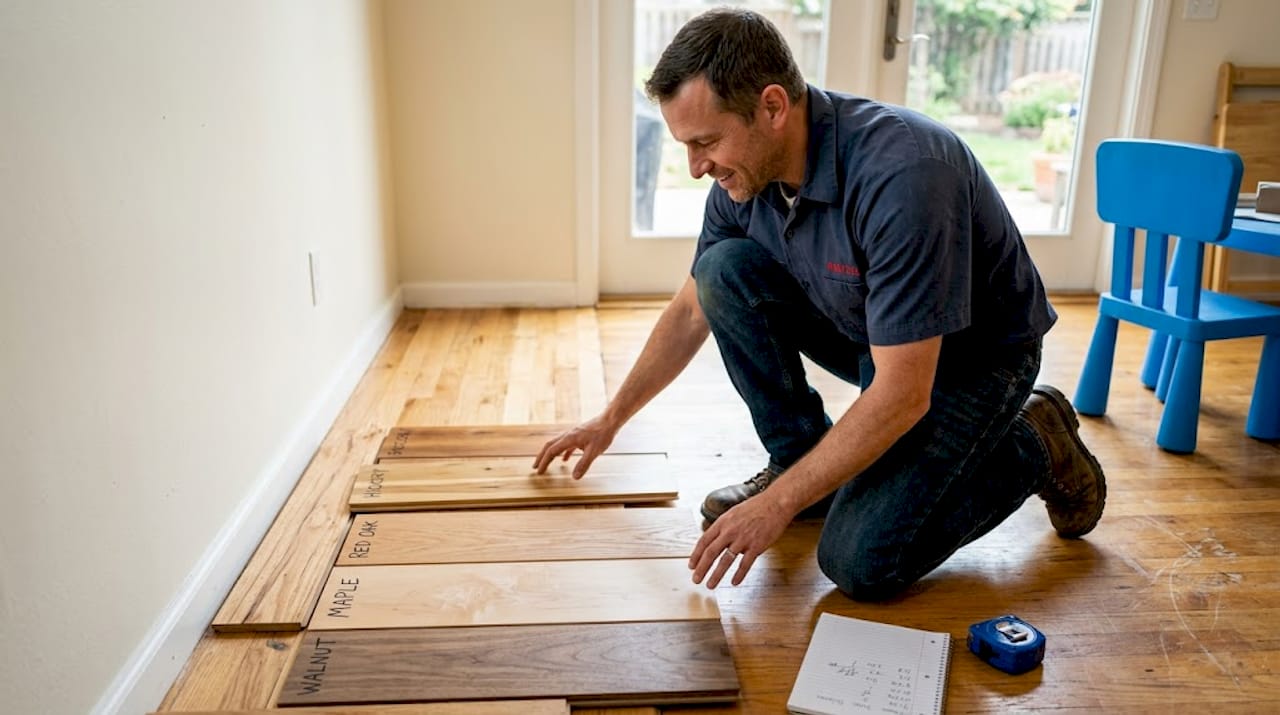
Maple is another strong contender, scoring around 1,450 on the Janka scale. Its light, consistent color can brighten a room, but it shows scratches more visibly than hickory or oak because of its fine grain.
Walnut is softer, around 1,010 on the Janka scale, and while it looks stunning, it requires more protective measures like rugs in high-traffic zones. Choosing wood species carefully based on your household’s activity level is far more important than picking based on color alone.
| Species | Janka hardness | Scratch visibility | Kid-friendliness |
|---|---|---|---|
| Hickory | 1,820 | Low | Excellent |
| White oak | 1,360 | Medium | Very good |
| Red oak | 1,290 | Medium | Good |
| Maple | 1,450 | High | Good |
| Walnut | 1,010 | Medium | Fair |
Hickory and oak excel in wear but have lower dent resistance, so supplementing with rugs is recommended in zones where kids spend the most time. If you want to go deeper on protective surface treatments, check out scratch-resistant options that pair well with these species.
Finish, installation, and maintenance: Ingredients for a safer floor
The species you choose is only part of the equation. How your floor is finished, installed, and maintained determines whether it stays safe and beautiful through years of family life.
Finish selection is where chemistry meets safety. Water-based polyurethane finishes dry faster, emit fewer VOCs, and maintain their clarity over time. Oil-modified finishes offer a warmer amber tone but release more chemicals during and after application. For homes with infants or toddlers, water-based is the clear winner from a health standpoint.
Installation method also affects safety. Nail-down and glue-down installations create a stable, solid surface with no flex or bounce. Floating floors, where planks click together over a foam underlayment, can shift slightly over time and create micro-gaps that collect crumbs and bacteria. They also tend to feel less solid underfoot, which can affect balance for young walkers.
Here is a simple maintenance routine that keeps family floors safe:
- Sweep or dust-mop daily to remove grit that acts like sandpaper underfoot
- Wipe spills immediately with a barely damp cloth, never soaking the wood
- Use a pH-neutral hardwood floor cleaner weekly
- Place felt pads under all furniture legs to prevent drag marks
- Inspect high-traffic areas monthly for finish wear and address early
Area rugs are practical for kid zones and protect against dents in the spots where children play most. Pair that with smart flooring for pets and kids planning and you dramatically extend the life and safety of your investment.
Pro Tip: Place a non-slip rug pad under every area rug in your home. The rug itself protects the floor, but the pad keeps the rug from sliding out from under running feet.
Consistent maintenance is not just about looks. It is about keeping the surface predictable and safe for children who are still developing their balance and coordination.
Before any installation begins, preparing for installation properly, including acclimating the wood and checking subfloor moisture levels, prevents the warping and gapping that can create trip hazards later.
Design choices: Making your floor safe and stylish
Safety and style do not have to compete. With the right design decisions, your floor can look like it belongs in a magazine while still standing up to the chaos of family life.
Finish sheen level is one of the most practical design decisions you will make. Glossy finishes reflect more light and look dramatic, but they show every smudge, footprint, and scratch. More importantly, they can be slippery when wet. Matte and satin finishes hide daily wear much better and provide more grip underfoot. For families, this is not just a style preference. It is a safety call.
Plank width affects how your floor looks and how forgiving it is. Wider planks (5 inches and above) show more of the wood’s natural character, including knots and grain variation, which helps camouflage small scratches. Narrower planks have more seams, which can collect dirt but also distribute stress more evenly.
Color selection plays a bigger role in daily life than most parents expect. Mid-tone floors in warm browns and grays hide dust, pet hair, and light scratches far better than very dark or very light floors. Use rugs to supplement protection for kids despite overall wood durability numbers, and choose rug colors that complement your floor tone.
| Design feature | Family-safe benefit | Style impact |
|---|---|---|
| Matte finish | Less slippery, hides scratches | Modern, relaxed look |
| Wide planks | Fewer seams, hides wear | Open, natural feel |
| Mid-tone color | Hides dust and scuffs | Versatile, timeless |
| Distressed texture | Masks dents naturally | Rustic, character-rich |
For homes with multiple floors, coordinating your flooring choices across levels also affects safety. Consistent flooring types reduce tripping risks at transitions. Explore best hardwood for multi-level homes to see how to carry a safe, cohesive design throughout your entire home.
Key mistakes to avoid when choosing child-safe hardwood flooring
Even well-researched parents make flooring mistakes that cost them money or, worse, compromise their family’s safety. Here are the most common ones and how to sidestep them.
Ignoring VOCs entirely. Many parents focus on durability ratings and forget to ask about finish chemistry. A floor with a high Janka score but a high-VOC finish can still degrade indoor air quality for months. Always ask for the finish’s safety data sheet before purchasing.
Assuming all hardwood is equally safe. Wood species, finish type, installation method, and maintenance all interact. A walnut floor with a low-VOC water-based finish and regular care can outperform a hickory floor finished with a cheap oil-based product that was never properly maintained.
Skipping maintenance until problems appear. Finish wear is gradual and easy to miss until bare wood is exposed. Bare wood absorbs spills, bacteria, and allergens. Staying ahead of finish wear with annual inspections keeps the floor sealed and safe.
- Always request VOC content in writing before purchasing
- Test a sample plank for slip resistance before committing to a full order
- Ask how the floor was finished: factory-finished vs. site-finished have different VOC timelines
- Confirm the installer uses low-VOC adhesives and sealants, not just the planks themselves
Parents should supplement dent-prone flooring with area rugs for added protection, especially in playrooms and hallways where foot traffic is highest.
Pro Tip: Before your installer leaves, ask them to walk you through the exact cleaning products that are safe for your specific finish. Using the wrong cleaner can strip the protective layer and void your warranty.
For flooring for active households or if you want a deeper look at long-term durability, our guide on choosing durable hardwood flooring covers what to expect over a 10 to 20 year lifespan.
Our perspective: What most parents don’t realize about child-safe hardwood flooring
After working with hundreds of families, we have noticed a consistent pattern: parents spend the most energy worrying about the wrong things. Wood grain, color trends, and plank width dominate the conversation, while finish chemistry and maintenance habits barely come up. That is backwards.
The finish is the part of the floor your child actually touches. It is what releases VOCs into your home’s air. It is what determines whether a spill soaks in or wipes clean. Choosing a stunning hickory floor with a high-VOC finish is like buying a safe car seat and then not buckling it.
We also see families skip the rug conversation entirely, then call us frustrated when their beautiful floor shows dents after six months. Pet-safe and child-safe flooring tips always circle back to the same truth: no single product does everything. The best child-safe floor is a system, combining the right species, the right finish, smart installation, consistent maintenance, and strategic rug placement.
Retail claims will always sound better than daily reality. Trust performance data over marketing language, and ask hard questions before you buy.
Get professional help choosing the perfect child-safe floor
Choosing a child-safe hardwood floor involves more variables than most parents expect, and getting it right the first time saves you money, stress, and potential health concerns down the road.
At Kapriz Hardwood Floors, we carry a curated selection of family-friendly hardwood options across every budget, from high-end luxury brands to affordable everyday choices, all vetted for quality and safety. Our team understands the specific needs of active families and can walk you through finish options, species comparisons, and installation methods that fit your home. Shop hardwood flooring options to browse what we carry, or explore wood grades to understand how grading affects both appearance and performance in family settings.
Frequently asked questions
Which hardwood species are safest for homes with young children?
Hickory and oak rank highest for wear resistance, making them strong choices for active families, though adding area rugs in high-use zones helps offset their susceptibility to denting.
Do certain hardwood finishes make floors safer for children?
Yes. Low-VOC, water-based finishes reduce chemical off-gassing and are the safer choice for homes where young children spend time on the floor.
How can I protect my hardwood floors in high-traffic playrooms?
Area rugs compensate for wood’s lower dent resistance by absorbing impact in the spots where kids play most, and non-slip pads underneath keep the rugs from becoming a hazard themselves.
Is glossy or matte finish safer for kids?
Matte finishes are the better choice for family homes because they provide more grip underfoot and hide scratches better than glossy alternatives, which can also become slippery when wet.
Can regular cleaning routines really make a difference for child safety?
Absolutely. Routine cleaning enhances safety by preventing slip-causing residue buildup, removing allergens, and keeping the finish intact so the floor stays sealed and protective over time.


