

Why Hardwood Floors Boost Bay Area Home Resale Value
TL;DR:
- Hardwood floors significantly enhance resale value through aesthetics, perceived quality, and durability.
- Refinishing existing hardwood offers a higher return on investment than installing new floors.
- Market-matching and detailed finishing are crucial for maximizing buyer appeal and resale success.
When you’re preparing a home for sale in the Bay Area, every dollar you spend needs to work hard. Sellers often debate between kitchen remodels, bathroom refreshes, or curb appeal projects, but one upgrade consistently outperforms the rest: hardwood flooring. Buyers respond to hardwood floors in a way that’s almost emotional, walking into a listing and immediately feeling the quality underfoot. Hardwood floors drive resale value through timeless aesthetics, perceived quality, durability, and strong buyer demand, all of which translate to faster sales and higher offers.
Table of Contents
- How hardwood floors impact home resale value
- ROI breakdown: New hardwood floors vs. refinishing
- The importance of market-matching and buyer expectations
- Choosing the best hardwood floors for Bay Area homes
- Our take: What really boosts resale with hardwood floors
- Ready to increase your home’s value? Next steps with Kapriz Hardwood Flooring
- Frequently asked questions
Key Takeaways
| Point | Details |
|---|---|
| Refinishing maximizes ROI | Refinishing hardwood floors typically returns over 140 percent of project costs on resale. |
| Buyer appeal is universal | Hardwood floors are a top feature requested by Bay Area buyers, accelerating sales and raising offers. |
| Market-matching is key | Upgrades aligned with neighborhood standards deliver the strongest resale returns. |
| Engineered options excel locally | Engineered hardwood offers the right balance of durability and style for the Bay Area’s climate. |
| Design and finish matter | Choosing popular finishes and widths increases home appeal in current real estate listings. |
How hardwood floors impact home resale value
Not all upgrades create the same impression. A new water heater is necessary but invisible. A fresh coat of paint helps but rarely moves the needle on price. Hardwood floors, though, are one of the first things a buyer notices and one of the last things they forget.
The impact works through several clear channels:
- First impressions: Open a front door to a gleaming hardwood floor versus worn carpet, and buyers make a judgment about the entire home within seconds. That perception shapes how much they’re willing to offer before they even see the kitchen.
- Perceived quality: Hardwood signals that the homeowner invested in materials that last. Buyers assume other parts of the home were cared for with the same attention.
- Low maintenance expectations: Unlike carpet, which buyers know they may need to replace immediately, hardwood reads as move-in ready. That peace of mind has dollar value.
- Photography and showings: Hardwood floors photograph dramatically better than carpet or vinyl. In a market where buyers scroll through dozens of online listings, a room with rich wood tones stops the scroll.
- Durability for Bay Area lifestyles: Families with pets, kids, and active outdoor lives need floors that handle real life. Hardwood, especially harder species, holds up over years.
“Hardwood floors boost resale value primarily through timeless aesthetic appeal, perceived quality, durability, and strong buyer demand.”
If you want to understand the full picture, reading about the pros and cons of hardwood gives a clear-eyed view before you commit. And if you’re still deciding on species and grade, a look at the best hardwood types for Bay Area homes will help you narrow it down quickly.
Real estate agents in the Bay Area consistently report that homes with hardwood floors spend fewer days on market and attract multiple offers more reliably than comparable homes with carpet. That competitive dynamic is not accidental. It’s what the data keeps showing, year after year.
ROI breakdown: New hardwood floors vs. refinishing
Understanding the resale drivers leads to a critical question: Is it better to refinish or replace, and what does each deliver at resale?
The numbers here are more specific than most homeowners expect. According to 2022 NAR Remodeling Impact Report data, refinishing existing hardwood floors returns an average of 147% of the project cost at resale, while installing brand-new hardwood returns approximately 118%. That gap is significant. It means that if you have existing hardwood under old carpet or a dated finish, sanding and refinishing is almost always the smarter financial move.
It’s worth noting that the 2025 NAR Remodeling Impact Report shifted its focus toward doors, closets, and other categories, so those earlier flooring ROI figures from 2022 remain the most cited benchmark for hardwood specifically.
Here’s a practical comparison for Bay Area homeowners:
| Project type | Typical Bay Area cost | Avg. value added | Estimated ROI |
|---|---|---|---|
| Refinish existing hardwood | $3 to $5 per sq. ft. | High | ~147% |
| New hardwood installation | $8 to $15 per sq. ft. | High | ~118% |
| Carpet replacement | $3 to $6 per sq. ft. | Low to moderate | ~50 to 75% |
| Luxury vinyl plank | $4 to $8 per sq. ft. | Moderate | ~75 to 100% |
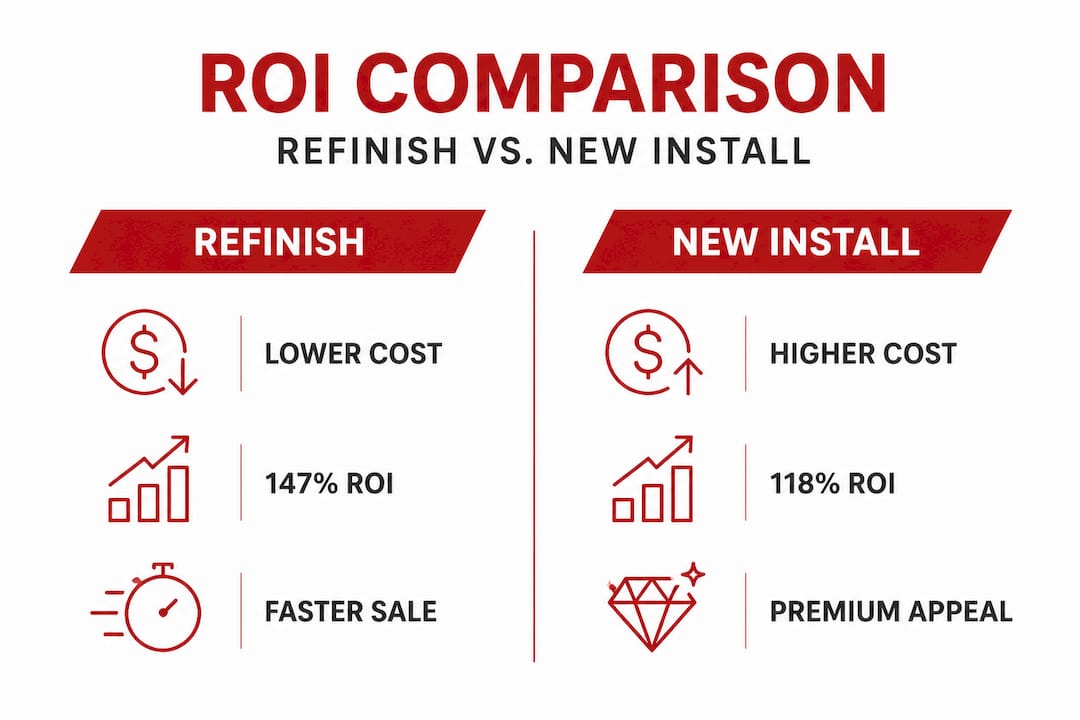
The Bay Area’s labor market pushes installation costs higher than the national average, which is why the gap between refinishing ROI and new installation ROI is even more pronounced locally. A refinish project that might cost $4,000 in a mid-sized Midwest city could run $7,000 or more in San Jose or Oakland. But the value added at resale scales upward too, because Bay Area home prices mean that hardwood’s appeal commands real dollars, not just percentage points.
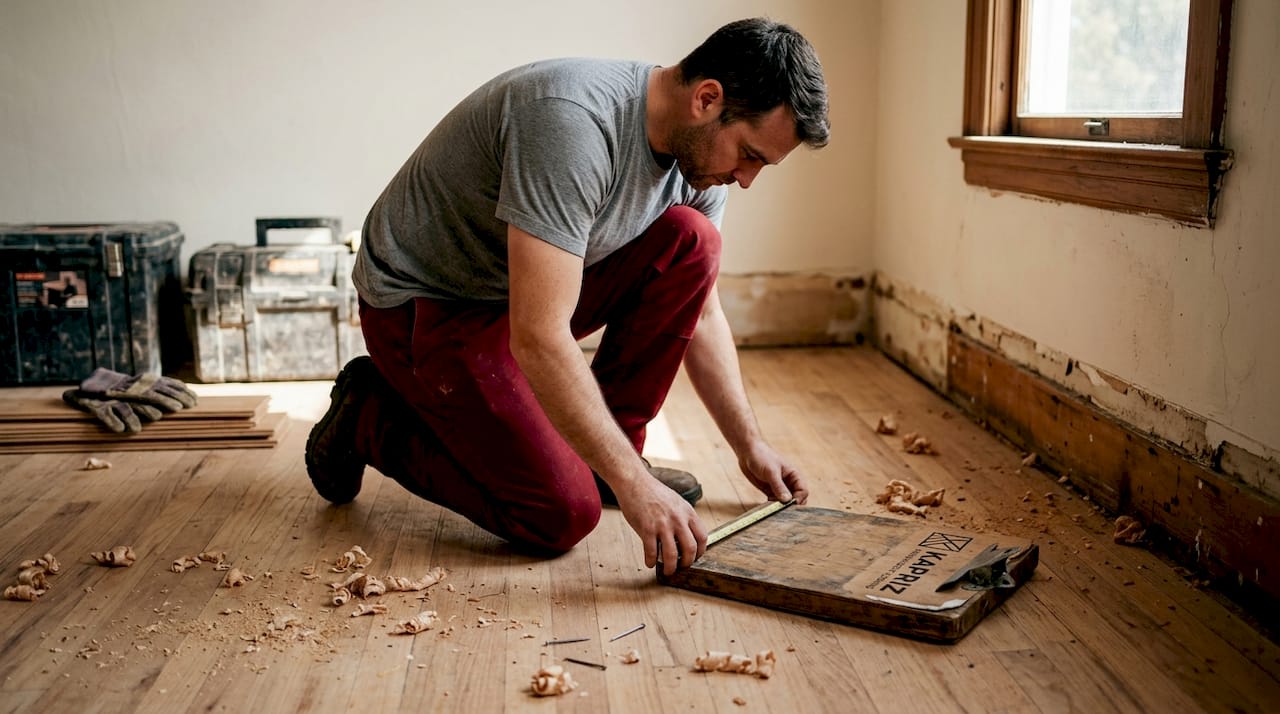
Pro Tip: If you’re selling within 12 months, prioritize refinishing over replacing unless the existing floors are structurally compromised or a species that buyers actively dislike. A fresh finish on solid oak or maple dramatically outperforms new budget flooring in buyer perception.
For a deeper look at how to maximize ROI on hardwood in your specific neighborhood, we break it down with practical guidance for different home price points.
The importance of market-matching and buyer expectations
ROI isn’t just about the floor itself. What matters is how your choices stack up to local buyers’ expectations. This is where many homeowners make expensive mistakes.
Installing $20-per-square-foot exotic hardwood in a neighborhood where homes top out at $800,000 is a classic case of over-upgrading. You spend more than the market will reward you for, and the returns shrink accordingly. Market-matching is critical because exceeding neighborhood norms in flooring often reduces net returns, even as it raises absolute property appeal.
Here’s a quick comparison to help you think about it:
| Neighborhood tier | Recommended flooring | Buyer expectation | Risk of over-upgrading |
|---|---|---|---|
| Entry-level ($600K to $900K) | Engineered hardwood or refinished solid | Move-in ready, clean finish | High if installing premium species |
| Mid-market ($900K to $1.5M) | Solid or engineered hardwood, standard widths | Quality materials, neutral tones | Moderate |
| Luxury ($1.5M+) | Wide-plank solid, premium species, custom finish | Distinctive, high-end details | Low |
To match your investment to your market, follow these steps:
- Pull comps: Look at the 10 most recent sales in your immediate neighborhood. Note what flooring they advertised and what price per square foot they achieved.
- Ask your agent: An experienced Bay Area buyer’s agent knows what flooring triggers emotional offers versus what feels neutral to local shoppers.
- Choose species and width accordingly: Mid-range neighborhoods respond well to 3-inch to 5-inch white oak or maple. Luxury buyers increasingly want 5-inch to 7-inch wide planks with a matte or low-sheen finish.
- Stay neutral on color: Gray-toned and warm natural tones perform broadly across buyer segments. Avoid very dark stains in rooms with limited natural light.
Vinyl plank flooring has made real gains with families who prioritize water resistance and easy cleaning. But hardwood remains the premium choice for resale value perception, especially in Bay Area markets where buyers are sophisticated and compare dozens of homes before making decisions.
For Bay Area homes with moisture concerns, look at engineered hardwood for Bay Area conditions as a practical solution that still delivers hardwood’s resale premium. And when you want to understand how hardwood stacks up against other materials over time, the flooring durability comparisons page gives you a clear side-by-side picture.
Choosing the best hardwood floors for Bay Area homes
To deliver lasting resale value, let’s talk specifics about what hardwood floors perform best for Bay Area homes.
The Bay Area’s climate is more varied than people outside the region realize. San Francisco’s marine layer brings consistent humidity. The South Bay gets hot, dry summers. Hillside homes in Marin or Oakland experience temperature swings between morning fog and afternoon heat. These conditions matter when choosing between solid and engineered hardwood.
Here’s what to prioritize:
- Engineered hardwood for most Bay Area spaces: The cross-ply construction of engineered hardwood for climate stability means it won’t gap or buckle the way solid hardwood can when humidity swings. It still looks and feels like real wood because it is real wood on the surface layer.
- Solid hardwood for stable, climate-controlled interiors: If you have HVAC that keeps indoor humidity consistent, solid hardwood in a kitchen or dining room can be a powerful statement piece for luxury buyers.
- Wide planks are winning: The 5-inch to 7-inch wide-plank look is what premium buyers are requesting in 2026. It makes rooms feel larger and photographs beautifully.
- Matte and satin finishes: High-gloss is fading in popularity. Matte and low-sheen finishes hide everyday scratches better and read as more sophisticated to today’s buyers.
- Eco-certified options: FSC-certified hardwood and reclaimed wood floors appeal to environmentally aware Bay Area buyers. They often command a premium in green-conscious neighborhoods.
- High-traffic areas: For entryways, hallways, and kitchens, choose species with a Janka hardness rating above 1,200. White oak (Janka 1,360), hard maple (1,450), and hickory (1,820) are all excellent choices.
Pro Tip: Kitchens are the trickiest room for hardwood because of water exposure. Engineered hardwood with a proper finish and good underlayment handles kitchen use better than solid in most Bay Area homes. Buyers love seeing hardwood flow seamlessly from the living area into the kitchen, and it photographs as one cohesive, high-end space.
For detailed guidance on what holds up over time in Bay Area conditions, the Bay Area flooring durability guide is a practical resource. If you want visual inspiration to show clients or your designer, inspiring floor designs collects real-world examples that work in Bay Area homes specifically.
Our take: What really boosts resale with hardwood floors
Here’s what we’ve actually seen make the difference in Bay Area resale outcomes, setting the numbers aside for a moment.
Most homeowners obsess over species. They agonize over whether to choose white oak versus red oak, or walnut versus maple. In our experience, the species is rarely what makes or breaks a sale. What actually moves buyers emotionally is the condition and finish of the floor, not the name of the tree it came from. A flawlessly refinished red oak floor in excellent condition will outperform a poorly finished walnut floor every single time.
Lighting is one of the most underestimated factors in hardwood resale appeal. We’ve seen rooms with genuinely beautiful floors fall flat in showings because the lighting was wrong. A cooler-toned floor under warm incandescent lights looks muddy and lifeless. A warm natural wood floor under bright LED lighting suddenly pops and reads as rich and inviting. Before you list, reconsider your bulb temperature and staging light placement as much as you think about the floor itself.
The other thing we hear too little about is the importance of transitions and details. Buyers notice where your hardwood meets tile at the bathroom threshold. They notice uneven transitions between rooms, gaps at the baseboard, and squeaky boards near the entry. These small details signal neglect. A floor that is fundamentally beautiful but has ignored details will undercut buyer confidence in ways that an extra $2,000 in finish quality won’t fix.
For sellers in micro-markets like Noe Valley, Piedmont, or Los Altos, the bar for detail is extremely high. Those buyers have seen hundreds of homes. What makes them write an offer is often not one dramatic feature but an accumulation of small signals that say “this home was cared for.” Hardwood in perfect condition, with clean transitions and a current finish, sends exactly that message.
We also strongly believe that site-finished hardwood offers an edge in these precision-driven markets. Because the finish is applied after installation, the floor, walls, and trim all look like they belong together. It’s a level of craftsmanship that pre-finished floors can’t fully replicate, and discerning buyers feel it even if they can’t name it.
Ready to increase your home’s value? Next steps with Kapriz Hardwood Flooring
If you’re ready to apply these insights and increase your home’s resale value, here’s how we can help.
At Kapriz Hardwood Floors, we stock everything from accessible, quality engineered options to high-end solid hardwood brands that serious buyers recognize. Every product we carry is something we’d put in our own homes. That’s not a tagline; it’s how we select our inventory.
Explore the full range at Kapriz hardwood floors and filter by species, finish, width, and price point. If you want personalized guidance based on your neighborhood comps and selling timeline, start with the Bay Area durability guide, where we walk through specific product recommendations by use case. Our team knows the Bay Area market and can help you invest the right amount in the right floor, so every dollar you spend comes back to you at closing.
Frequently asked questions
Does every home see an increase in resale value with hardwood floors?
Most homes do, but ROI is highest when upgrades match the neighborhood standard. Over-upgrading beyond neighborhood norms can actually reduce your net returns, even if the floor itself is stunning.
Is it better to refinish old hardwood or install new?
Refinishing existing floors nearly always wins financially, recouping up to 147% of project cost compared to 118% for new installations, making it the smarter pre-sale investment when the structure is sound.
Do engineered hardwood floors add value in the Bay Area?
Yes, and they’re often the smarter choice here. Engineered hardwood’s climate stability handles the Bay Area’s humidity swings better than solid, without sacrificing the look or resale appeal buyers want.
How do hardwood floors compare to luxury vinyl for resale?
Vinyl has grown in popularity with families for its water resistance, but hardwood remains premium in resale perception, especially for Bay Area buyers comparing multiple listings in competitive price brackets.
Which hardwood finishes appeal most to today’s buyers?
Matte and satin finishes, wide planks (5 to 7 inches), and warm neutral or natural tones are the strongest performers in Bay Area showings right now, both in person and in listing photography.
Recommended
- Transform Your Bay Area Home Value with Right Flooring | Kapriz Hardwood Flooring Store
- Popular flooring choices for Bay Area homes: quality & value | Kapriz Hardwood Flooring Store
- Hardwood in kitchens: durability and design for Bay Area homes | Kapriz Hardwood Flooring Store
- What Are the Ideal Hardwood Flooring Solutions for Bay Area Homes? | Kapriz Hardwood Flooring Store


