

Transform Your Bay Area Home Value with Right Flooring
TL;DR:
- Hardwood flooring significantly boosts home value and buyer appeal in the Bay Area.
- Trends favor light, natural finishes, wide planks, and matte textures for modern homes.
- Properly chosen and installed flooring enhances daily living quality and resale prospects.
Flooring is one of those upgrades most homeowners treat as an afterthought, something to fix after the kitchen remodel or the bathroom refresh. But in the Bay Area, where buyers are sophisticated and competition is fierce, the floor beneath your feet can quietly make or break a sale. Research confirms that new wood flooring earns a homeowner joy score of 9.3 out of 10, which is one of the highest ratings any home improvement can achieve. This article walks you through exactly how flooring choices affect your home’s value, which materials deliver the best return, and what trends Bay Area buyers are responding to right now.
Table of Contents
- How flooring choices affect home value in the Bay Area
- Comparing hardwood, vinyl, and laminate: Value, aesthetics, and durability
- Modern design trends and buyer preferences in 2026
- Smart upgrades: How to maximize resale and homeowner joy
- Our perspective: Why flooring deserves more attention than most upgrades
- Enhance your home’s market appeal with top flooring solutions
- Frequently asked questions
Key Takeaways
| Point | Details |
|---|---|
| Flooring boosts home value | Upgrading flooring is one of the most effective ways to increase your property’s appeal and resale value. |
| Hardwood leads in ROI | Hardwood flooring consistently offers the best return on investment for Bay Area homeowners. |
| Trends matter | Choosing current design trends and finishes can significantly improve buyer interest and perceived luxury. |
| Expert guidance helps | Consulting local experts ensures your flooring upgrade matches market expectations and maximizes results. |
How flooring choices affect home value in the Bay Area
Let’s look at how flooring specifically influences value in the Bay Area context. The Bay Area real estate market operates at a different level than most of the country. Buyers here are often tech professionals, seasoned investors, or both. They walk into a home and immediately notice the floors. Worn carpet, scratched laminate, or dated tile can create a negative first impression that no amount of fresh paint can fix.
Flooring upgrades affect value in two distinct ways. First, they raise the perceived value of a home, meaning buyers feel the home is worth more before they even check the listing price. Second, quality flooring can influence the appraised value, which matters directly to mortgage lenders and final sale prices.
Here is how different flooring types stack up in terms of value impact:
- Solid hardwood: Highest perceived value, strong appraisal impact, preferred by most Bay Area buyers
- Engineered hardwood: Strong value, works well in areas with humidity variation, nearly indistinguishable from solid
- Luxury vinyl plank (LVP): Growing in popularity, good durability, but still trails hardwood in resale cachet
- Laminate: Budget-friendly, but buyers and appraisers recognize it as a lower-tier option
- Carpet: Generally seen as a negative in Bay Area listings, especially in main living areas
“Wood flooring consistently ranks among the top upgrades for homeowner satisfaction, with a joy score of 9.3/10 in the 2025 NAR Remodeling Impact Report, signaling strong appeal to both current owners and future buyers.”
If you want to understand which materials deliver the strongest returns, exploring top hardwood flooring for ROI is a smart starting point. You can also browse popular Bay Area flooring choices to see what local homeowners are actually installing. The gap between hardwood and vinyl in terms of market impact is real, and understanding hardwood vs. vinyl flooring value helps you make a more informed decision before spending a dollar.
Comparing hardwood, vinyl, and laminate: Value, aesthetics, and durability
Now, let’s compare the top flooring materials for market impact. Choosing between hardwood, vinyl, and laminate is not just about budget. It is about understanding what each material communicates to a buyer and how long it will hold up under real-world conditions.
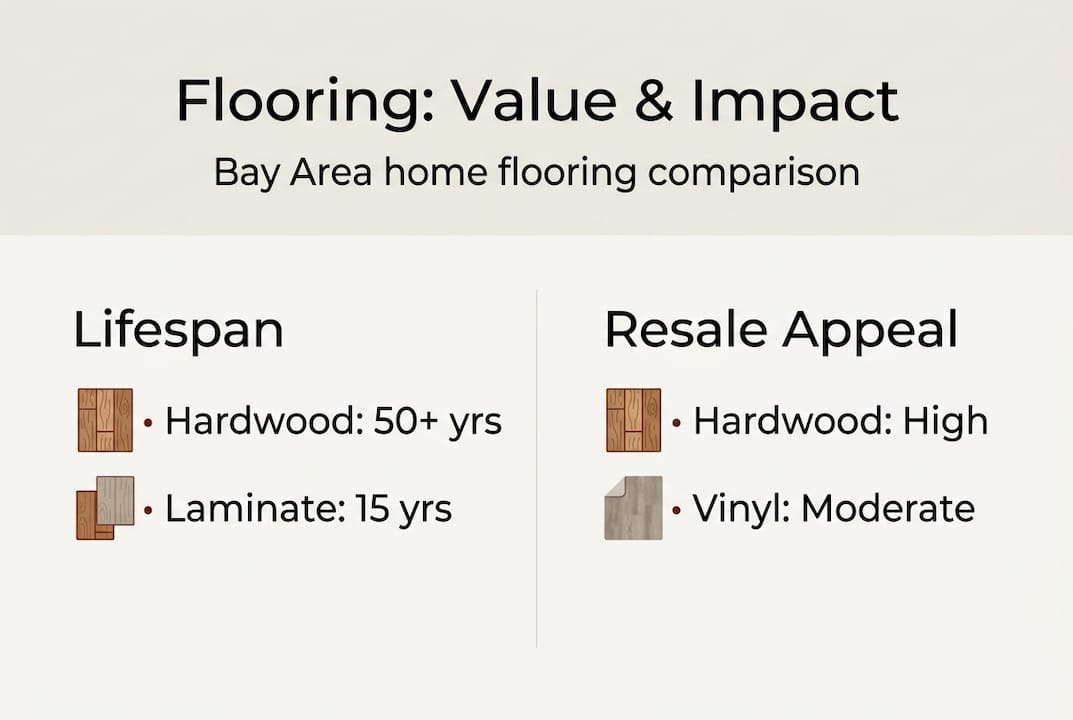
| Material | Avg. lifespan | Relative cost | Resale impact | Refinishable |
|---|---|---|---|---|
| Solid hardwood | 50+ years | High | Highest | Yes |
| Engineered hardwood | 25-30 years | Medium-high | High | Limited |
| Luxury vinyl plank | 15-25 years | Medium | Moderate | No |
| Laminate | 10-20 years | Low-medium | Low | No |
Hardwood remains the gold standard. The NAR report ties new wood flooring to high joy scores and improved livability, which translates directly into buyer motivation. When buyers love a home, they offer more and negotiate less.
Here is a ranked list of flooring priorities for Bay Area homeowners focused on value:
- Install solid or engineered hardwood in main living areas and bedrooms. This is where buyers look first.
- Use luxury vinyl plank in bathrooms, laundry rooms, or basements where moisture is a real concern.
- Avoid laminate in high-traffic or high-visibility areas. It shows wear faster and buyers notice.
- Remove carpet from main living spaces if your budget allows. Open, hard-surface floors photograph better and feel more modern.
Pro Tip: If you are replacing floors before listing, focus on consistency. Mixing too many flooring types across a home creates a disjointed feel that buyers find distracting. One or two materials, used thoughtfully, always looks more intentional and premium.
For a deeper look at how these materials compare in real resale scenarios, the hardwood resale vs. vinyl breakdown is worth reading. You can also check the 2025 flooring comparison guide for side-by-side analysis, and if you are curious about whether LVP hurts your value, the piece on luxury vinyl’s impact on value gives a clear, honest answer.
Modern design trends and buyer preferences in 2026
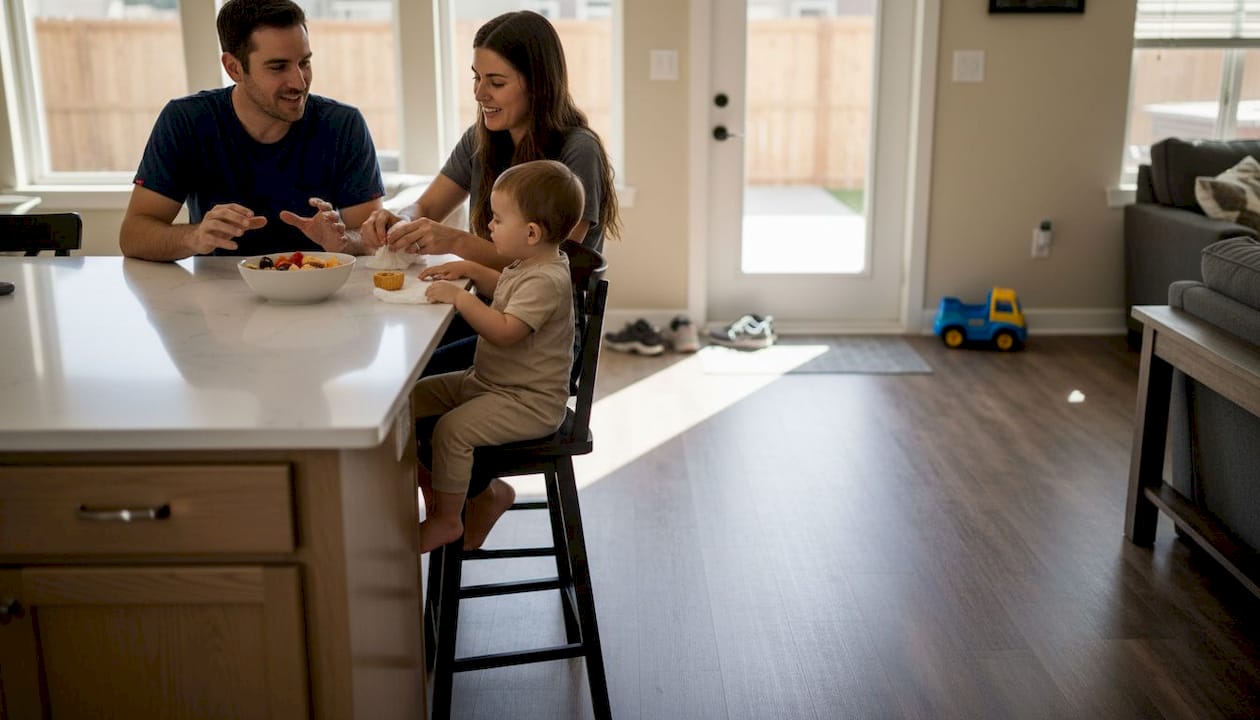
Trends and buyer preferences evolve, so what’s current for 2026? Bay Area buyers in 2026 are gravitating toward floors that feel warm, natural, and effortless. The cold, gray tones that dominated the previous decade are fading. In their place, you are seeing lighter oak finishes, honey-toned woods, and matte surfaces that feel lived-in rather than sterile.
| Trend | Description | Buyer appeal |
|---|---|---|
| Light natural finishes | Blonde and honey oak tones | Very high |
| Wide plank formats | 5 to 7+ inch planks | High, feels spacious |
| Matte surface texture | Low-sheen, natural look | High, hides wear well |
| Herringbone patterns | Classic geometric layout | Growing, adds luxury feel |
| Smoked and wire-brushed | Textured, aged appearance | Moderate, niche appeal |
Here is what is driving these preferences among Bay Area buyers:
- Natural aesthetics connect with the region’s design culture. Bay Area homes often blend indoor and outdoor living, and light wood floors reinforce that connection.
- Wide planks make rooms feel larger. In a market where square footage is expensive, anything that creates a sense of space adds perceived value.
- Matte finishes are practical. They hide scratches, pet prints, and everyday scuffs better than high-gloss options, which matters to buyers with kids or pets.
“According to the 2025 NAR Remodeling Impact Report, new wood floors deliver measurable aesthetic and livability benefits, reinforcing why design choices matter beyond personal taste.”
If you want to stay current, the Bay Area flooring trends guide covers what local designers and buyers are requesting right now. For color-specific guidance, the 2026 flooring color trends resource breaks down which tones are gaining traction. And if you have wondered whether hardwood is still relevant in a world of newer materials, the article on is hardwood still trendy answers that question directly.
Smart upgrades: How to maximize resale and homeowner joy
What practical steps can you take for maximum benefit? Knowing that flooring matters is one thing. Knowing exactly what to do about it is another. Here is a clear, actionable path for Bay Area homeowners who want to upgrade their floors intelligently.
Common mistakes to avoid:
- Installing trendy colors that will feel dated in three years
- Choosing the cheapest option to save money before a sale, only to have buyers negotiate down anyway
- Mixing too many flooring materials across the home
- Skipping professional installation to cut costs, which often leads to visible gaps, uneven surfaces, or early wear
- Ignoring subfloor prep, which is the foundation that determines how long your new floors last
For a full breakdown of what not to do, the guide on flooring mistakes to avoid is one of the most practical resources we offer.
Step-by-step approach for smart flooring upgrades:
- Assess your current floors honestly. Walk through with fresh eyes or ask a trusted friend. If it looks tired to you, it will look tired to a buyer.
- Set a realistic budget. Quality hardwood does not have to mean luxury pricing. There are excellent mid-range options that deliver strong ROI.
- Choose materials based on room function. Hardwood for living areas and bedrooms, moisture-resistant options for wet zones.
- Prioritize consistency in color and style across open-plan areas so the home flows visually.
- Hire a professional installer. The material is only as good as the installation beneath it.
Pro Tip: Focus your upgrade budget on the rooms buyers see first: the entryway, living room, and primary bedroom. These areas drive emotional decisions, and emotion drives offers.
The data backs this up. Wood flooring upgrades increase both homeowner joy and livability scores, which directly boosts resale appeal. If you want to connect the dots between flooring investment and home value, the resource on boosting value with hardwood lays it out clearly.
Our perspective: Why flooring deserves more attention than most upgrades
Let’s wrap up with a local perspective on why flooring matters so much. We have worked with Bay Area homeowners long enough to notice a pattern. The upgrades that get the most attention, like kitchen remodels and bathroom renovations, often deliver less emotional impact per dollar than a well-chosen floor replacement. Buyers walk into a home and feel the floors before they consciously register them. A beautiful hardwood floor creates warmth and quality that no countertop can replicate.
What surprises most homeowners is that flooring is not just a pre-sale strategy. It is a daily quality-of-life decision. Living on floors you love changes how you feel in your own home. That is not marketing language. That is what the joy score data confirms year after year.
Our honest advice: treat flooring as a primary investment, not a secondary fix. In the Bay Area, where every dollar of perceived value counts, the floor is often the first thing that closes the emotional gap between a buyer browsing and a buyer committing.
Enhance your home’s market appeal with top flooring solutions
If you are inspired to upgrade after what we have covered, here is how to start. At Kapriz Hardwood Floors, we carry a wide range of hardwood flooring options built for Bay Area homes, from budget-friendly solid hardwoods to premium engineered products that handle California’s climate variation beautifully.
Whether you are updating one room or installing wood flooring throughout your home, we can help you find the right product at the right price. We do not cut corners on quality, and we do not believe you should have to either. Browse our latest luxury design trends to see what is resonating with Bay Area buyers right now, and take the first step toward a floor that works as hard as you do.
Frequently asked questions
Does hardwood flooring really increase my Bay Area home’s resale value?
Yes, hardwood flooring is strongly linked to higher resale value and buyer appeal in the Bay Area. The 2025 NAR Remodeling Impact Report records a homeowner joy score of 9.3 out of 10 for new wood floors, one of the highest of any upgrade tracked.
How does vinyl flooring compare to hardwood for home value?
Vinyl flooring has improved significantly in looks and durability, but hardwood still leads in resale value and market perception. Buyers in the Bay Area consistently respond more favorably to hardwood, especially in main living areas.
Which flooring upgrades provide the best ROI for homeowners?
Wood flooring upgrades deliver the highest return on investment and personal satisfaction scores compared to other options, with the NAR report confirming strong joy and livability improvements that translate directly into resale appeal.
What flooring trends are most popular in Bay Area homes for 2026?
Light natural finishes, wide plank formats, and matte surface textures are dominating buyer preferences in 2026. Herringbone patterns and wire-brushed textures are also gaining ground among buyers looking for a more distinctive, high-end feel.
Recommended
- Popular flooring choices for Bay Area homes: quality & value | Kapriz Hardwood Flooring Store
- Hardwood floor design ideas for Bay Area homes | Kapriz Hardwood Flooring Store
- How to choose hardwood floors for your Bay Area home | Kapriz Hardwood Flooring Store
- How to spot quality flooring: a guide for Bay Area homes | Kapriz Hardwood Flooring Store


