

Pet-Friendly Hardwood Floors: Honest Guide for Bay Area Pets
TL;DR:
- Modern techniques and finishes make hardwood floors durable for homes with pets.
- Engineered hardwood with high-quality finishes is more moisture and scratch-resistant than solid hardwood.
- Proper cleaning, realistic expectations, and design choices are key to pet-friendly hardwood flooring.
If you have a dog or cat, you’ve probably been told that hardwood floors and pets simply don’t mix. That’s mostly a myth. The reality is that millions of pet owners across the country live happily with beautiful hardwood, and Bay Area homeowners are no exception. New manufacturing advances, smarter finishes, and a better understanding of wood species mean you can have a stylish, long-lasting floor even with a 70-pound Labrador or a cat that treats your living room like an obstacle course. This guide cuts through the marketing noise and gives you straight answers.
Table of Contents
- What makes hardwood floors ‘pet-friendly’?
- Engineered vs. solid hardwood: Which is better for pets?
- Scratch resistance, finishes, and real-world pet wear
- Design and lifestyle: Choosing pet-friendly floors you’ll love
- The uncomfortable truth most experts won’t tell you about pet-friendly hardwood
- Find your perfect fit at Kapriz Hardwood Flooring
- Frequently asked questions
Key Takeaways
| Point | Details |
|---|---|
| Define ‘pet-friendly’ | It means choosing hardwood floors with the right finish, species, and construction for pets. |
| Engineered beats solid | Data shows engineered hardwood slightly outperforms solid for scratch resistance and stability. |
| Finish over species | The floor finish makes a bigger difference for durability than wood species alone. |
| Design for your life | Select colors and grain patterns that fit your style—and hide scratches—while matching your Bay Area lifestyle. |
What makes hardwood floors ‘pet-friendly’?
The phrase “pet-friendly hardwood” gets thrown around a lot by flooring salespeople, but it rarely gets a clear definition. At its core, a pet-friendly floor is one that resists scratching from claws, tolerates minor moisture exposure from spills and accidents, and still looks good after years of daily use with animals.
Three construction factors matter most:
- Wear layer thickness: In engineered hardwood, the top wood layer protects against surface damage. A thicker wear layer means more sanding cycles if the floor ever needs refinishing.
- Wood species hardness: Harder species like hickory, maple, and white oak resist dents and scratches better than softer options like pine or cherry.
- Finish type: This is the real game-changer. The finish is the protective coating on top of the wood. It takes the first hit from claws, moisture, and dirt every single day.
When you’re looking at best floor choices for dog owners, the finish conversation is unavoidable. Aluminum oxide finishes, for example, are significantly harder than older oil-based options and extend the life of your floor dramatically in a pet household.
Choosing a harder wood species without upgrading the finish is like buying a great car and skipping the oil changes. The finish does the daily protective work.
Pro Tip: Don’t get too hung up on which wood species to pick. Focus first on the finish. A well-finished floor in a medium-hardness species will outperform a poorly finished exotic hardwood every time in a home with pets.
According to scratch resistance data, engineered red oak resists scratches to 5-7 lbs of pressure versus solid red oak at 4-6 lbs. That small but meaningful difference adds up fast in a home with active pets. If you want to dig deeper into which species hold up best, the guide on most scratch-resistant hardwoods is worth your time.
Engineered vs. solid hardwood: Which is better for pets?
This is the question we hear most from Bay Area pet owners, and it deserves a real answer based on data, not just brand preference.
Engineered hardwood is made of a real wood top layer bonded to multiple layers of plywood or high-density fiberboard underneath. This layered construction makes it more dimensionally stable, meaning it expands and contracts less with humidity changes. That matters a lot in the Bay Area, where coastal moisture, foggy mornings, and warm dry summers all take turns stressing your floors.
Solid hardwood is exactly what it sounds like: one solid piece of wood from top to bottom. It’s beautiful, classic, and can be sanded and refinished many more times over its lifetime. But it reacts more strongly to moisture, which puts it at a disadvantage in pet households where accidents happen.
Here’s a quick side-by-side comparison:
| Feature | Engineered Hardwood | Solid Hardwood |
|---|---|---|
| Scratch resistance | 5-7 lbs pressure | 4-6 lbs pressure |
| Moisture tolerance | Higher | Lower |
| Refinishing cycles | 1-3 times | 5-7 times |
| Bay Area climate suitability | Excellent | Moderate |
| Cost range | Moderate to high | Moderate to high |
The top factors to help you decide between the two:
- How many pets do you have? More pets mean more accidents and more claw traffic. Engineered wins here.
- What’s your Bay Area microclimate? Near the coast in Pacifica or Daly City? Engineered handles humidity swings better.
- Do you want to refinish in 20 years? If longevity and multiple refinishes matter, solid has the edge over decades.
- What’s your budget? Both options are available across price ranges, but installation costs can differ.
- Are you renting or owning long-term? Solid hardwood adds resale value. Engineered still looks great and holds up well.
The research on engineered vs. solid hardwood backs up what we see in real homes: engineered is the practical choice for most pet-owning households in the Bay Area, especially those within a few miles of the coast. Solid hardwood remains a great option in drier inland areas like Walnut Creek or Livermore, where humidity is lower and more consistent.
Remember, scratch resistance data confirms that engineered red oak resists scratches to 5-7 lbs of pressure versus solid at 4-6 lbs, a meaningful advantage when a 60-pound dog runs across your living room every morning.
Scratch resistance, finishes, and real-world pet wear
Here’s a truth the flooring industry doesn’t love to advertise: all hardwood floors will scratch eventually. The goal isn’t to find a floor that never scratches. The goal is to find one that scratches slowly, hides minor marks well, and stays beautiful through years of pet life.
Finish quality is the variable that separates floors that look great after five years from floors that look tired after two. The most common finish types for pet households include:
- Aluminum oxide: The gold standard for pet owners. Hard, protective, and available on most factory-finished boards.
- UV-cured urethane: Fast-drying, durable, and resistant to surface scuffs.
- Oil-based polyurethane: Provides a warm, rich look but wears faster and requires more maintenance.
- Hardwax oil: Beautiful natural finish but needs more frequent reapplication in pet households.
As finish quality research confirms, both engineered and solid oak have structural limits, and finish quality is the crucial variable for real-world performance. Choosing a floor with a certified aluminum oxide finish is one of the smartest moves a Bay Area pet owner can make.
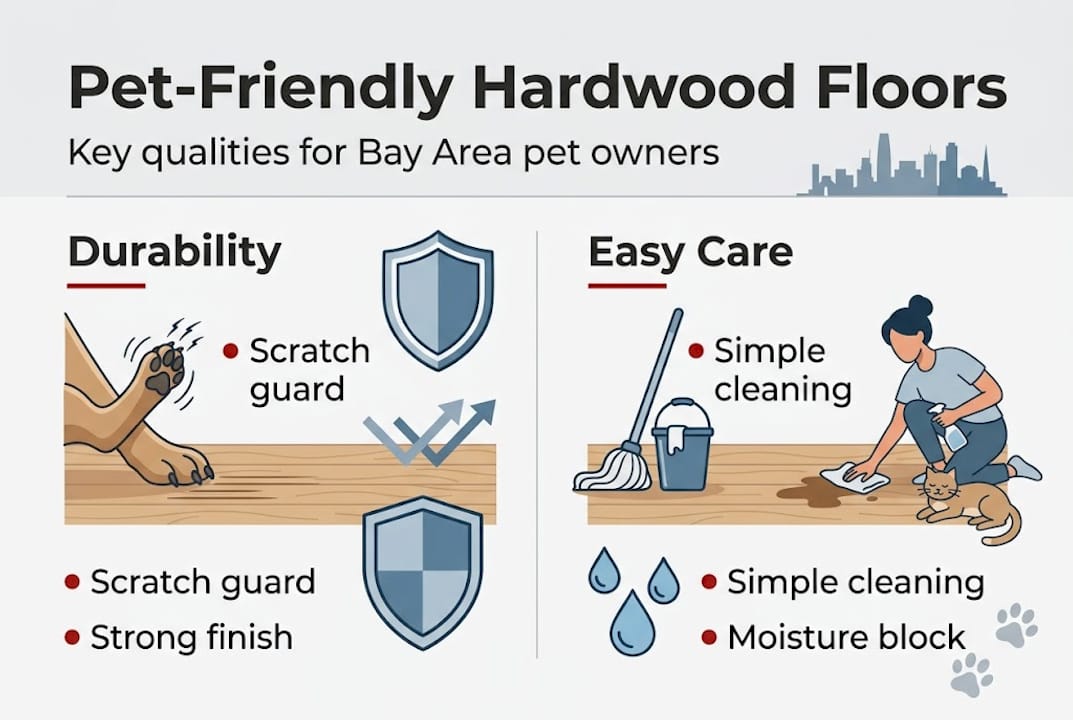
The hardwood floor scratch resistance types guide goes into more detail on how these finishes are tested and what the ratings actually mean in practical terms.
For cleaning in a pet household, a simple routine makes a huge difference:
- Sweep or vacuum daily to keep grit and debris from acting like sandpaper under paw traffic.
- Wipe up pet accidents immediately. Don’t let liquid sit.
- Use a pH-neutral hardwood cleaner, not vinegar or steam mops.
- Place absorbent mats near water bowls and food stations.
Pro Tip: A microfiber dust mop used daily removes pet hair and fine grit before it can scratch the finish. It takes about two minutes and extends the life of your floor significantly. Check out our flooring care and cleaning guides for product recommendations that work.
Design and lifestyle: Choosing pet-friendly floors you’ll love
Durability matters, but you’re also going to live with this floor every day. It needs to look good, feel right, and fit the way you actually live in your Bay Area home.
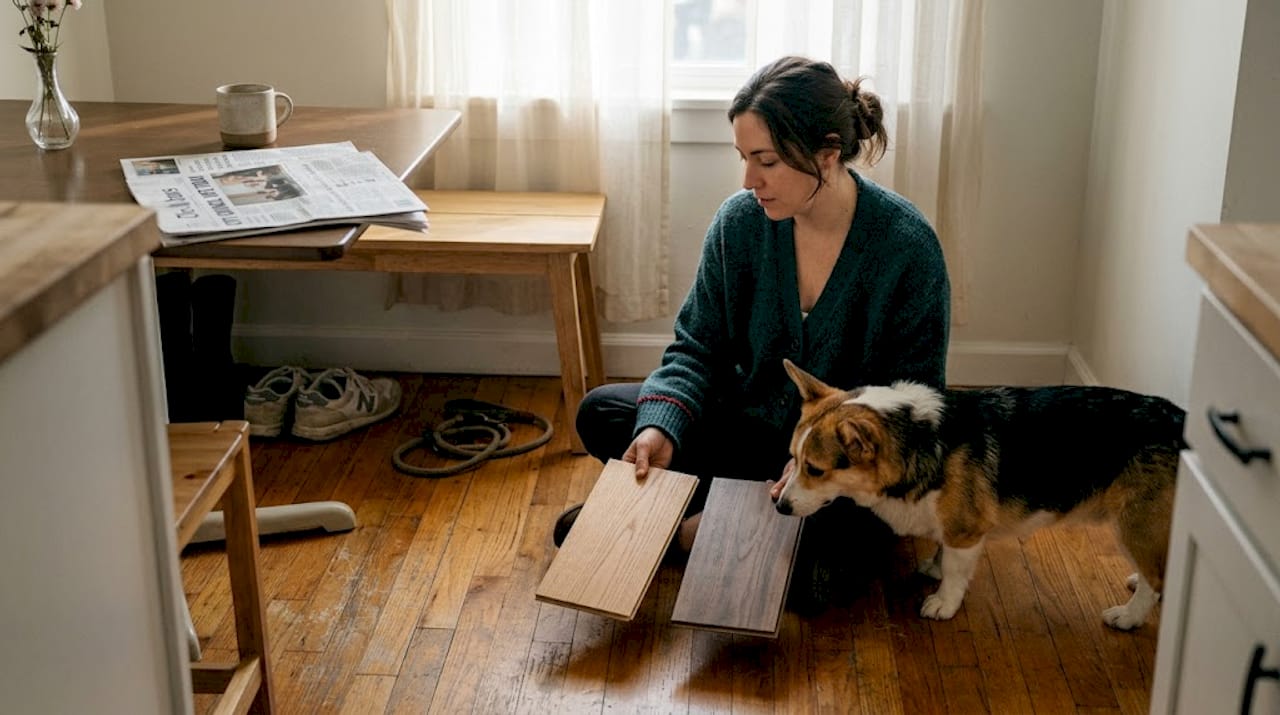
Color and finish sheen are two design decisions that have a real impact on how pet-friendly your floor feels day to day. As wear pattern research shows, both engineered and solid hardwood show wear over time, so matching your finish to your lifestyle is key.
Here’s what works well in real pet households:
- Medium-toned floors (honey, warm walnut, greige): These are the sweet spot. They hide pet hair between sweepings and don’t show minor scratches the way very dark or very light floors do.
- Wire-brushed or hand-scraped textures: These finishes have intentional surface texture that masks minor claw marks beautifully.
- Matte or satin sheens: High-gloss floors show every paw print, smudge, and scratch under light. Matte finishes forgive far more.
- Wider planks: These can give your Bay Area home a relaxed, modern feel while reducing the number of seams where pet hair and debris collect.
Your pet’s breed, size, and habits also shape the decision. Large dogs with long nails are harder on floors than small cats. Breeds that run and skid frequently cause more wear near doorways and around furniture. If you share your home with cats, the best options for cat owners resource gives specific recommendations.
Bay Area lifestyle factors matter too. If your household involves hiking boots, sandy beach days, and an indoor-outdoor lifestyle, you need a floor that can handle grit and occasional moisture from wet paws. That’s a different profile than a quiet apartment in Noe Valley. Explore luxury hardwood flooring trends to see what’s popular in Bay Area homes right now, including options that blend durability with high-end design.
The uncomfortable truth most experts won’t tell you about pet-friendly hardwood
We’ve been in this business long enough to say something that most flooring guides skip: no hardwood floor is truly pet-proof. Not a single one. Anyone who sells you on a “100% scratch-proof” or “accident-proof” hardwood floor is overselling.
What you’re actually shopping for is a pet-resilient floor. One that handles real life with grace, wears slowly, and still looks warm and beautiful after years of dog walks, cat zoomies, and spilled water bowls. The small scratches and character marks that build up over time? Many homeowners come to see those as part of what makes their home feel lived-in and real.
The owners who end up happiest with their flooring choice are the ones who went in with honest expectations. They chose wisely based on their actual pet count, cleaning habits, and lifestyle. They didn’t chase the “perfect” floor. Understanding what really matters in pet-proof flooring comes down to this: your habits and your cleaning routine matter just as much as the product you buy.
Find your perfect fit at Kapriz Hardwood Flooring
You’ve done the research. Now let’s put it to work. At Kapriz Hardwood Floors, we stock a wide selection of pet-friendly hardwood options for Bay Area homes, from budget-conscious engineered floors to high-end luxury hardwoods that bring serious style without sacrificing durability.
Our team knows Bay Area homes, Bay Area climates, and the real demands that pets put on floors. Browse our full hardwood flooring selection online, or stop in to see and feel the options in person. We can help you find durable Bay Area flooring options that match your home’s style and your pets’ energy. If you want to stay ahead of what’s trending, our modern floor design trends resource is a great starting point.
Frequently asked questions
What is the most scratch-resistant hardwood species for homes with pets?
Harder woods like oak, hickory, and maple offer some of the best scratch resistance for pet owners. Engineered and solid oak both provide strong scratch resistance, with engineered versions performing slightly better under pressure.
Can pet accidents damage hardwood floors, and what can I do to prevent it?
Yes, pet accidents can stain and warp hardwood if left to soak in. Choosing water-resistant finishes and cleaning up spills immediately are your two best defenses, since both hardwood types are vulnerable to moisture over time.
How do engineered hardwood floors hold up compared to solid hardwood with pets?
Engineered red oak generally handles scratches and moisture better than solid hardwood in pet households. The 5-7 lbs scratch resistance of engineered oak versus 4-6 lbs for solid oak is a real advantage in active homes.
Do darker floors show more pet scratches and hair?
Yes, darker stains show pet hair, dust, and surface scratches more noticeably under light. Medium-toned floors and matte finishes are far more forgiving for everyday pet-household life.
What’s the best cleaning routine for pet-friendly hardwood floors?
Daily sweeping with a microfiber mop and regular gentle cleaning with a pH-neutral hardwood cleaner keeps your floors looking their best. Wipe pet accidents immediately and avoid steam mops, which can damage the finish over time.


