

Top oak flooring styles for stunning interiors 2026
TL;DR:
- Choosing oak flooring involves considering construction type, format, grade, finish, and lighting conditions.
- Popular styles include plank formats, herringbone, chevron, and parquet, each influencing room feel.
- Balancing personal taste with practicality and testing samples in actual lighting helps prevent costly mistakes.
Choosing the right oak floor can feel overwhelming when you’re staring at dozens of samples, each one looking slightly different under the store lights. The truth is, oak flooring selection goes far beyond picking a color you like. It’s about matching construction type, board format, grade, and finish to the real-world conditions of your home. This guide breaks down the most important oak flooring styles so you can stop guessing and start deciding with confidence. Whether you’re renovating a historic brownstone or designing a modern open-plan home, the right framework makes all the difference.
Table of Contents
- How to evaluate oak flooring styles
- Top oak flooring styles: Plank types and patterns
- Textures, grades, and surface styles
- Finishes and color choices
- How to choose the best oak style for your project
- Our take: What experts wish more homeowners knew about oak flooring styles
- Get expert help with your oak flooring project
- Frequently asked questions
Key Takeaways
| Point | Details |
|---|---|
| Solid vs. engineered | Solid oak is best for longevity and refinishing, while engineered oak is suitable for tricky spaces like basements. |
| Board formats matter | Choose wide planks for modern calm or patterns like herringbone for dynamic visual interest. |
| Texture and grade impact look | Selecting the right surface texture and grade shapes the floor’s style, feel, and practicality. |
| Finish affects durability | Oil, lacquer, and UV finishes offer unique levels of protection, maintenance, and color richness. |
| Match style to space | Consider your home’s use and aesthetics to find an oak flooring style that lasts and fits your design vision. |
How to evaluate oak flooring styles
Before you fall in love with a specific look, it pays to understand the structural and visual categories that define every oak floor. Skipping this step is how people end up with a gorgeous floor that warps, fades, or simply feels wrong in the space.
The first decision is construction type. Solid oak floors are milled from a single piece of wood, can be sanded and refinished multiple times, and can last 50 years or more. Engineered oak uses a real oak veneer bonded to a stable core, making it suitable for basements and radiant heat systems where solid wood would be risky. Knowing which one fits your subfloor and climate is step one.
Next come format and grade. Board width and length affect how a room feels visually, and oak’s status as a top choice in hardwood flooring comes partly from its flexibility across formats. Grades determine how much natural variation you see in the wood:
- Prime/Select: Minimal knots, very uniform appearance
- Character (#1 Common): Moderate variation, knots, and grain movement
- Rustic: Heavy knots, open grain, and strong character marks
Finally, finish plays a huge role in both protection and visual outcome. Matte, satin, and high-gloss coatings all read differently in natural and artificial light. Always evaluate samples in the actual room before committing.
Top oak flooring styles: Plank types and patterns
Once you know what to evaluate, exploring the distinct oak board types and patterns helps narrow down your options quickly. The format you choose sets the visual tone for the entire room.
Classic plank, wide plank, herringbone, and parquet are the four major board formats you’ll encounter. Each serves a different design intent and works better in certain room sizes and styles.
- Classic narrow plank (2″ to 3.25″): Timeless, versatile, and works in traditional or transitional interiors
- Wide plank (5″ and above): Creates a calmer, more expansive feel and reads as more modern; check out the wide plank flooring benefits for a deeper look
- Herringbone: Interlocking rectangular boards set at 90-degree angles, adding movement and a sense of luxury
- Chevron: Similar to herringbone but boards meet at a point, creating a sharper, more dynamic V-shape
- Parquet: Geometric block patterns that bring traditional elegance and formality
Pro Tip: In smaller rooms, wide plank flooring can actually make the space feel larger because fewer seams means less visual clutter. It’s a counterintuitive move that consistently impresses clients.
If you want to stay current, reviewing current plank floor trends shows that wide plank and subtle herringbone are the two formats dominating new builds and high-end renovations right now. Pattern choices like herringbone add cost due to installation complexity, but the visual payoff is significant in entryways and living rooms.
Textures, grades, and surface styles
Beyond board layout, textures and grades add another dimension to your oak flooring selection. This is where the floor stops being just a surface and starts becoming a design statement.
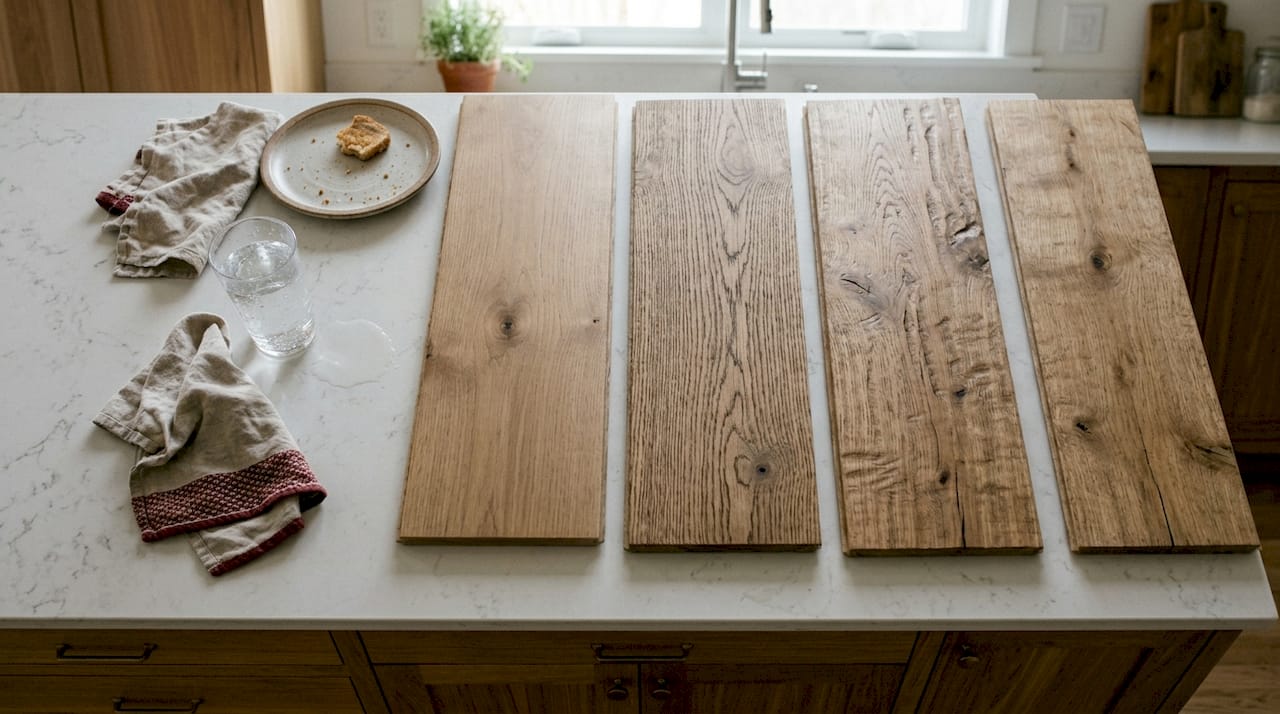
Oak surface textures include smooth, brushed or wire-brushed, distressed or hand-scraped, and reclaimed. Each has a practical side beyond aesthetics. Wire-brushing opens up the wood grain slightly, giving it a tactile, natural feel while also making everyday scratches and dents far less visible.
| Texture | Best for | Hides wear? |
|---|---|---|
| Smooth | Contemporary, minimalist | Less effective |
| Wire-brushed | Transitional, farmhouse | Very effective |
| Hand-scraped | Rustic, traditional | Highly effective |
| Reclaimed | Eclectic, industrial | Extremely effective |
Grades work hand-in-hand with texture. Prime, Character, and Rustic grades determine the quantity of natural features you see, from virtually none to a floor full of knots and mineral streaks. A smooth finish on a prime-grade board looks sleek and modern. A wire-brushed finish on a rustic-grade board looks like it belongs in a centuries-old farmhouse.
For a full breakdown of how grades are classified across species, the guide to hardwood flooring grades is worth reading before you shop. Pairing the right texture with the right grade is one of the most underrated decisions in the entire selection process.
Finishes and color choices
Now that you’ve explored texture and grade, understanding finish and color will complete your oak flooring style toolkit. These two choices have more impact on day-to-day satisfaction than almost any other variable.
Oak finishes range from natural and oil to UV lacquer and wire-brushed, with colors spanning honey, warm gray, and deep espresso. Each finish type has a distinct performance profile:
| Finish type | Protection level | Recoat ease | Visual look |
|---|---|---|---|
| Natural/clear | Moderate | Easy | Warm, open-grain |
| Oil | Low to moderate | DIY-friendly | Matte, organic |
| UV lacquer | High | Professional | Consistent sheen |
| Wire-brushed coat | Moderate | Moderate | Textured, casual |
Here’s how to choose the right finish for your setting:
- Assess your household traffic. High-traffic homes with kids or pets should lean toward UV lacquer.
- Decide on maintenance tolerance. Oil finishes look stunning but need spot-recoating every few years.
- Pick your sheen level. Matte reads as more casual and natural; higher gloss reads as more formal.
- Consider your color palette. Lighter finishes open up a room; darker tones add drama and warmth.
- Always test samples in your actual space before ordering.
Pro Tip: Natural light from north-facing windows makes warm honey tones look flat and dull. If your room faces north, go one shade warmer than you think you need. South-facing rooms amplify everything, so cooler grays and lighter tones work beautifully there.
For a detailed comparison of protective coatings, the floor finishing options guide covers both aesthetics and long-term durability in practical terms.
How to choose the best oak style for your project
All of these style options are only helpful if you know how to connect them to your actual needs, so let’s examine how to choose the best fit for your specific project.
Start by mapping your decision factors before you browse products:
- Room use: High-traffic areas need tougher finishes and more forgiving grades.
- Subfloor type: Concrete slabs require engineered oak.
- Climate: Homes with dramatic seasonal humidity shifts benefit from engineered’s dimensional stability.
- Design intent: Match the grade and pattern to your overall interior style.
- Maintenance tolerance: Be honest about how much upkeep you’ll actually do.
Engineered oak is preferred for underfloor heating and concrete subfloors, while solid oak wins for longevity and the ability to refinish multiple times over decades. Understanding choosing durable hardwood flooring in the context of your local climate is especially important if you’re in an area with wide temperature swings.
The most timeless floors are never the trendiest ones. They’re the ones that were chosen with the specific home and family in mind.
Pro Tip: If you’re torn between a trendy look and a classic one, go classic for the floor and trendy with your accessories. Floors are expensive and disruptive to replace. Throw pillows are not.
For projects that call for a sophisticated European aesthetic, understanding European oak’s appeal explains why so many designers specify it over domestic red oak for its finer grain and tonal consistency.
Our take: What experts wish more homeowners knew about oak flooring styles
Most style guides give you a list and call it a day. What they rarely address is the emotional side of regret, which is very real in flooring decisions.
The number one mistake we see? People choose a floor color based on online photos or brochures, never realizing how dramatically lighting changes everything. A floor that looks like warm caramel in a showroom can look muddy in a dim hallway or almost white in a south-facing room flooded with afternoon sun. Testing modern hardwood style examples in your actual light conditions, not a store’s curated lighting, is non-negotiable.
The second mistake is chasing trends. Gray oak flooring exploded in popularity, and a significant number of those homeowners now find it cold and clinical. Wide plank in a natural or slightly warm tone, on the other hand, has looked right in every decade. Formats like herringbone have been popular for centuries for a reason. Choose styles with staying power and you’ll never feel like your floor is dated.
The best floors we’ve ever seen were chosen by people who balanced personal taste with the practical realities of their home and family. That balance is the real skill.
Get expert help with your oak flooring project
If you’re ready to make your oak flooring vision a reality or want more tailored options, the resources at Kapriz Hardwood Floors are built for exactly this stage of the process.
At Kapriz, we carry a wide range of products from luxury brands to smart budget options, and every single one meets our quality standard. You can explore hardwood floor options across styles, grades, and formats to find what fits your project. If you want to stay on top of what’s working in high-end design right now, browsing luxury design trends is a great starting point. Our team is also available for consultations and sample requests, so you never have to guess what a floor will actually look like in your home.
Frequently asked questions
What is the most durable oak flooring style?
Solid oak floors are the most durable option, capable of being sanded and refinished multiple times and lasting 50 years or more with proper care.
Are engineered oak floors suitable for basements?
Yes, engineered oak’s stable core handles moisture and temperature fluctuations far better than solid wood, making it the smart choice for below-grade spaces.
How do I choose between different oak grades?
Prime grades offer a clean, uniform look, character grades bring natural variation and personality, and rustic grades feature heavy knots and pronounced grain for a raw, organic feel.
Which finish is easiest to maintain on oak floors?
UV lacquer finishes are the easiest to maintain because they create a sealed, scratch-resistant surface layer that holds up well under daily wear.
Recommended
- Why oak is a top choice for hardwood flooring in 2026 | Kapriz Hardwood Flooring Store
- 2026 Warm Honey Oak Trend – Overstock Edition for Cozy SF Victorians | Kapriz Hardwood Flooring Store
- What Are the Latest Hardwood Flooring Styles to Stay on Trend? | Kapriz Hardwood Flooring Store
- Why European Oak floors are so popular? | Kapriz Hardwood Flooring Store


