


Why oak is a top choice for hardwood flooring in 2026
Many homeowners and designers assume newer hardwood species outperform traditional oak flooring in durability and aesthetics. This misconception overlooks oak’s proven track record across centuries of residential use. Oak remains a leading choice for Bay Area homes because it combines exceptional hardness, timeless visual appeal, and sustainable sourcing options. Whether you’re renovating a Victorian in San Francisco or designing a modern home in Palo Alto, understanding oak’s unique qualities helps you make an informed flooring decision. This guide explores why oak continues to dominate the hardwood flooring market and how it meets the specific needs of Bay Area homeowners and interior designers.
Table of Contents
- Key takeaways
- Durability and hardness: why oak stands strong for flooring
- Aesthetic appeal: natural grain, color, and versatility of oak flooring
- Sustainability and sourcing: why oak is a responsible flooring choice in the Bay Area
- Installation, maintenance, and cost considerations for oak flooring
- Explore oak hardwood flooring options with Kapriz Hardwood Flooring Store
- Frequently asked questions
Key Takeaways
| Point | Details |
|---|---|
| High Janka hardness | Oak resists dents and scratches from furniture and daily wear, extending floor life. |
| Water resistance via tyloses | White oak tyloses block moisture, boosting resistance to coastal humidity and moisture fluctuations. |
| Versatile grain and color | Oak grain accepts stains and finishes, enabling traditional and modern spaces. |
| Sustainable sourcing | Sustainable sourcing options appeal to Bay Area buyers seeking responsible materials. |
| Finish maintenance guidance | Apply a high quality polyurethane finish in satin or matte and recoat high traffic areas every three to five years. |
Durability and hardness: why oak stands strong for flooring
The physical properties of oak make it exceptionally well-suited for residential flooring in homes with active lifestyles. Oak is prized for its high Janka hardness rating, meaning it’s resistant to dents and scratches, making it suitable for residential use. Red oak measures 1290 on the Janka scale, while white oak scores 1360, both significantly harder than popular alternatives like cherry (995) or walnut (1010). This hardness translates directly to longer floor life in areas where furniture moves frequently, children play, and pets run.
Bay Area homes often experience unique wear patterns due to indoor-outdoor living styles and proximity to coastal moisture. Oak’s cellular structure provides natural resistance to these challenges. The wood’s density prevents surface damage from dropped objects and rolling furniture while maintaining dimensional stability when humidity fluctuates. White oak, in particular, contains tyloses (cellular structures that block moisture penetration), making it more water-resistant than many hardwoods.
Households with pets benefit enormously from oak’s scratch resistance. Dog claws and cat activity create constant surface contact that softer woods cannot withstand long-term. Oak floors show minimal wear from these daily interactions when properly finished. The wood’s hardness also means fewer visible dents from dropped toys, kitchen utensils, or furniture legs.
Pro Tip: Apply a high-quality polyurethane finish in satin or matte to maximize oak’s scratch resistance while maintaining its natural appearance. Recoat high-traffic areas every 3-5 years rather than waiting for full refinishing.
For choosing the right wood species, consider these durability factors:
- Janka hardness rating above 1200 for areas with heavy furniture and foot traffic
- Moisture resistance properties for kitchens, entryways, and rooms near outdoor access
- Grain tightness affecting how well the wood hides minor surface damage over time
- Finish compatibility to ensure protective coatings bond properly and last
“Oak’s combination of hardness and grain structure creates a floor that ages gracefully rather than showing every mark. The wood develops character without looking worn, which is exactly what Bay Area homeowners want for long-term value.”
Aesthetic appeal: natural grain, color, and versatility of oak flooring
Oak’s visual characteristics offer designers and homeowners remarkable flexibility for creating distinct interior atmospheres. Oak flooring offers a balance of classic and modern appeal due to its grain texture and ability to accept stains and finishes well. Red oak displays prominent grain patterns with pinkish undertones, while white oak presents subtler grain with gray and taupe notes. These natural variations allow the same species to work in traditional Victorian restorations and minimalist contemporary spaces.
The grain structure itself becomes a design element. Red oak’s cathedral patterns and flecking create visual movement across floor surfaces, adding warmth and texture without additional decoration. White oak’s straighter, more uniform grain provides a calmer backdrop that lets furniture and architectural details take center stage. Both species show medullary ray flecking, those distinctive lines that catch light and add depth to the wood surface.
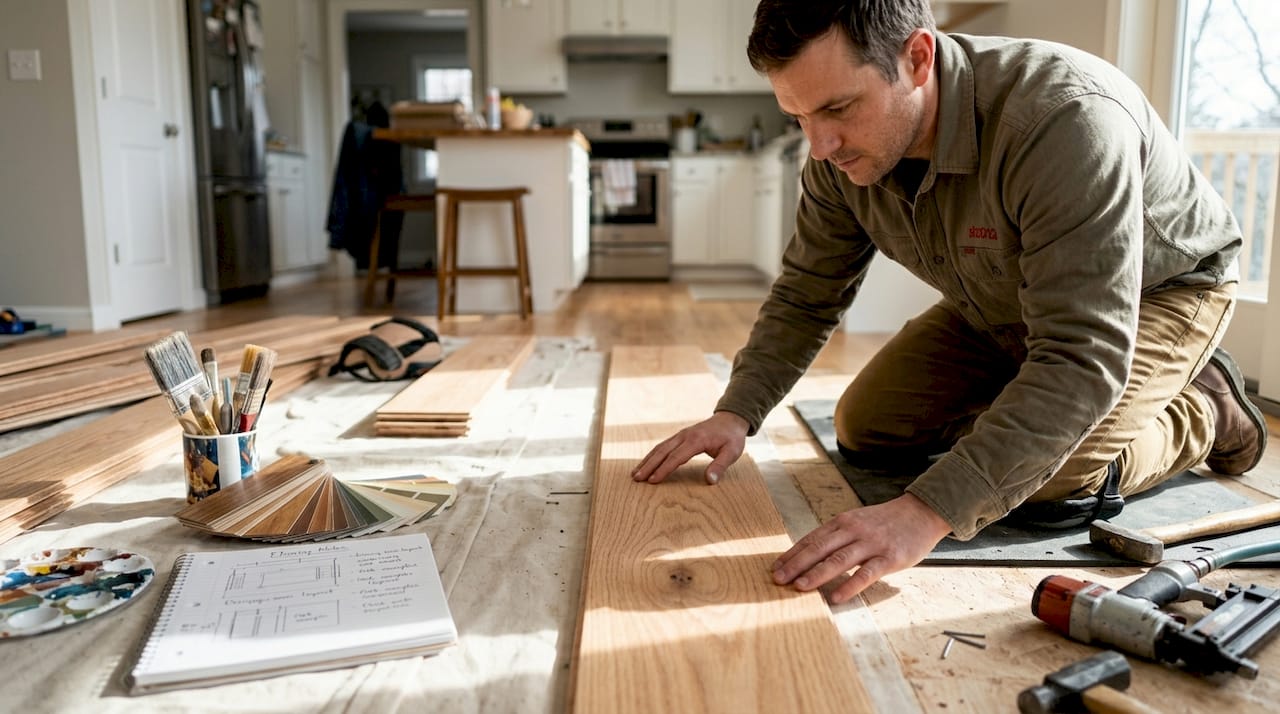
Color range gives oak exceptional adaptability. Natural red oak spans honey tones to reddish brown, while white oak ranges from light tan to medium brown with gray influences. This native color palette works beautifully unstained, but oak’s open grain structure also accepts stains uniformly. You can achieve anything from pale Scandinavian whites to rich espresso darks, all while maintaining the wood’s distinctive grain character.
Comparing oak to other popular Bay Area hardwoods reveals its unique position:
| Species | Natural Color | Grain Pattern | Stain Acceptance | Design Style Fit |
|---|---|---|---|---|
| Red Oak | Pinkish brown | Bold, varied | Excellent | Traditional, farmhouse, transitional |
| White Oak | Tan to gray-brown | Subtle, straight | Excellent | Contemporary, modern, Scandinavian |
| Maple | Creamy white | Fine, subtle | Moderate (blotchy) | Modern, minimalist |
| Walnut | Dark chocolate | Straight, elegant | Poor (too dark) | Luxury, contemporary |
Pro Tip: Test stain colors on actual oak samples from your flooring batch rather than relying on manufacturer charts. Natural variation in oak means the same stain can look noticeably different on red versus white oak or even between boards from different trees.
For hardwood flooring design trends, oak’s versatility shines through multiple applications:
- Wide plank installations (7-10 inches) showcase grain patterns dramatically
- Wire-brushed textures emphasize grain while adding slip resistance
- Matte and natural oil finishes create organic, lived-in aesthetics
- Mixed-width planking adds visual interest in open floor plans
The ability to customize oak’s appearance through finish selection means your floor can evolve with design preferences. A floor installed with natural finish today can be refinished with gray stain in five years without replacing the wood itself.
Sustainability and sourcing: why oak is a responsible flooring choice in the Bay Area
Environmental considerations influence Bay Area purchasing decisions more than in most U.S. regions, making oak’s sustainability profile particularly relevant. Sustainably sourced oak can be an eco-friendly choice, reducing environmental impact when properly certified and harvested. Oak forests in North America and Europe are managed under strict forestry practices that ensure regeneration exceeds harvest rates.
Forest Stewardship Council (FSC) certification provides verification that oak flooring comes from responsibly managed forests. These certified operations maintain biodiversity, protect water resources, and support local communities. When you select FSC-certified oak, you’re choosing wood from forests where every harvested tree is replaced by new growth. This creates a renewable cycle rather than depleting forest resources.
European oak floors popularity stems partly from Europe’s advanced sustainable forestry programs. European oak (Quercus robur and Quercus petraea) grows in managed forests that have operated under sustainability principles for decades. The wood travels further than domestic oak, but the carbon footprint remains reasonable because European forestry practices are exceptionally efficient. Many European mills also utilize every part of the tree, minimizing waste.
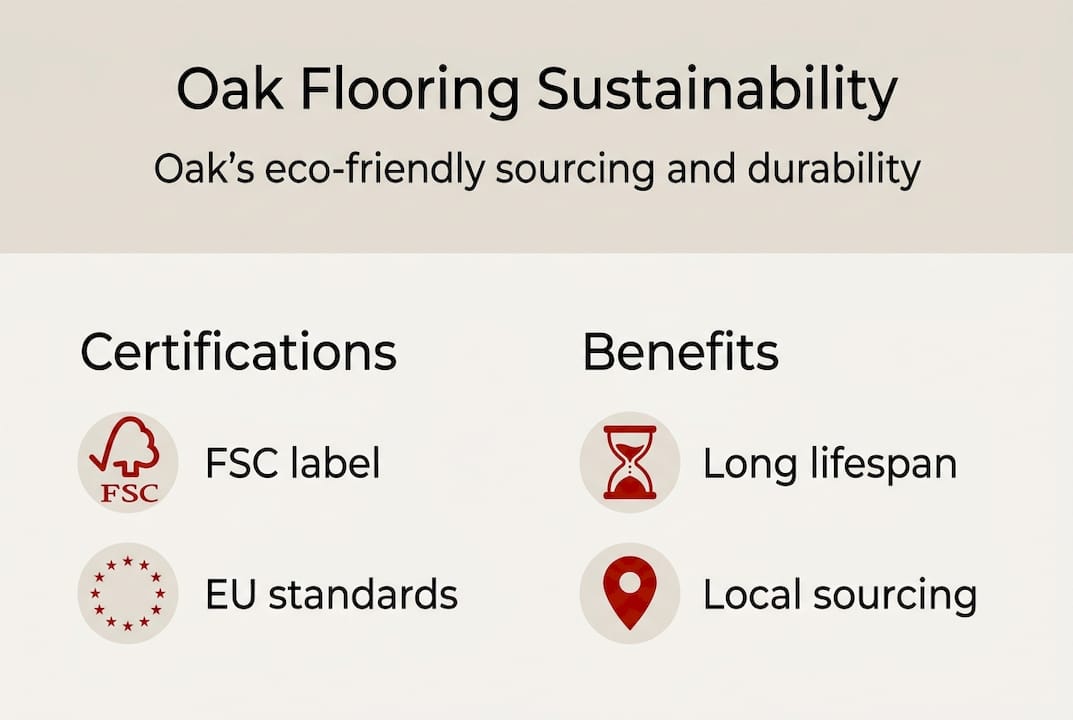
Domestic oak from American forests offers the advantage of shorter transportation distances, reducing shipping emissions. The eastern United States contains vast oak forests that are actually expanding, not shrinking. According to U.S. Forest Service data, oak volume in American forests has increased steadily over the past 50 years due to sustainable management practices and reduced demand for oak in other industries.
For sustainable wood flooring types, oak stands out because:
- Oak trees grow relatively quickly compared to exotic hardwoods, reaching harvest maturity in 60-80 years
- Abundant supply in managed North American and European forests reduces pressure on old-growth ecosystems
- Local milling operations in the U.S. minimize processing energy and transportation emissions
- Oak’s durability means floors last 50-100+ years, reducing replacement frequency and long-term resource consumption
“Choosing oak flooring aligns with Bay Area values around environmental responsibility without compromising on quality or aesthetics. The wood’s natural durability means your sustainable choice delivers decades of service, multiplying the positive impact of that initial decision.”
Beyond certification labels, ask suppliers about their specific sourcing practices. Reputable flooring retailers can trace their oak to specific forest regions and provide documentation of sustainable practices. This transparency matters for environmentally conscious buyers who want assurance their flooring choices support responsible forestry.
Installation, maintenance, and cost considerations for oak flooring
Practical implementation factors significantly impact your overall satisfaction with oak flooring. Proper installation and regular maintenance extend oak floor lifespan; costs vary by grade and installation method. Understanding these elements helps you budget accurately and set realistic expectations for your flooring project.
Installation methods for oak flooring include:
-
Nail-down installation: Traditional method where flooring is nailed to a wood subfloor. Provides excellent stability and allows for future refinishing. Best for solid oak planks 3/4 inch thick. Requires proper subfloor preparation and moisture barriers.
-
Glue-down installation: Adhesive bonds flooring directly to concrete or wood subfloors. Works well for engineered oak and areas where nail-down isn’t feasible. Creates very stable floors with minimal movement. Requires perfectly level subfloors.
-
Floating installation: Planks connect to each other but not the subfloor, sitting on underlayment. Suitable for engineered oak only. Easiest DIY option and works over many subfloor types including existing flooring. Allows for easier removal if needed.
-
Staple-down installation: Similar to nail-down but uses staples, often faster for professional installers. Provides comparable stability to nail-down. Works only with wood subfloors.
For install hardwood floors methods, your subfloor condition and home structure determine the best approach. Concrete slabs require glue-down or floating methods, while wood subfloors accommodate any installation type.
Maintenance requirements for oak remain moderate compared to other flooring types. Regular sweeping or vacuuming removes abrasive dirt that causes surface scratches. Damp mopping with hardwood-specific cleaners handles spills and maintains finish integrity. Avoid excessive water and harsh chemicals that can damage protective coatings or penetrate the wood.
Refinishing schedules depend on traffic levels and finish type. High-traffic oak floors typically need refinishing every 10-15 years, while low-traffic areas can go 20-25 years between refinishing. The thick wear layer on 3/4-inch solid oak allows for 4-6 refinishing cycles over the floor’s lifetime, making it a truly long-term investment.
Pro Tip: Choose Select or #1 Common grade oak to balance cost and appearance. Select grade shows minimal knots and color variation, commanding premium prices. #1 Common includes more character marks but costs 20-30% less while offering identical durability and performance.
Cost expectations for oak flooring in the Bay Area:
| Cost Component | Price Range | Notes |
|---|---|---|
| Material (solid oak) | $4-$12 per sq ft | Varies by grade, width, and species |
| Material (engineered oak) | $5-$14 per sq ft | Premium for wider planks and thicker wear layers |
| Installation labor | $4-$8 per sq ft | Higher for complex layouts or difficult subfloors |
| Subfloor preparation | $2-$5 per sq ft | If leveling or moisture barriers needed |
| Finishing (unfinished oak) | $2-$4 per sq ft | Staining and polyurethane application |
Total project costs for 1,000 square feet of oak flooring typically range from $10,000 to $24,000 including materials, installation, and finishing. Prefinished oak reduces installation time and eliminates on-site finishing costs but offers less customization. Unfinished oak provides complete control over final appearance but requires additional time and expense for site finishing.
For hardwood flooring costs, remember that initial investment spreads over decades of use. Oak’s longevity and refinishing potential mean lower lifetime costs compared to flooring types requiring complete replacement every 10-20 years.
Explore oak hardwood flooring options with Kapriz Hardwood Flooring Store
Ready to experience oak’s exceptional qualities in your Bay Area home? Kapriz Hardwood Flooring Store offers an extensive selection of hardwood floors featuring both domestic and European oak in various grades, widths, and finishes. Our showroom lets you compare grain patterns, colors, and textures in person, helping you visualize how different oak options will look in your specific space.

Our flooring experts understand Bay Area homes and design preferences, providing guidance tailored to your project requirements and budget. We’ll help you select the right oak grade that balances character and cost, recommend appropriate installation methods for your subfloor conditions, and connect you with experienced installers who specialize in wood flooring throughout the house. Whether you’re drawn to the bold grain of red oak or the refined elegance of white oak, understanding hardwood flooring grades ensures you get exactly the look and performance you want. Visit our store to explore oak flooring options that combine timeless beauty with practical durability.
Frequently asked questions
Is oak flooring suitable for high-traffic areas in Bay Area homes?
Yes, oak flooring excels in high-traffic areas due to its high Janka hardness rating and dense grain structure. Both red oak and white oak resist denting and surface wear better than softer hardwoods, making them ideal for entryways, hallways, and family rooms. Applying a durable polyurethane finish adds an extra protective layer that maintains appearance even under constant use. Regular maintenance like sweeping and occasional recoating keeps oak floors looking excellent in busy households for decades.
How does oak compare to other hardwoods in terms of maintenance?
Oak requires similar maintenance to other popular hardwoods like maple or hickory, with regular sweeping and occasional damp mopping. The open grain structure of oak actually makes it slightly easier to refinish than tight-grained species because sanding removes material more uniformly. Most oak floors need refinishing every 10-20 years depending on traffic, which is comparable to or better than alternatives. For detailed comparisons of maintenance requirements across species, explore choosing the right wood species to understand how oak fits your lifestyle.
Can oak flooring be installed over radiant heating systems?
Yes, oak flooring works well over radiant heating when properly installed and acclimated. Engineered oak is generally preferred for radiant heat applications because its layered construction provides better dimensional stability than solid oak. The key is gradual temperature increases, proper moisture testing before installation, and leaving adequate expansion gaps around room perimeters. Glue-down and floating installation methods both work effectively over radiant systems. Review install hardwood floors methods for specific techniques that ensure successful radiant heat compatibility.
Are there sustainable oak flooring options available in the Bay Area?
Yes, sustainably harvested oak flooring is readily available throughout the Bay Area from responsible retailers. Look for FSC certification or equivalent environmental standards that verify responsible forest management. Both domestic American oak and imported European oak can meet strict sustainability criteria when sourced from certified forests. Many Bay Area flooring suppliers prioritize sustainable options because local consumers value environmental responsibility. Explore sustainable wood flooring types to understand certification standards and find oak products that align with your environmental values while delivering the durability and beauty you expect.
Recommended
- Why European Oak floors are so popular? | Kapriz Hardwood Flooring Store
- 2026 Warm Honey Oak Trend – Overstock Edition for Cozy SF Victorians | Kapriz Hardwood Flooring Store
- Sustainable wood flooring types for Bay Area homes 2026 | Kapriz Hardwood Flooring Store
- Types of hardwood flooring: quality options for every budget | Kapriz Hardwood Flooring Store


