


Wide plank flooring guide: Style benefits for homeowners
Wide plank flooring often gets reduced to a simple description of wider boards, but there’s much more to understand. This flooring choice transforms how rooms feel and look, offering distinct advantages that go beyond basic dimensions. Whether you’re renovating or building new, understanding what wide plank flooring truly offers helps you make informed decisions about enhancing your home’s aesthetic appeal and long-term value.
Table of Contents
- Key takeaways
- What is wide plank flooring? Defining features and dimensions
- Benefits of wide plank flooring for your home’s style and feel
- Choosing the right wood species and finishes for wide plank flooring
- Installation and maintenance tips for wide plank flooring
- Explore wide plank hardwood flooring options from Kapriz Hardwood Flooring
- FAQ
Key Takeaways
| Point | Details |
|---|---|
| Wide plank width thresholds | Wide planks are typically five inches wide or more and up to twelve inches, reducing seams and enhancing the visual impact. |
| Fewer seams impact | Fewer seams create a cleaner, more expansive look that makes rooms feel larger. |
| Room shape and direction | Room dimensions and plank direction affect perceived space, so measure rooms and plan orientation before installation. |
| Maintenance and value | Fewer seams also simplify maintenance and can support higher resale value. |
What is wide plank flooring? Defining features and dimensions
The distinction between standard and wide plank flooring starts with measurements. Wide plank flooring boards are typically 5 inches wide or more, compared to standard planks around 2–3 inches. This difference creates dramatically different visual effects in your space.
Wider boards mean fewer seams across your floor. A 12-foot wide room needs only about 30 wide planks versus 48 standard planks. Fewer seams create a cleaner, more expansive look that makes rooms feel larger than their actual square footage.
Many homeowners assume any plank over 4 inches qualifies as wide, but industry standards place the threshold at 5 inches minimum. Premium options extend to 10 or even 12 inches wide, though these require careful consideration of your room dimensions and layout.
The width affects more than appearance. Wider planks showcase wood grain patterns more prominently. You see sweeping cathedral patterns and distinctive character marks that get chopped up in narrower boards. Each plank becomes a statement piece rather than just a flooring component.
Pro Tip: Measure your room’s width and length before selecting plank width. Rooms under 10 feet wide benefit from planks in the 5 to 7 inch range, while larger spaces can handle 8 to 10 inch planks without overwhelming the proportions.
Common width ranges for wide plank hardwood meaning include:
- 5 to 7 inches for versatile installation in most rooms
- 7 to 9 inches for spacious living areas and open concepts
- 9 to 12 inches for dramatic statements in large rooms
- Custom widths available for specific design visions
Room proportions matter significantly. A narrow hallway with 10 inch planks looks awkward, while the same planks create stunning impact in a great room. Consider sight lines from entryways and how the plank direction affects perceived space.
Installation direction also plays a role. Running wide planks lengthwise in a room makes it feel longer, while perpendicular installation can widen narrow spaces. The interplay between plank width and direction gives you control over how people experience your rooms.
Benefits of wide plank flooring for your home’s style and feel
The visual expansion effect stands out immediately. Wide plank flooring creates a sense of spaciousness and showcases wood grain more prominently, enhancing home aesthetics. Your eye travels across fewer interruptions, making even compact rooms feel more open and airy.
Natural wood characteristics shine through on wider surfaces. Mineral streaks, knots, and grain variations that might seem like flaws on narrow planks become distinctive features on wide planks. You’re not just installing flooring but displaying natural art across your entire floor.
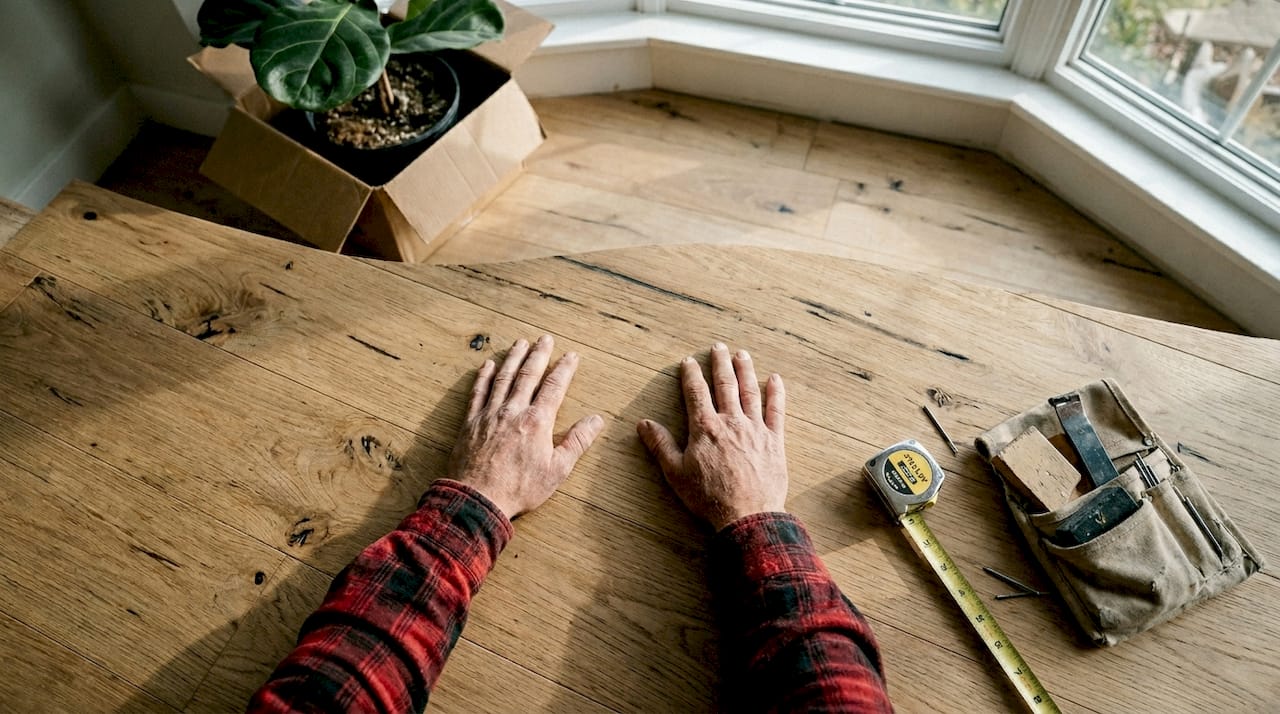
Design versatility surprises many homeowners. Wide planks work equally well in rustic farmhouse settings and sleek modern spaces. The key lies in finish selection and wood species rather than the width itself.
Maintenance becomes simpler with fewer seams. Dirt and debris accumulate in the grooves between planks, so having 40% fewer seams means 40% less cleaning effort. Spills stay on plank surfaces rather than seeping into multiple cracks.
“The shift toward wider planks reflects homeowner desire for authentic, substantial materials that make bold design statements while maintaining timeless appeal.”
Resale value considerations matter for long term planning. Homes with quality wide plank flooring typically command higher prices because buyers perceive them as premium upgrades. The investment pays back when you sell, especially in competitive markets.
Key aesthetic advantages include:
- Amplified natural wood beauty and character
- Reduced visual clutter from fewer seam lines
- Enhanced light reflection across broader surfaces
- Better showcase for distinctive grain patterns
- Timeless appeal that transcends design trends
The psychological impact shouldn’t be underestimated. Wider planks convey stability and permanence. They feel substantial underfoot and create a grounded, secure atmosphere that narrower planks can’t match.
Color and finish choices gain importance on wide planks. Lighter tones maximize the spacious feel, while darker stains create dramatic contrast. Matte finishes hide minor scratches better than high gloss, though both work beautifully depending on your lifestyle and aesthetic preferences.
Following prefinished hardwood flooring trends helps you select finishes that complement wide plank dimensions while staying current with design evolution.
Choosing the right wood species and finishes for wide plank flooring
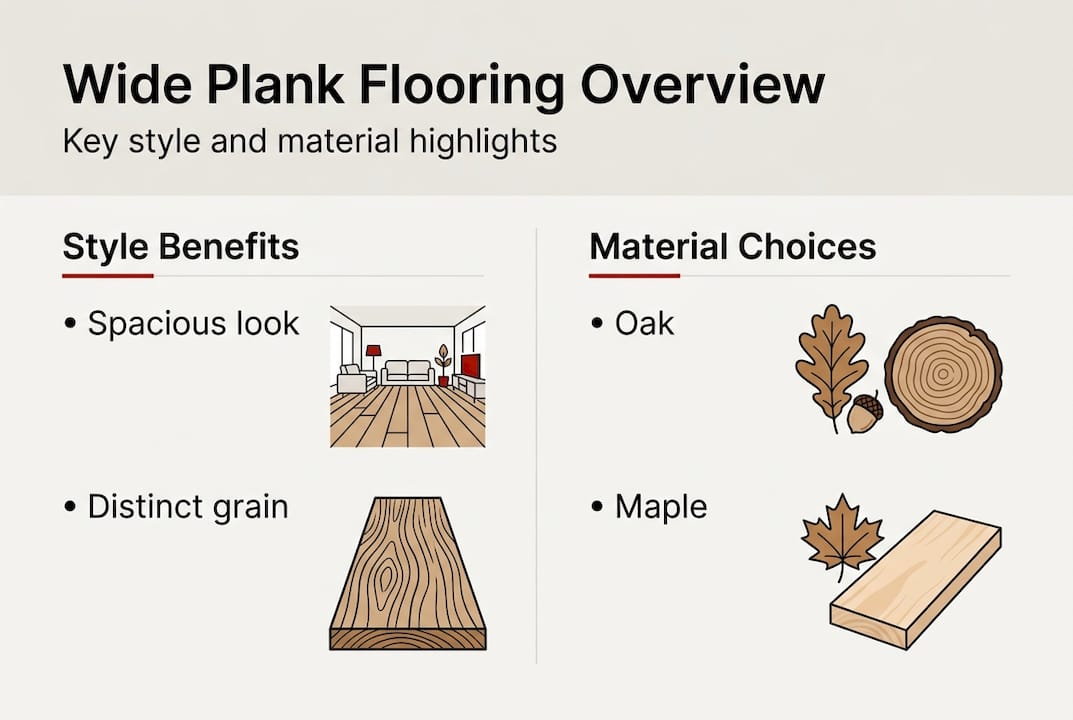
Wood species selection determines both appearance and performance. Oak, maple, and hickory are popular durable wood choices for wide plank flooring, each with distinct grain patterns and color tones. Your choice affects everything from scratch resistance to how the floor ages over decades.
Oak remains the most popular choice for good reason. Red oak shows prominent grain with warm undertones, while white oak offers subtler grain and cooler tones. Both species handle wide plank formats beautifully, with grain patterns that become more impressive at larger dimensions.
Maple provides a tighter, more uniform grain pattern. It works well for contemporary designs where you want clean lines without heavy grain distraction. The light natural color accepts stains differently than oak, sometimes showing blotchy results, so many homeowners prefer natural or lightly tinted finishes.
Hickory brings the most dramatic grain variation and hardness. It’s the choice for high traffic areas where durability trumps uniformity. The color variation between heartwood and sapwood creates natural contrast that some love and others find too busy.
| Wood Species | Janka Hardness | Grain Pattern | Color Range | Best For |
|---|---|---|---|---|
| Red Oak | 1290 | Prominent | Warm pink to tan | Traditional styles |
| White Oak | 1360 | Moderate | Cool gray to brown | Versatile applications |
| Maple | 1450 | Fine, uniform | Creamy white | Modern designs |
| Hickory | 1820 | Very prominent | Light to dark brown | High traffic areas |
| Walnut | 1010 | Rich, varied | Chocolate brown | Luxury installations |
Finish options protect your investment while enhancing appearance. Oil based polyurethane creates the hardest surface but requires longer drying time and has stronger odor during application. Water based polyurethane dries faster with less odor but needs more coats for equivalent protection.
Hardwax oil finishes penetrate wood fibers rather than sitting on top. They’re easier to repair in small sections but require more frequent reapplication. The natural look appeals to homeowners wanting authentic wood feel underfoot.
Pro Tip: Match wood species to your home’s humidity levels and lifestyle. Active households with pets need harder species like hickory or maple, while quieter homes can enjoy softer woods like walnut for their rich appearance.
Texture choices range from smooth to hand scraped. Smooth finishes showcase grain patterns clearly and simplify cleaning. Hand scraped or wire brushed textures hide minor damage better and add tactile interest, though they collect slightly more dust in the grooves.
Stain colors transform the same species into completely different looks. Light stains preserve natural wood tones and maximize brightness. Medium stains add warmth without obscuring grain. Dark stains create drama but show dust and scratches more readily.
Exploring choosing the right wood species helps you understand how different options perform in real world conditions specific to your region and home environment.
Installation and maintenance tips for wide plank flooring
Proper installation of wide plank flooring requires acclimation and expert skill to avoid gaps and warping. Wood expands and contracts with humidity changes, and wider planks magnify these movements. Rushing installation leads to problems that become obvious within months.
Acclimation prevents most installation failures. Follow these steps:
- Deliver flooring to installation site at least 72 hours early
- Maintain room temperature between 60 and 80 degrees
- Keep relative humidity between 35% and 55%
- Open boxes and stack planks with spacers for air circulation
- Use a moisture meter to verify wood content matches subfloor
- Wait until readings stabilize before beginning installation
Subfloor preparation matters more with wide planks. Any irregularities telegraph through to the surface. The subfloor must be flat within 3/16 inch over 10 feet, clean, dry, and structurally sound. Concrete subfloors need moisture barriers even in dry climates.
Installation methods vary by product type. Solid wood typically gets nailed or stapled to wood subfloors. Engineered wide planks offer more flexibility with glue down, float, or nail down options. Each method has specific requirements for expansion gaps and fastener spacing.
Expansion gaps around room perimeters prevent buckling. Wide planks need 3/4 inch gaps minimum, sometimes more in humid climates. Baseboards and shoe molding hide these gaps while allowing necessary movement.
Pro Tip: Schedule professional installation for wide plank flooring. The investment protects your material costs and ensures proper technique. Installers experienced with wide planks know how to handle the unique challenges these boards present.
Maintenance preserves beauty and extends lifespan. Daily care involves:
- Sweep or vacuum with soft bristle attachment
- Wipe spills immediately with dry or slightly damp cloth
- Use felt pads under furniture legs
- Maintain consistent humidity levels year round
- Avoid walking in high heels or cleats
Weekly cleaning uses products specifically designed for hardwood. Avoid vinegar, steam mops, or wet mopping, which damage finish and wood fibers. A barely damp microfiber mop with approved cleaner removes dirt without excess moisture.
Annual or biannual maintenance includes professional cleaning and potential recoating. High traffic areas show wear first. Catching finish degradation early allows simple screening and recoating rather than full refinishing.
Preventing damage beats repairing it. Entry mats trap dirt and moisture before they reach your floors. Window treatments reduce UV exposure that fades wood over time. Humidity control systems maintain stable conditions that prevent gaps and cupping.
Understanding installing plank flooring techniques helps you communicate effectively with installers and recognize quality workmanship during the process.
Explore wide plank hardwood flooring options from Kapriz Hardwood Flooring
Now that you understand wide plank flooring’s benefits and requirements, exploring quality options becomes your next step. Kapriz Hardwood Flooring offers carefully curated selections of hardwood floors that balance premium quality with accessible pricing.

Our inventory spans multiple wood species, widths, and finishes to match your specific vision. Whether you’re planning wood flooring throughout house or updating a single room, our team helps you navigate choices based on your lifestyle, budget, and design goals.
We stock products we’d install in our own homes. From select grade to character grade, understanding hardwood flooring grades helps you choose the right balance of appearance and value. Our expert guidance ensures you get flooring that performs beautifully for decades.
FAQ
What is considered the width for wide plank flooring?
Wide plank flooring starts at 5 inches wide and extends to 12 inches or more. Standard planks measure 2 to 3 inches wide, making wide planks nearly twice as broad. This increased width showcases wood grain patterns more prominently and creates a more spacious visual effect in rooms.
Does wide plank flooring work well in small rooms?
Wide planks can enhance small rooms when selected thoughtfully. Lighter finishes and strategic plank orientation make compact spaces feel larger rather than cramped. The key is choosing appropriate widths, typically 5 to 7 inches for rooms under 200 square feet. Learn more about plank width for small spaces to optimize your layout.
How durable is wide plank hardwood flooring compared to standard planks?
Wide plank flooring matches standard plank durability when properly installed and maintained. Durability depends primarily on wood species hardness and finish quality rather than plank width. Hickory wide planks outlast oak standard planks because of species characteristics. Explore durable hardwood flooring options to find the right combination for your needs.
What maintenance does wide plank flooring require?
Regular sweeping or vacuuming removes dirt and debris that can scratch finishes. Clean periodically with hardwood specific products, avoiding excess water or harsh chemicals. Maintain consistent humidity between 35% and 55% to prevent gaps or cupping. Wipe spills immediately and use protective pads under furniture. Following proper hardwood flooring maintenance tips extends your floor’s lifespan significantly.
Recommended
- Wide plank hardwood meaning: Bay Area homeowner guide | Kapriz Hardwood Flooring Store
- Prefinished Hardwood Flooring Trends: Keeping Up with the Style | Kapriz Hardwood Flooring Store
- Flooring Articles | Kapriz Hardwood Flooring Store
- What plank width and finish are best for small spaces? | Kapriz Hardwood Flooring Store


