

What is engineered hardwood: benefits and features explained
Many homeowners assume all hardwood floors are identical, but that misconception can lead to costly mistakes and disappointing results. Engineered hardwood represents a distinct category of flooring that combines real wood beauty with advanced construction techniques designed for modern homes. Unlike traditional solid hardwood, engineered options offer enhanced stability, broader installation possibilities, and resistance to environmental challenges that plague single-piece wood planks. Understanding these differences empowers you to make informed decisions that align with your home’s specific needs, design preferences, and budget constraints. This guide breaks down engineered hardwood’s construction, advantages, comparisons with alternatives, and maintenance requirements so you can confidently choose flooring that delivers lasting value and aesthetic appeal.
Table of Contents
- Key takeaways
- What is engineered hardwood? Construction and design explained
- Advantages of engineered hardwood for homeowners and designers
- Comparing engineered hardwood with other flooring options
- Choosing and maintaining engineered hardwood floors
- Explore engineered hardwood options at Kapriz Hardwood Flooring Store
- Frequently asked questions about engineered hardwood
Key Takeaways
| Point | Details |
|---|---|
| Engineered hardwood definition | Engineered hardwood uses a real wood veneer bonded to layered cores such as plywood or HDF to deliver greater stability and versatile installation options. |
| Stability in varying climates | The cross laminated core minimizes expansion and contraction, reducing warping and gaps during humidity changes. |
| Versatile installation locations | Engineered planks can be installed over concrete, radiant heat, basements, and other spaces where solid wood is less suitable. |
| Veneer thickness and refinishing | Thicker veneers allow multiple refinishing cycles, while thinner veneers may limit how often you can sand. |
| Maintenance and cost outlook | Compared with solid hardwood, engineered options often cost less upfront and offer durable performance with lower maintenance needs. |
What is engineered hardwood? Construction and design explained
Engineered hardwood consists of a real wood veneer over plywood or HDF layers for strength and stability. This multi-layer construction typically features three to nine core layers made from high-density fiberboard or cross-laminated plywood, topped with a hardwood veneer ranging from 0.6mm to 6mm thick. The cross-grain construction of these layers counteracts the natural tendency of wood to expand and contract with humidity changes, creating a product far more dimensionally stable than solid hardwood planks.
The engineering process bonds each layer with adhesives under high pressure and heat, creating a unified plank that resists warping, cupping, and gapping. This design allows engineered hardwood to maintain its shape and appearance in environments where solid hardwood would fail. Basements, kitchens, and rooms with radiant heating systems all become viable locations for authentic wood flooring thanks to this construction method.
Common wood species used for the top veneer include oak, maple, hickory, walnut, and exotic options like Brazilian cherry or acacia. The veneer thickness directly impacts how many times you can refinish the floor over its lifetime. Thicker veneers of 4mm to 6mm allow multiple refinishing cycles, while thinner options of 1mm to 2mm may only support one refinishing or none at all.
Total plank thickness typically ranges from 3/8 inch to 3/4 inch, with thicker planks generally offering better sound dampening and a more substantial feel underfoot. The core material choice also affects performance characteristics. Plywood cores provide excellent moisture resistance and structural integrity, while HDF cores offer superior density and a smoother surface for the veneer layer.
Pro Tip: Select engineered hardwood with at least a 3mm veneer thickness if you anticipate needing to refinish the floor in the future. This provides enough material for one or two sandings while maintaining the floor’s structural integrity and appearance.
Understanding this construction helps you appreciate why engineered hardwood behaves differently than solid wood. The layered design transforms a natural material prone to movement into a stable flooring solution suitable for challenging installation scenarios.
Advantages of engineered hardwood for homeowners and designers
Engineered hardwood offers superior stability in humid or variable climates compared to solid hardwood. The cross-laminated core construction neutralizes the natural expansion and contraction cycles that cause solid wood floors to gap in winter and buckle in summer. This stability makes engineered products ideal for regions with significant seasonal humidity fluctuations or homes without consistent climate control.
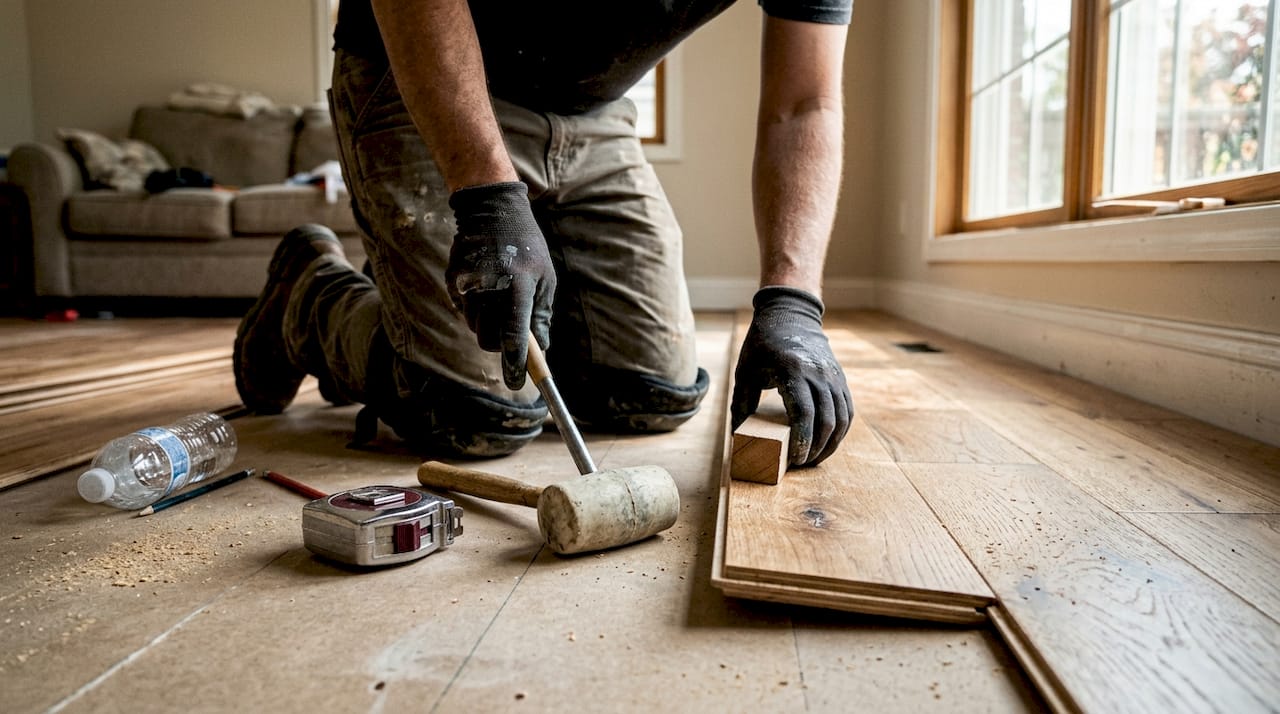
Installation versatility represents another major advantage. You can install engineered hardwood directly over concrete slabs using floating, glue-down, or nail-down methods depending on the product specifications. This flexibility opens up basement spaces, condominiums with concrete subfloors, and multi-story buildings where solid hardwood installation would be impractical or impossible. Compatibility with radiant heating systems further expands application possibilities, allowing you to combine the warmth of heated floors with authentic wood aesthetics.
The dimensional stability of engineered planks reduces long-term maintenance headaches. You’ll experience fewer gaps between boards during dry seasons and less risk of cupping or crowning during humid periods. This consistency preserves the floor’s appearance and reduces the need for seasonal adjustments or repairs that solid hardwood often requires.
Design flexibility matches or exceeds solid hardwood options. Manufacturers offer engineered products in virtually every wood species, grain pattern, color, and finish available in solid wood. Pre-finished engineered planks arrive with factory-applied finishes that cure under UV light, creating harder, more durable surface protection than site-applied finishes. You can choose from matte, satin, semi-gloss, or high-gloss sheens, as well as hand-scraped, wire-brushed, or smooth surface textures.
Installation speed and simplicity benefit both DIY enthusiasts and professional installers. Many engineered products feature click-lock edge systems that eliminate the need for nails or glue, allowing rooms to be completed in hours rather than days. Pre-finished surfaces mean no sanding, staining, or finishing work after installation, and the floor is ready for furniture and foot traffic immediately.
Pro Tip: Choose floating installation with click-lock engineered hardwood for spaces where you might need to access subfloor utilities or where you want the flexibility to take the floor with you if you move. This method requires no adhesives or fasteners and allows for easy removal and reinstallation.
These advantages explain why engineered vs solid hardwood differences often favor engineered products for practical applications despite solid wood’s traditional prestige.
Comparing engineered hardwood with other flooring options
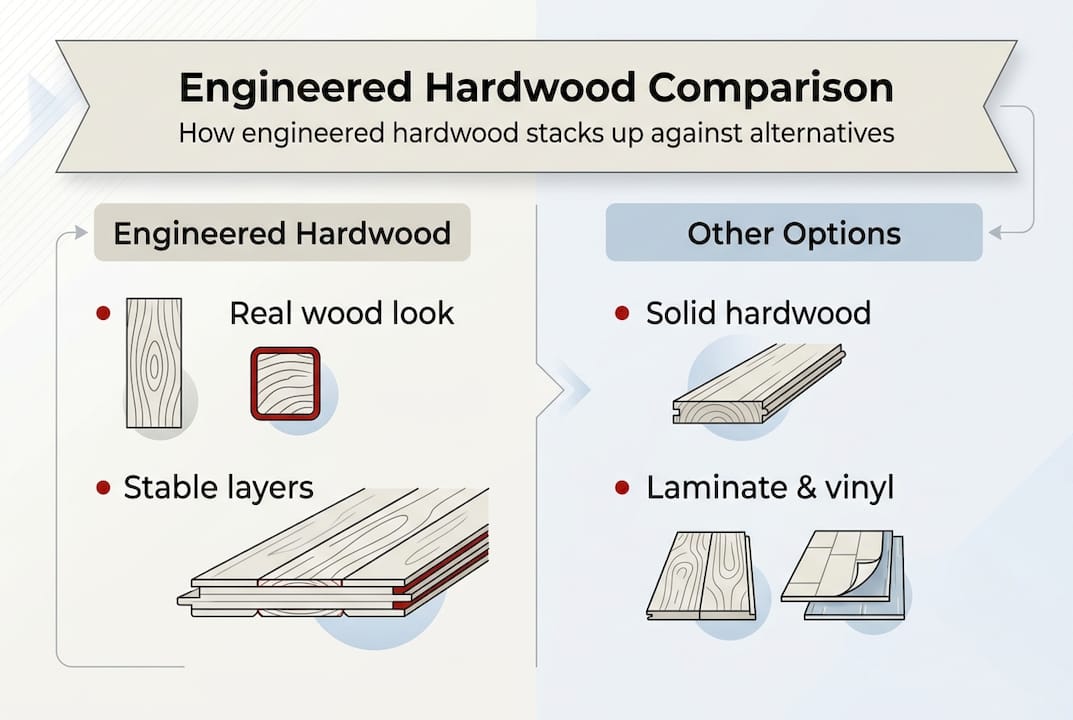
Engineered hardwood combines real wood looks with cost and stability advantages over solid hardwood. Understanding how it stacks up against alternatives helps you make the right choice for your specific situation.
| Feature | Engineered Hardwood | Solid Hardwood | Laminate | Luxury Vinyl Plank |
|---|---|---|---|---|
| Material | Real wood veneer over plywood/HDF | 100% solid wood | Photographic image over fiberboard | Printed vinyl with wear layer |
| Cost per sq ft | $3 to $12 | $5 to $15 | $1 to $5 | $2 to $7 |
| Moisture Tolerance | Good to excellent | Poor to fair | Fair | Excellent |
| Installation Difficulty | Easy to moderate | Moderate to difficult | Easy | Easy |
| Refinishing Potential | Limited (1-3 times) | Multiple times (5-7) | None | None |
| Lifespan | 20 to 40 years | 50 to 100+ years | 10 to 25 years | 10 to 20 years |
| Authentic Wood Look | Yes | Yes | No | No |
Solid hardwood remains the premium choice for longevity and refinishing potential, but its sensitivity to moisture and temperature changes limits installation locations. Solid wood requires stable humidity levels between 30% and 50% year-round and cannot be installed over concrete or radiant heating without expensive subfloor modifications. The higher initial cost and longer installation time also impact budget considerations.
Laminate flooring offers the lowest cost and easiest installation but lacks the authentic texture and warmth of real wood. The photographic layer can mimic wood grain patterns convincingly from a distance, but close inspection reveals the artificial nature. Laminate cannot be refinished, and damaged planks must be replaced entirely. However, laminate’s excellent moisture resistance and durability make it suitable for high-traffic commercial spaces or homes with active pets and children.
Luxury vinyl plank provides superior waterproofing and resilience, making it ideal for bathrooms, laundry rooms, and basements prone to moisture. Modern LVP products feature embossed textures that simulate wood grain more convincingly than laminate, and some premium lines include cork or foam backing for improved comfort underfoot. The synthetic composition means zero risk of water damage, but LVP lacks the natural warmth and character that real wood provides.
Engineered hardwood occupies the middle ground, delivering authentic wood beauty with practical advantages over solid hardwood at a more accessible price point. You sacrifice some refinishing potential compared to solid wood, but gain installation flexibility and environmental stability that solid wood cannot match. For most homeowners seeking the look and feel of real wood without solid hardwood’s limitations, engineered products offer the best balance of aesthetics, performance, and value.
Environmental considerations also factor into the comparison. Engineered hardwood uses less rare or old-growth timber per plank since only the thin top layer requires premium wood species. The core layers can utilize fast-growing, sustainably harvested wood or recycled materials. This efficient use of resources makes engineered options more environmentally responsible than solid hardwood while maintaining comparable aesthetics.
Exploring budget hardwood flooring options reveals how engineered products deliver authentic wood character at prices that fit diverse financial constraints.
Choosing and maintaining engineered hardwood floors
Proper maintenance and correct selection are key to maximizing engineered hardwood lifespan. Making informed choices during the purchasing process and following appropriate care protocols ensures your investment delivers decades of beauty and performance.
Follow these steps when evaluating engineered hardwood products:
- Assess veneer thickness based on your refinishing expectations. Thicker veneers of 3mm or more allow for future sanding and refinishing, while thinner options prioritize initial cost savings over long-term flexibility.
- Examine the finish type and warranty coverage. Factory-applied aluminum oxide finishes provide superior durability compared to polyurethane, and warranties ranging from 25 years to lifetime indicate manufacturer confidence in product quality.
- Consider wood species hardness for your traffic patterns. Oak and maple offer good durability for family homes, while softer species like pine or fir suit low-traffic areas, and extremely hard species like hickory or Brazilian cherry handle commercial applications.
- Verify installation method compatibility with your subfloor. Concrete requires floating or glue-down methods, while wooden subfloors accommodate nail-down, glue-down, or floating installations depending on product specifications.
- Match plank width and length to room dimensions. Wider planks of 5 to 7 inches create a contemporary look and make small rooms appear larger, while narrower planks of 2 to 3 inches suit traditional aesthetics and busy patterns.
- Evaluate core material for your environment. Plywood cores excel in moisture-prone areas, while HDF cores provide superior density and dimensional stability in climate-controlled spaces.
Installation considerations vary by home environment. Basements and below-grade spaces benefit from floating installations that allow for minor subfloor movement without transferring stress to the flooring. Main living areas with stable conditions can use any installation method based on preference and budget. Rooms with radiant heating require products specifically rated for thermal compatibility and benefit from glue-down installation for optimal heat transfer.
Daily maintenance preserves engineered hardwood’s appearance and extends its lifespan. Sweep or vacuum regularly using soft bristle attachments to remove abrasive dirt and debris. Place doormats at entrances to capture moisture and grit before they reach the floor. Use felt pads under furniture legs to prevent scratches and dents from concentrated weight.
Weekly or biweekly damp mopping with pH-neutral hardwood floor cleaner removes accumulated residue without damaging the finish. Avoid excessive water, oil-based soaps, wax products, or steam cleaners that can penetrate seams and damage the core layers. Wipe up spills immediately to prevent moisture absorption at plank edges.
Seasonal adjustments maintain optimal conditions. Run humidifiers during winter months to prevent excessive drying and gap formation. Use dehumidifiers or air conditioning in summer to control humidity below 60% and prevent expansion issues. Maintain indoor relative humidity between 35% and 55% year-round for best results.
Avoid common mistakes that shorten floor life. Never wet mop or allow standing water on engineered hardwood. Don’t use harsh chemicals, abrasive cleaners, or vinegar-based solutions that strip protective finishes. Refrain from wearing high heels or cleats indoors, and trim pet nails regularly to minimize surface scratches.
Pro Tip: Apply fresh coats of manufacturer-recommended floor polish or refresher product every 1 to 2 years to restore shine and add an extra protective layer. This simple maintenance step extends the time between refinishing cycles and keeps your floor looking new.
Understanding engineered hardwood cost factors helps you budget appropriately for both initial investment and ongoing maintenance. Exploring water resistant engineered hardwood options reveals products specifically designed for challenging moisture conditions.
Explore engineered hardwood options at Kapriz Hardwood Flooring Store
Now that you understand engineered hardwood’s construction, benefits, and maintenance requirements, it’s time to see how these principles translate into real products that transform your space. At Kapriz Hardwood Floors, we curate a diverse selection of hardwood floors that balance quality with affordability, ensuring you never compromise on durability or aesthetics regardless of your budget.
Our engineered hardwood products span multiple wood species, finishes, and price points, all meeting our strict quality standards. We personally test and use every product line we carry, so you can trust that your investment will deliver lasting performance. Whether you’re planning a single room update or considering wood flooring throughout house installations, our team provides personalized consultations to match your design vision with the right engineered hardwood solution. Visit us to explore samples, discuss installation methods, and discover why quality hardwood flooring doesn’t have to break your budget.
Frequently asked questions about engineered hardwood
Can you install engineered hardwood over existing floors?
Yes, you can install engineered hardwood over existing floors in many cases. Floating installation methods work well over vinyl, linoleum, or existing hardwood if the surface is level, clean, and structurally sound. However, carpet and padding must be removed first, and high-pile or cushioned surfaces require removal to ensure stability.
How does engineered hardwood durability compare to solid hardwood?
Engineered hardwood matches solid hardwood in surface durability since both feature the same hardwood species on top. The key difference lies in dimensional stability, where engineered hardwood resists warping and gapping better than solid wood. Solid hardwood allows more refinishing cycles over its longer lifespan, but engineered products perform better in challenging environments.
How often should you refinish engineered hardwood floors?
Refinishing frequency depends on veneer thickness and wear patterns. Engineered hardwood with 3mm to 6mm veneers can be refinished once or twice over 20 to 30 years. Thinner veneers of 1mm to 2mm may not support refinishing at all. Most engineered floors need refinishing less often than solid hardwood due to durable factory finishes.
Is engineered hardwood suitable for bathrooms and kitchens?
Engineered hardwood works in kitchens with proper precautions like immediate spill cleanup and adequate ventilation. Full bathrooms pose higher moisture risks that favor waterproof alternatives, but powder rooms and half baths can accommodate engineered products. Choose engineered hardwood with excellent moisture ratings and sealed edges for best results in these spaces.
Does engineered hardwood cost less than solid hardwood?
Yes, engineered hardwood typically costs 20% to 40% less than comparable solid hardwood in both materials and installation. Mid-range engineered products run $4 to $8 per square foot installed, while solid hardwood averages $6 to $12 per square foot. The cost advantage increases when factoring in engineered hardwood’s suitability for DIY installation and compatibility with existing concrete subfloors.
Recommended
- Engineered vs. Solid Hardwood – Which Flooring Type is Right for You? | Kapriz Hardwood Flooring Store
- Engineered Hardwood | Kapriz Hardwood Flooring Store
- Engineered Hardwood Floors Are a Smart Investment: Style, Durability, and | Kapriz Hardwood Flooring Store
- The Ultimate Guide to Engineered Hardwood Flooring: Unraveling Hidden Facts | Kapriz Hardwood Flooring Store


