

Exposing the waterproof hardwood myth: what buyers need to know
The flooring industry has a marketing problem, and it’s costing homeowners real money. Walk into almost any flooring showroom and you’ll hear the phrase “waterproof hardwood” tossed around like it’s a standard product category. It isn’t. No solid wood product is manufactured as truly waterproof, yet the label sticks because it sells floors. If you’re a homeowner or property investor trying to make a smart flooring decision, understanding this distinction isn’t just helpful. It’s the difference between a floor that lasts decades and one that buckles after a single leak.
Table of Contents
- Why the ‘waterproof hardwood’ myth persists
- What real hardwood can—and cannot—handle
- Engineered wood, laminate, and vinyl: How they compare
- Buying smart: What to ask and check before you choose
- The uncomfortable truth most showrooms won’t tell you
- Explore flooring options you can trust
- Frequently asked questions
Key Takeaways
| Point | Details |
|---|---|
| No solid wood is waterproof | Despite marketing claims, true waterproof hardwood flooring does not exist. |
| Material choice matters | Different flooring materials offer varying levels of water resistance. |
| Buyer beware | Always verify product claims and ask for documentation before purchasing. |
| Smart maintenance is key | Protecting floors from water starts with proper care and informed choices. |
Why the ‘waterproof hardwood’ myth persists
The myth didn’t appear out of nowhere. It grew from a collision between clever marketing and genuinely confused product categories. When luxury vinyl plank (LVP) and hybrid flooring exploded in popularity, manufacturers needed a way to position these products against traditional hardwood. The solution was to lean into the word “hardwood” even when the product contained little to no actual wood. Terms like “wood-look,” “wood-core,” and “real wood feel” blurred the line between what is hardwood and what merely resembles it.
The result? Marketing mislabels water-resistant engineered or hybrid wood-look floors as “waterproof hardwood,” creating a myth that now has serious staying power. Buyers walk in expecting one thing and walk out with something entirely different, often without realizing it until water damage reveals the truth.
Here’s what the labels actually mean:
- Waterproof: No moisture penetration under any condition. True for 100% vinyl core products.
- Water-resistant: Can handle brief surface moisture but will eventually absorb water if left standing.
- Hybrid/engineered wood-look: Often water-resistant at the surface, but the core may swell or delaminate with prolonged exposure.
- Solid hardwood: Naturally porous. Absorbs moisture. Period.
“The most dangerous phrase in flooring retail is ‘waterproof hardwood.’ It sounds reassuring, but it describes a product that does not exist in solid wood form.”
Pro Tip: Before buying any floor labeled “waterproof hardwood,” ask the salesperson to show you the actual product spec sheet. Look for the core material. If it says “solid wood” or “HDF” (high-density fiberboard), it is not waterproof. Only a 100% vinyl or stone polymer composite (SPC) core delivers true waterproofing. You can also explore water-resistant wood flooring options to understand what’s actually available on the market.
What real hardwood can—and cannot—handle
Solid hardwood is one of the most beautiful and durable flooring materials on the planet. It can last 100 years with proper care. But water is its natural enemy, and no finish changes that fundamental reality. No solid wood product is manufactured as truly waterproof, regardless of how thick the polyurethane coating is.
When solid hardwood gets wet, three things happen in sequence:
- Surface absorption: Water seeps through micro-gaps in the finish, especially near seams and edges.
- Swelling: Wood fibers expand as they absorb moisture, causing boards to press against each other.
- Warping or cupping: Uneven moisture distribution causes boards to curve upward at the edges (cupping) or buckle upward in the center (crowning).
Here’s a quick breakdown of how different hardwood species handle moisture exposure:
| Wood species | Hardness (Janka) | Moisture sensitivity | Best use case |
|---|---|---|---|
| White oak | 1,360 lbf | Moderate | Living rooms, bedrooms |
| Brazilian walnut | 3,684 lbf | Lower | High-traffic dry areas |
| Pine | 870 lbf | High | Low-moisture spaces only |
| Hickory | 1,820 lbf | Moderate | Active households, dry zones |
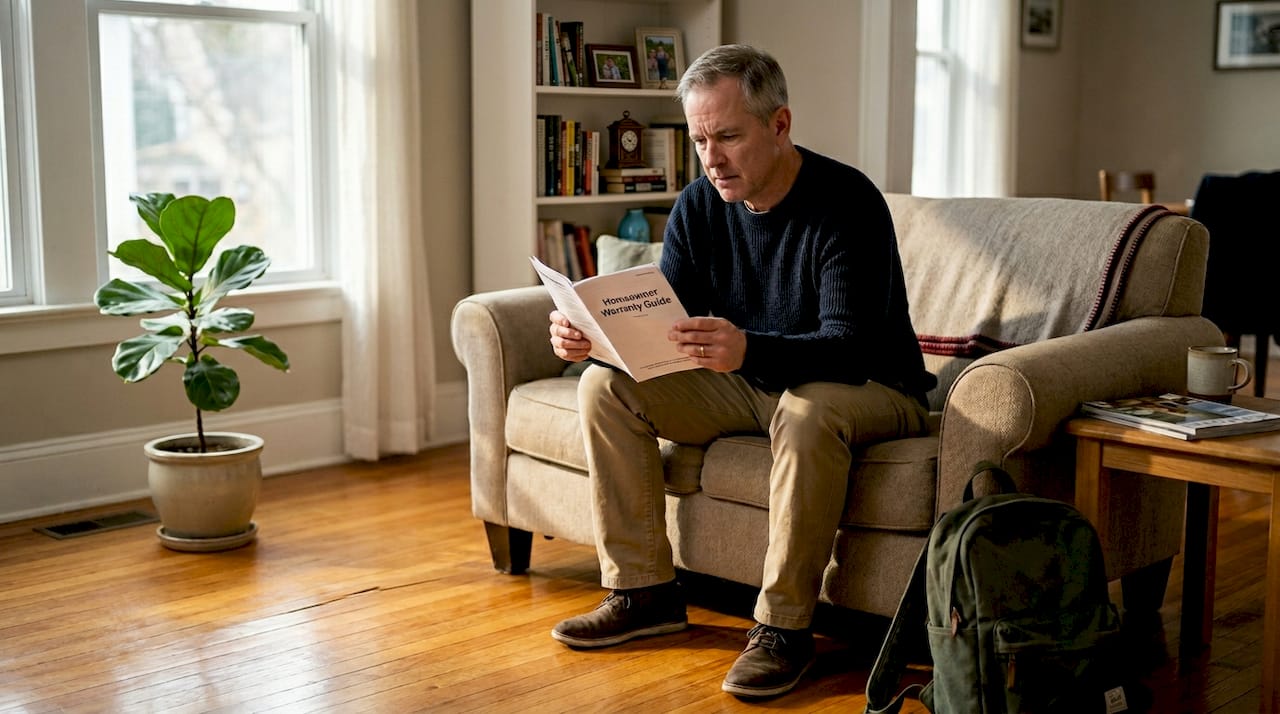
Warranty exclusions are another reality buyers often miss. Most solid hardwood warranties explicitly exclude water damage, flooding, and moisture-related issues. That means if a pipe bursts or a dishwasher leaks, you’re paying for repairs out of pocket regardless of how new the floor is.
Pro Tip: The single best thing you can do for a solid hardwood floor is control the humidity in your home. Keep indoor relative humidity between 35% and 55% year-round. A whole-home humidifier or dehumidifier is a much cheaper investment than floor replacement. For more strategies, read up on protecting hardwood floors from moisture.
Engineered wood, laminate, and vinyl: How they compare
Once you accept that solid hardwood has real moisture limits, the next question becomes: what should you use instead in moisture-prone areas? The answer depends on how much water exposure you’re actually dealing with.
Marketing mislabels water-resistant engineered floors as “waterproof hardwood” so often that many buyers don’t realize these are fundamentally different products. Here’s how the main categories actually stack up:
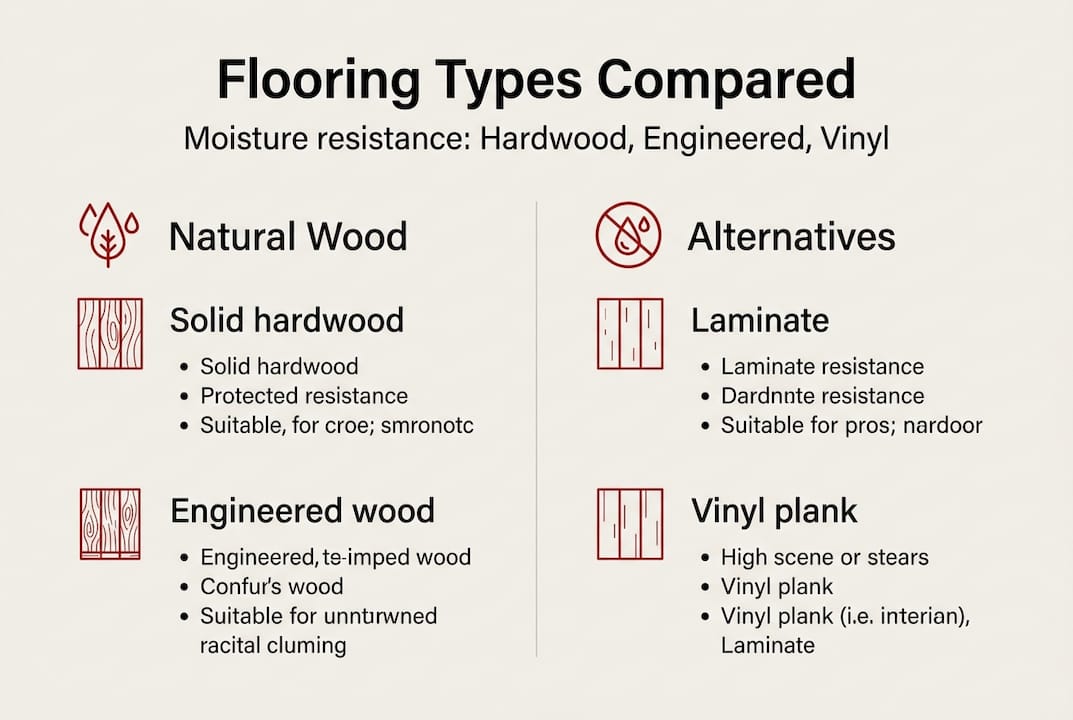
| Flooring type | Core material | Water resistance | Best rooms |
|---|---|---|---|
| Solid hardwood | 100% wood | Low | Bedrooms, living rooms |
| Engineered hardwood | Wood veneer over plywood | Moderate | Main floors, above grade |
| Laminate | HDF core with photo layer | Low to moderate | Dry areas only |
| Luxury vinyl plank (LVP) | PVC or SPC core | High to fully waterproof | Kitchens, baths, basements |
Key differences that matter for your buying decision:
- Engineered hardwood uses a real wood veneer over a plywood base. It handles humidity swings better than solid wood but still isn’t waterproof. Great for main living areas and above-grade installations.
- Laminate has a photographic layer over an HDF core. It looks like wood but swells badly when water gets under it. Not a good choice for kitchens or bathrooms unless it’s specifically rated for moisture.
- Waterproof vinyl flooring is the only category that genuinely lives up to waterproof claims. The SPC or WPC core doesn’t absorb water, making it ideal for bathrooms, kitchens, laundry rooms, and basements.
For a deeper look at how these two popular options perform under real conditions, the laminate vs. vinyl moisture results comparison is worth your time before you buy.
Buying smart: What to ask and check before you choose
Armed with the right questions, you can cut through the marketing noise quickly. Most flooring salespeople aren’t deliberately misleading you. They’re repeating what they were trained to say. Your job is to ask for specifics.
Here are the steps to take before committing to any floor:
- Ask for the spec sheet. Every legitimate product has one. Look for core material, moisture resistance rating, and warranty exclusions.
- Check the warranty language. If “water damage” is excluded, that product is not waterproof. Full stop.
- Ask about the installation environment. Below-grade (basement), on-grade (slab), or above-grade installations have different moisture risks.
- Request third-party certifications. FloorScore, NALFA, or similar certifications indicate the product has been independently tested.
- Ask about acclimation requirements. Solid and engineered hardwood must acclimate to your home’s humidity before installation. Vinyl does not. This tells you a lot about how the product handles moisture.
Red flags to watch for: vague phrases like “moisture-friendly” or “water-smart” with no supporting data, warranties under 10 years on a product marketed as premium, and pressure to buy without reviewing documentation.
No solid wood product is truly waterproof, so if a salesperson insists otherwise without showing you a spec sheet, walk away. For a broader look at how to avoid common pitfalls, preventing hardwood flooring issues covers the most frequent buyer mistakes. If you’re in a coastal or high-humidity region, also check out what works for engineered flooring in Bay Area climates specifically.
Pro Tip: When in doubt, ask the retailer for the manufacturer’s technical data sheet (TDS), not just the marketing brochure. The TDS lists actual test results for moisture, wear, and load resistance. If they can’t produce one, that’s your answer.
The uncomfortable truth most showrooms won’t tell you
Here’s what we’ve seen after years in this industry: the waterproof hardwood myth persists not because buyers are gullible, but because it’s profitable to let it persist. Showrooms move more product when customers believe they’re getting the best of both worlds, the warmth of real wood with the durability of synthetic flooring. That combination doesn’t exist in a single product.
We’ve heard from homeowners who spent $8,000 or more on floors marketed as “waterproof hardwood,” only to face buckling within two years of a minor plumbing issue. The warranty didn’t cover it. The salesperson was long gone. The floor was solid wood with a thick finish, exactly what marketing mislabels as waterproof.
What you should trust instead of marketing jargon is documentation, installation requirements, and honest conversations about where the floor is going. A good retailer will tell you when hardwood isn’t the right call. Understanding what water-resistance really means in flooring terms is the single most valuable thing you can learn before stepping into a showroom.
Explore flooring options you can trust
Now that you know the truth behind the waterproof hardwood myth, the next step is finding products that actually match your home’s needs without the misleading labels.
At Kapriz Hardwood Floors, we only carry products we’d install in our own homes. Whether you’re looking at a full hardwood flooring selection for a dry living space or exploring wood flooring options for different rooms in your home, we’ll give you straight answers backed by real product data. Not sure which material fits your situation? Our guide to comparing hardwood, vinyl, and laminate breaks it all down clearly so you can buy with confidence.
Frequently asked questions
Is any hardwood flooring actually waterproof?
No solid hardwood flooring is truly waterproof. At best, some products offer surface-level water resistance for a limited time before moisture penetrates the wood fibers.
What type of flooring is best for kitchens or bathrooms with frequent moisture?
Vinyl flooring with an SPC or WPC core is the best choice for high-moisture areas because it’s engineered to be fully waterproof and holds up well under daily exposure to water.
How can I protect hardwood floors from water damage?
Wipe up spills immediately, place rugs near sinks and entryways, and maintain indoor humidity between 35% and 55% year-round to prevent swelling and warping.
Are engineered hardwood floors better against water than solid hardwood?
Yes, engineered hardwood handles moisture and humidity swings better than solid hardwood due to its layered plywood core, but it is still not fully waterproof and should not be used in wet rooms.
Recommended
- Water resistant wood flooring: durable options explained | Kapriz Hardwood Flooring Store
- Hardwood Dream on a Budget? Laminate vs. LVP Showdown for Real Homes | Kapriz Hardwood Flooring Store
- The Ultimate Guide to Engineered Hardwood Flooring: Unraveling Hidden Facts | Kapriz Hardwood Flooring Store
- Hardwood flooring pros and cons: Bay Area homeowner’s guide | Kapriz Hardwood Flooring Store

