

What is floating wood floor? 2026 guide to quality hardwood
Many homeowners mistakenly believe floating floors mean cheap laminate or lack durability. In reality, floating wood floors use engineered hardwood planks with interlocking systems that create beautiful, stable surfaces without nails or glue. This guide explains what floating floors really are, how to install them properly, their advantages and limitations, and how to maintain them for lasting beauty.
Table of Contents
- What Is A Floating Wood Floor? Definition And Basics
- Materials And Installation Process For Floating Wood Floors
- Benefits And Limitations Of Floating Wood Floors For Homeowners
- Caring For Your Floating Wood Floor: Maintenance And Longevity
- Explore Quality Floating Wood Flooring Options At Kapriz Hardwood Floors
- Frequently Asked Questions
Key takeaways
| Point | Details |
|---|---|
| Installation method | Floating floors lock together over underlayment without attaching to subfloors, allowing natural expansion. |
| Material choice | Engineered hardwood or click-lock planks designed specifically for floating installation work best. |
| Subfloor preparation | Clean, dry, flat subfloors with moisture barriers prevent warping and ensure longevity. |
| Maintenance basics | Weekly vacuuming, occasional mopping, and maintaining 30-50% humidity preserve floor beauty. |
What is a floating wood floor? Definition and basics
Floating wood floors use interlocking planks that rest on underlayment without mechanical fasteners or full-spread adhesive connecting them to the subfloor below. The planks connect to each other through locking systems, creating a unified surface that literally floats above the foundation.
Three common locking systems make this possible:
- Click-lock mechanisms snap planks together at angles
- Drop-lock systems allow planks to slide horizontally into position
- Tongue-and-groove edges interlock with gentle tapping
No nails, staples, or construction adhesive attach the floor to your subfloor. Instead, expansion gaps of about 1/4 to 3/8 inch around the perimeter allow the entire floor to expand and contract as temperature and humidity change. Baseboards and quarter-round molding hide these gaps while keeping the floor free to move.
Pro Tip: The term floating floor has two meanings in the industry. Standard floating floors use click-lock engineered hardwood, while acoustic floating floors involve specialized systems for sound dampening. This guide focuses on the more common click-lock installation.
You can install hardwood floors using several methods, but floating installation stands out for its versatility. Unlike nailed floors requiring wood subfloors or glued floors demanding perfect flatness, floating installation works over various surfaces including concrete, tile, and even existing flooring.
Materials and installation process for floating wood floors
Engineered hardwood planks designed specifically for floating installation work best because their layered construction resists moisture-related movement better than solid wood. Some manufacturers also produce click-lock solid hardwood, but engineered remains the more stable choice.
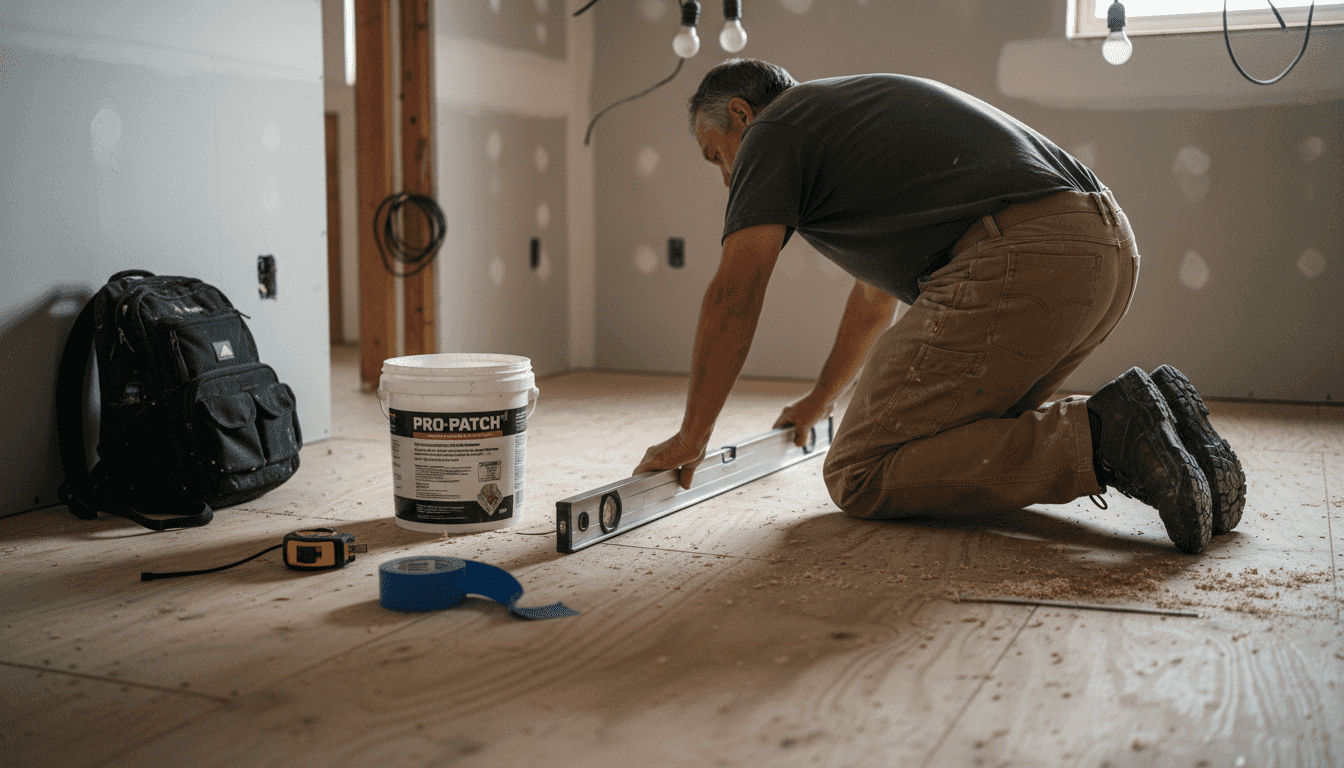
Your subfloor determines installation success more than any other factor. The surface must meet three critical requirements:
- Clean and debris-free to prevent uneven spots
- Dry with compatible moisture levels between subfloor and planks
- Flat within 3/16 inch deviation across any 10-foot span
Proper subfloor preparation prevents 90% of floating floor problems. Grinding down high spots, filling low areas, and testing moisture content takes time but saves money on repairs later. Concrete subfloors especially need moisture testing because excess moisture trapped under floating floors causes cupping, warping, and potential mold growth.
Underlayment serves multiple purposes beyond cushioning. Common types include foam for basic installations, felt for sound dampening, cork for natural insulation, and rubber for moisture-prone areas. Concrete subfloors always require vapor barriers, typically polyethylene sheeting, to block moisture migration from below.
Installation follows a straightforward process:
- Roll out underlayment across the entire floor area
- Tape seams to prevent shifting during plank installation
- Start the first row perfectly straight using a chalk line or laser level
- Lock subsequent planks together row by row
- Cut planks to fit around obstacles and maintain expansion gaps
- Install baseboards and transitions to complete the look
Avoid pinning the floor by placing heavy furniture or cabinets directly on top without room for movement. Never install permanent fixtures through floating floors into the subfloor below. The floor needs freedom to expand and contract, or you will see buckling, gaps, or damaged planks.
Pro Tip: Starting your first row perfectly straight prevents alignment problems that compound across the entire floor. Spend extra time getting the first three rows positioned correctly.
Understanding job preparation requirements and ensuring your subfloor is stiff, flat, and dry creates the foundation for a successful floating floor that lasts decades.
Benefits and limitations of floating wood floors for homeowners
Floating wood floors offer practical advantages that make them popular for renovations and new construction. Installation over radiant heat systems, existing tile, or concrete happens faster than traditional methods because you skip fastening steps. The floating method naturally accommodates expansion and contraction, reducing damage risk from seasonal humidity changes.
Key benefits include:
- DIY-friendly installation requiring basic tools and skills
- Lower material and labor costs compared to nail-down or glue-down methods
- Compatibility with various subfloor types and conditions
- Easy replacement of individual damaged planks without full floor removal
- Real wood appearance from engineered hardwood top veneer
Thorough pre-installation preparation is the most important step for a successful floating floor installation.
Engineered hardwood provides genuine wood beauty with added dimensional stability from its layered construction. The top veneer offers the same rich grain patterns and natural color variation as solid hardwood, while the plywood or HDF core resists moisture-related warping.
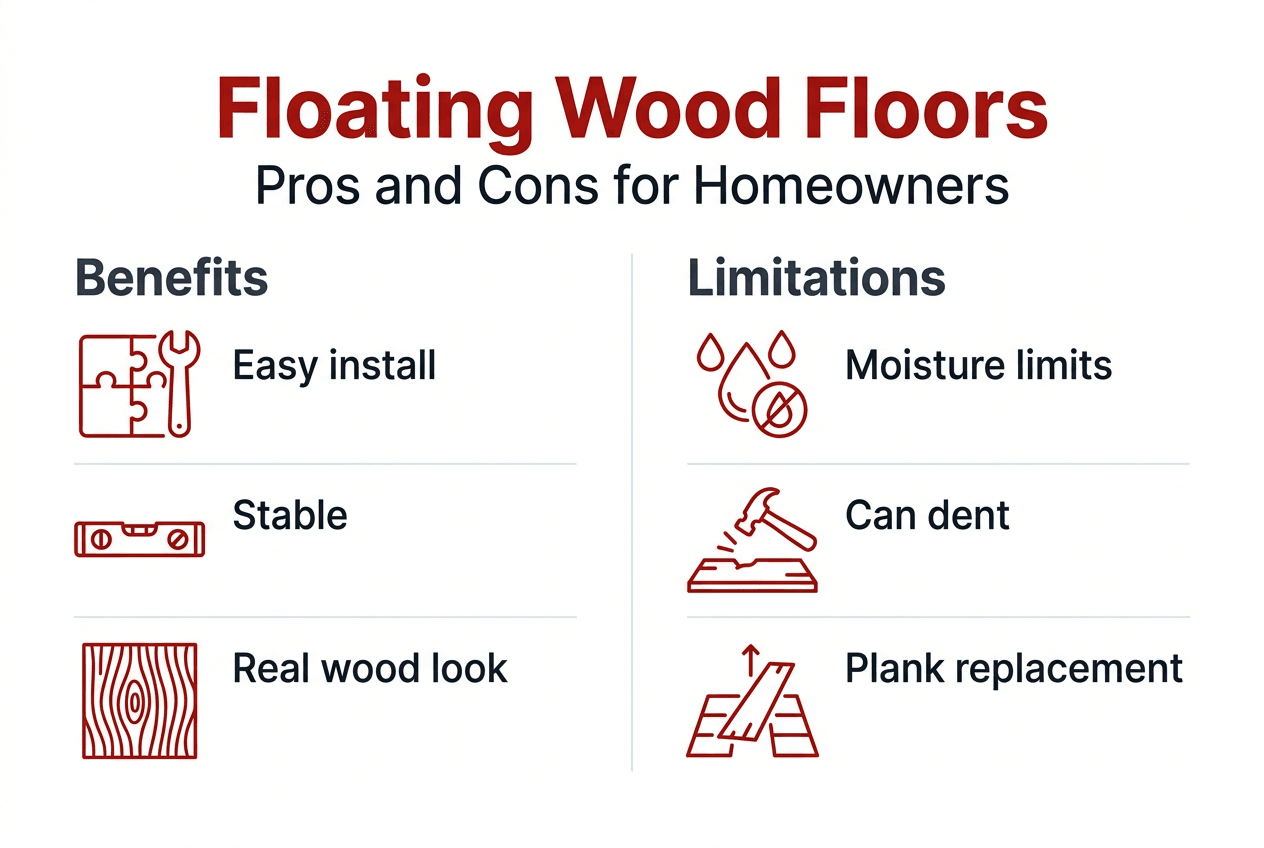
Realistic limitations exist despite these advantages. Engineered hardwood can dent in high-traffic areas or when heavy objects drop on the surface. The wear layer thickness determines how many times you can refinish the floor, typically ranging from one to three sandings depending on veneer thickness.
Moisture tolerance has limits too. While engineered wood handles humidity fluctuations better than solid wood, excessive moisture from spills, flooding, or high humidity still causes damage. Bathrooms, laundry rooms, and other moisture-prone spaces need extra caution and possibly alternative flooring materials.
Maintenance requirements remain relatively simple. Regular vacuuming removes grit that scratches the finish. Occasional damp mopping with hardwood-specific cleaners keeps surfaces clean without over-wetting the wood. Avoiding standing water and addressing spills immediately protects the wood layers from moisture penetration.
Replacing damaged planks involves more work with floating floors than you might expect. You must disassemble the floor from the nearest wall to the damaged plank, swap it out, then reassemble everything. Strategic furniture placement can hide minor damage until you are ready for more extensive repairs.
Caring for your floating wood floor: maintenance and longevity
Proper maintenance preserves both appearance and structural integrity of floating wood floors. Indoor humidity between 30-50% prevents dry cupping, where plank edges curl upward due to moisture loss. Low humidity, especially during winter heating seasons, causes the wood core to shrink while the finish remains rigid, creating the cupping effect.
Establishing a regular cleaning routine takes minimal effort:
- Vacuum weekly using soft brush attachments to remove dust and debris
- Damp mop every month or two with hardwood floor cleaner
- Wipe spills immediately to prevent moisture absorption
- Place mats at entrances to trap dirt and moisture
- Use furniture pads under chair legs and table feet
Pro Tip: Running a humidifier during dry winter months or in arid climates stabilizes moisture levels and prevents gaps from developing between planks.
Expansion gaps require periodic inspection. Check around the perimeter to ensure baseboards have not compressed the gaps, which would pin the floor and prevent natural movement. Removing baseboards and trimming them slightly restores proper spacing if needed.
Avoiding common mistakes extends floor life significantly. Never steam mop floating wood floors because excessive heat and moisture penetrate seams and damage the core layers. Skip oil soaps and wax products that leave residue and dull the factory finish. Understanding and avoiding installation mistakes prevents problems before they start.
Weekly vacuuming and occasional mopping keeps engineered hardwood looking fresh for years. The finish protects the wood veneer from minor scratches and scuffs, but deep gouges may require professional repair or plank replacement.
Addressing minor damage quickly prevents bigger problems. Small scratches often disappear with hardwood touch-up markers matching your floor color. Deeper scratches may need wood filler and finish touch-up. Identifying the source of damage, whether from furniture, pet claws, or dropped objects, helps you implement prevention strategies.
Temperature stability matters too. Avoid placing floating floors in areas with extreme temperature swings like enclosed porches or sunrooms without climate control. Consistent indoor temperatures between 60-80°F help floors maintain their integrity and appearance.
Explore quality floating wood flooring options at Kapriz Hardwood Floors
Ready to transform your space with beautiful floating wood floors? Kapriz Hardwood Floors offers an extensive selection of quality hardwood flooring combining affordability with durability. We stock engineered hardwood options suitable for floating installation across various styles, colors, and price points.
Discover why engineered hardwood floors represent a smart investment for your home. Our team helps you select flooring that matches your design vision and budget while meeting performance requirements for your specific installation. Whether you are renovating one room or installing wood flooring throughout your house, we provide the products and expertise you need.
Frequently asked questions
What is the best underlayment for floating wood floors?
Underlayment options include foam, felt, cork, and rubber, each serving specific purposes. Foam provides basic cushioning for standard installations, while felt adds sound dampening for multi-story homes. Cork offers natural insulation and moisture resistance, making it ideal for basement installations. Concrete subfloors always require vapor barriers, typically 6-mil polyethylene sheeting, to block moisture migration. Choosing the right underlayment depends on your subfloor type, moisture levels, and performance priorities.
Can floating wood floors be installed over radiant heating?
Yes, floating installation works perfectly over radiant heated floors because the floating method naturally accommodates thermal expansion. The floor moves freely as temperatures change, preventing buckling or gaps that plague nailed floors over heating systems. Use underlayment designed for radiant heat applications to ensure proper heat transfer. Keep radiant system temperatures below 85°F at the floor surface to protect the engineered wood from excessive drying.
How to prevent damage to floating wood floors?
Maintaining proper expansion gaps of 1/4 to 3/8 inch around the perimeter prevents buckling and peaking when floors expand. Controlling indoor humidity between 30-50% stops dry cupping and moisture-related damage. Never pin the floor with heavy fixtures or tight baseboards that restrict movement. Protect floors from impacts by using furniture pads and avoiding dropping heavy objects. Avoiding common flooring mistakes during installation and maintenance keeps your floors beautiful for decades.
How long do floating wood floors last?
Properly installed and maintained floating wood floors last 20 to 40 years depending on wear layer thickness and traffic levels. Thicker veneer engineered hardwood allows multiple refinishing cycles, extending lifespan significantly. High-traffic areas show wear faster than bedrooms or formal spaces. Regular maintenance, humidity control, and prompt damage repair maximize longevity. Quality products from reputable manufacturers typically outlast budget options by 10 to 15 years.
Recommended
- How to Install Hardwood Floors – Nail-Down, Glue-Down, and Floating Methods | Kapriz Hardwood Flooring Store
- Drift Wood Lago Laminate Floors | Flooring Store Kapriz Santa Clara
- INSTALLING A WOOD FLOORING | Kapriz Hardwood Flooring Store
- 2025 Flooring Guide – Hardwood Durability vs. Laminate Ease vs. Vinyl | Kapriz Hardwood Flooring Store


